What Food Is Seoul Famous For?
The Korean dishes Seoul is known for, from tteokbokki and Korean fried chicken to bulgogi burgers, plus where to eat around Namsan and Myeongdong before going up the tower.
What Food Is Seoul Famous For?
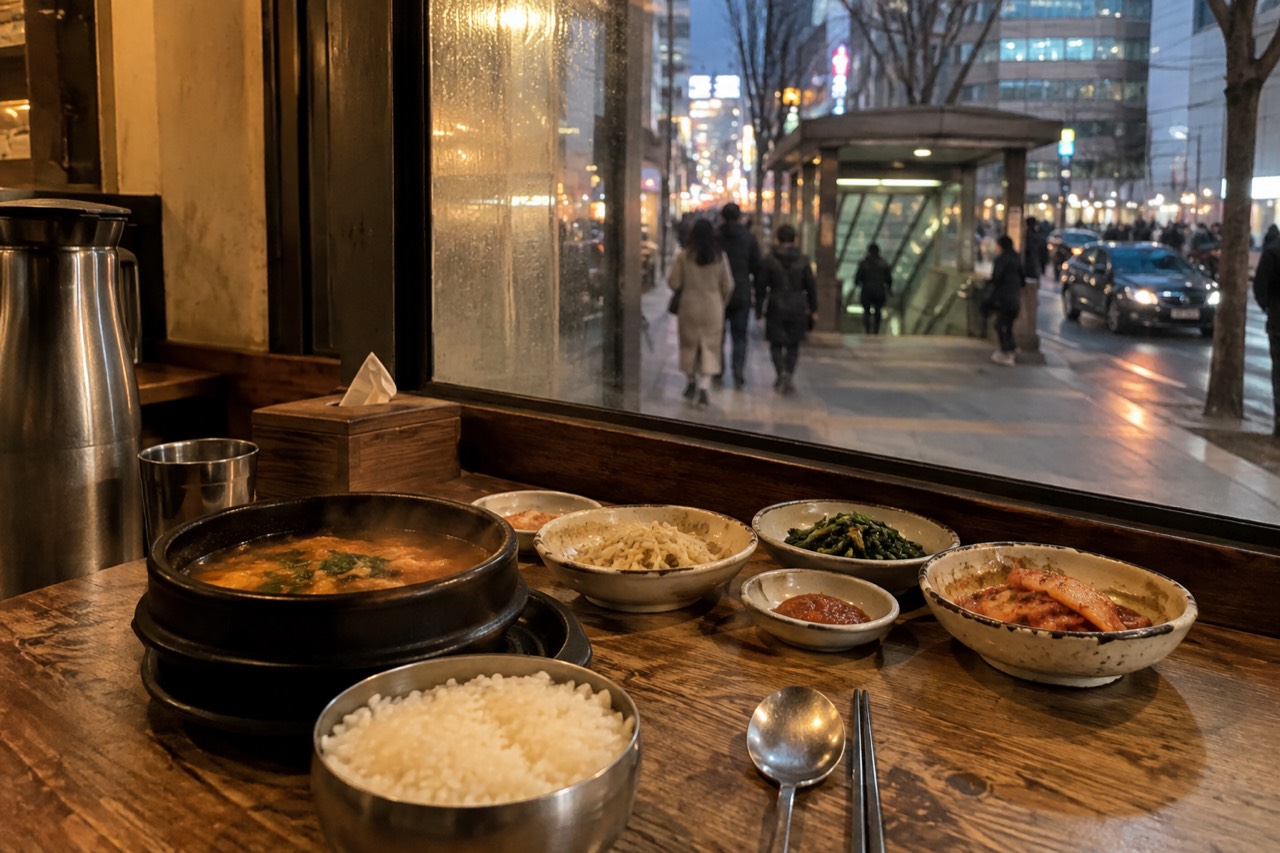
Seoul is famous above all for its everyday Korean food: tteokbokki, the chewy rice cakes in sweet-spicy sauce; gimbap, the seaweed-wrapped rolls; Korean fried chicken; bulgogi and galbi grilled meats; buckwheat noodles; and the soup-and-stew culture of kimchi jjigae and sundubu. The city's own food identity is street-corner and market-based, and much of it is eaten standing up.
That is the short answer. The longer one is that Seoul food is less about one signature dish than about a density of small, specialised places, each doing one thing well, clustered around markets, subway stations and nightlife streets. Ask ten Seoul residents what the city's food is and you will get overlapping but different lists, because the honest answer depends on where in the city you are standing.
What makes this worth planning around, rather than just stumbling into, is that the neighbourhoods around Namsan sit on top of several of these clusters at once. Myeongdong, at the foot of the mountain on its northern side, is one of the city's best-known street food streets. Namdaemun Market, just to the west, is one of Seoul's great traditional markets. And the summit of Namsan itself has its own food layer, from a convenience store and a fried chicken chain at the plaza to a rotating French restaurant at the top of the tower.
A useful frame for a first visit: eat your way up the mountain. Start with street food or market food in Myeongdong or Namdaemun, work upward through whatever you find at the Seoul Tower Plaza, and finish, if the budget allows, with a drink or a full meal inside or on top of the tower itself. The observatory ticket is a small, separate purchase that only covers the deck inside the tower, so food and deck are planned independently.
Where should you eat before going up Namsan?
The two obvious bases are Myeongdong and Namdaemun Market. Myeongdong is the street food street, with stalls selling hot snacks through the afternoon and evening. Namdaemun is a traditional market with a deeper, older food culture, including its famous kalguksu alley of hand-cut noodle shops. Both sit within easy reach of the cable car's lower station.
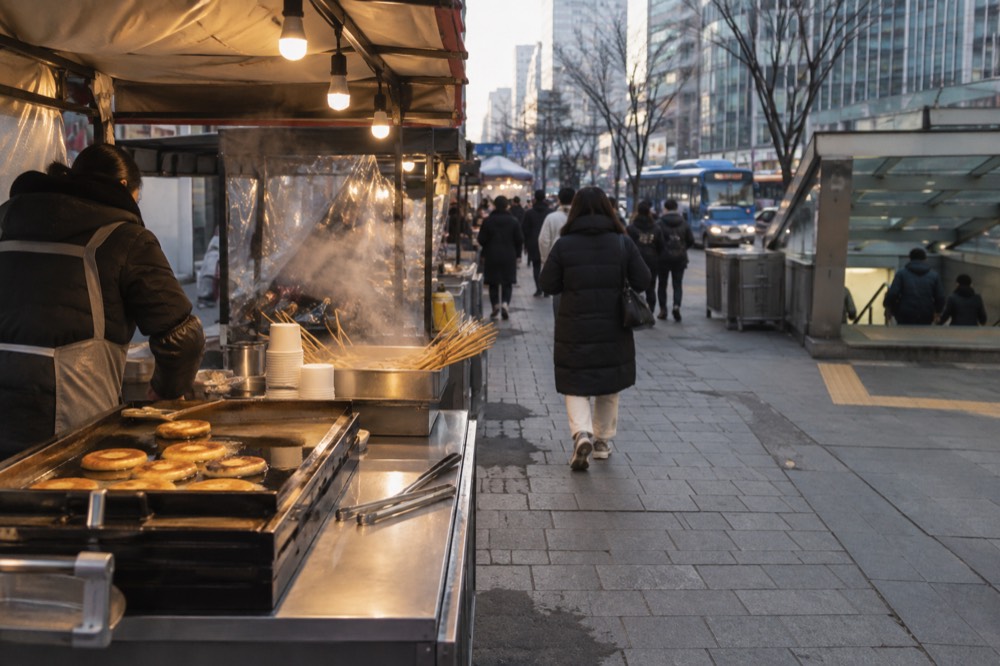
Myeongdong is where most visitors encounter Seoul street food first. The neighbourhood's main drag and its side streets fill with stalls selling grilled cheese, hotteok sweet pancakes, tornado potatoes, grilled squid and the rest of the rotating street repertoire. It is loud, crowded and aimed squarely at visitors, which is not a criticism: the food is genuinely good and the variety is the point. The neighbourhood is also a shopping hub in its own right, as we cover in what Myeongdong is famous for, and it is the natural starting side of the mountain, as our piece on whether Namsan is near Myeongdong explains.
Namdaemun Market is the more local, less curated version of the same instinct. The market's food alleys are famous for kalguksu, hand-cut wheat noodles in hot broth, and for a general market-food culture that predates the street food stalls of Myeongdong by generations. It is also newly relevant to anyone visiting Namsan in the evening: Seoul's new free guided night walk over the summit, launched in September 2026, deliberately finishes its route at Palgakjeong with a descent laid out toward Namdaemun, so that walkers can carry on eating there afterwards. The city's own announcement of the course makes the food connection explicit, and the whole programme is booked through the city's walking tour announcement page.
The third option is to eat at the mountain itself. The Seoul Tower Plaza, the building wrapped around the tower's base, has a full retail and food floor that needs no observatory ticket, and the operator's own restaurant directory lists what is currently open there.
What Korean dishes should a first-time visitor try?
Prioritise five: tteokbokki, the rice cakes in gochujang sauce that define Korean street food; gimbap, Korea's answer to the roll; Korean fried chicken, which is a distinct craft from its American cousin; bulgogi, marinated beef grilled at the table; and a proper stew, either kimchi jjigae or sundubu, because soup is the backbone of everyday Korean eating.
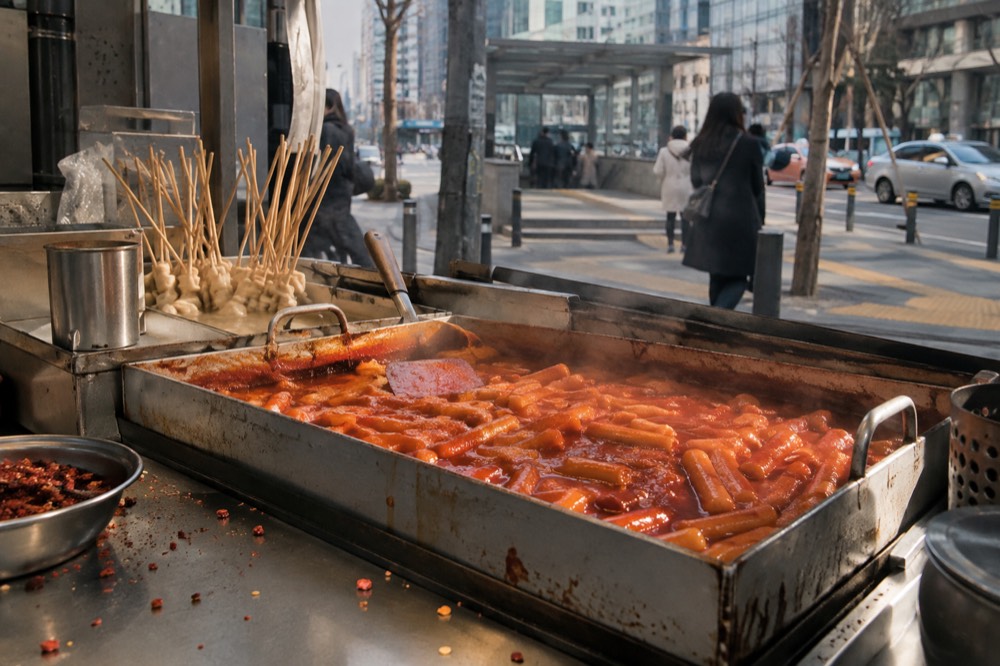
Tteokbokki is the dish to start with because it is everywhere and it teaches you the flavour profile of Korean street food in one bite: sweet, spicy, chewy, hot. Its market version is looser and soupier than the neat street-stall version, and both are legitimate. Gimbap is the companion dish, sold by the roll, cheap, portable and filled with anything from pickled radish and spinach to tuna or cheese.
Korean fried chicken deserves its own planning. The Korean version is twice-fried, thin-crusted and glazed, and it comes with a delivery-and-beer culture around it that is a food experience in itself. At the Namsan summit, a branch of the fried chicken chain bhc sits in the Seoul Tower Plaza.
Bulgogi, thin marinated beef, and its richer sibling galbi, grilled short rib, are the dishes most visitors arrive already knowing. They are best at a grill restaurant where the meat cooks at your table. And if you only have one proper sit-down meal, make it a stew: kimchi jjigae, the fermented cabbage stew, or sundubu jjigae, the soft tofu stew served still bubbling in its pot.
Here is a short planning table for the dishes and where they fit around Namsan.
| Dish | What it is | Where it fits around Namsan |
|---|---|---|
| Tteokbokki | Chewy rice cakes in sweet-spicy gochujang sauce | Street stalls in Myeongdong; a tteokbokki shop in Seoul Tower Plaza |
| Gimbap | Seaweed-wrapped rice rolls with varied fillings | Sold at market stalls and convenience stores everywhere, including the summit |
| Korean fried chicken | Twice-fried, thin-crusted, glazed chicken | A bhc branch operates in the Seoul Tower Plaza |
| Bulgogi | Marinated beef, usually grilled | The summit's N Burger serves a Seoul bulgogi burger, a fast-food take on it |
| Kalguksu | Hand-cut wheat noodles in hot broth | The kalguksu alley at Namdaemun Market, west of the mountain |
| Buckwheat noodles | Cold or hot naengmyeon-style noodles | A dedicated buckwheat noodle shop operates in Seoul Tower Plaza |
What is Korean street food like in Myeongdong?
Myeongdong's street food is a dense, rotating lineup of hot, handheld snacks: grilled skewers, hotteok pancakes filled with brown sugar and nuts, tornado potatoes, cheese corn cups, fish cakes on sticks and grilled squid. Stalls run through the afternoon and peak in the evening, when the streets are busiest and the queues longest.
The character of the street changes with the clock. In the afternoon the stalls are thinner and the eating is easier; by evening the main street is packed, and that is when the full range is out. Visitors consistently report the evening as the more atmospheric time, and the cable car company's own advice agrees in spirit, recommending the sunset-to-night window for the ride up. More of these guides are collected on Namsan Tower Seoul.
Two practical notes. First, Myeongdong's street food is eaten walking, and the whole area around Namsan is non-smoking with a stated fine, which keeps the eating lanes cleaner than in many cities. Second, if you are combining street food with the tower, the direction matters: eating first, in Myeongdong, then going up, is the natural order, because the plaza and the tower have their own food but less of the street variety.
Can you eat at the top of N Seoul Tower?
Yes, and the range is wider than most visitors expect. The Seoul Tower Plaza at the base has a convenience store, a Starbucks, a Gong Cha, a fried chicken chain, a buckwheat noodle shop, a cutlet specialist and more, all open without a ticket. Inside the tower, floors 1 through 7 hold cafes, a Korean grill, an Italian restaurant and a rotating French restaurant at the very top.
The free-versus-paid boundary matters here. The park, the summit plaza, the terraces and every shop and cafe at the tower's base are free to enter; only the observation deck inside the tower needs a ticket. That means you can ride up, eat fried chicken or noodles at the plaza, walk the terraces and the love locks, and never buy a deck ticket at all, as we explain in is it free to go up Namsan Tower.
Inside the tower, the food climbs with the building. Tower 1F holds N Terrace, a cafe and bar, and N Burger, which reopened in March 2026 after a renewal as a K-style handmade burger house with a Seoul bulgogi burger, Korean-seasoned chicken and its own lager. Tower 2F has The Place Dining, an Italian restaurant the operator confirms can be used without buying an observatory ticket. Tower 3F holds HanCook, a Korean grill. And Tower 7F holds n.Grill, the operator's flagship French restaurant, whose dining room rotates, one full turn taking 1 hour 40 minutes. An advance n.Grill reservation includes free observatory admission, which makes it the one food route that folds the deck ticket into the meal.
What about drinks and desserts?
Seoul's drink culture runs on coffee shops, which are everywhere and taken seriously, and on the beer-and-fried-chicken combination Koreans call chimaek. For dessert, look for hotteok pancakes, bungeoppang fish-shaped cakes, and the city's dense layering of bakeries and dessert cafes, including several at the Namsan summit itself.
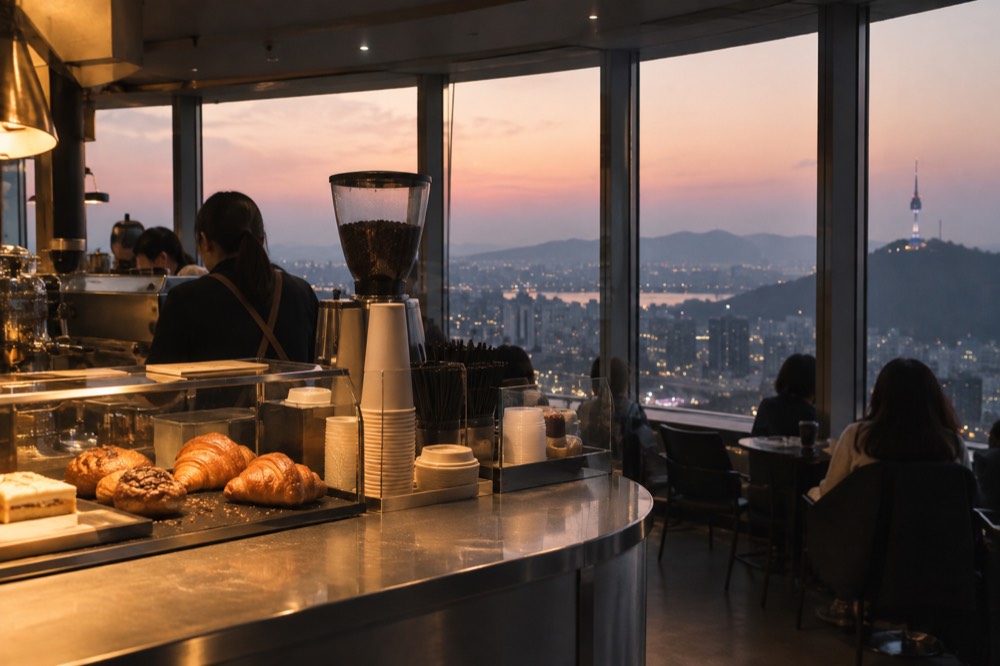
Coffee is the quiet constant of a Seoul day. Chains and independents compete on every block, and the summit keeps up its end: a Starbucks sits in the Seoul Tower Plaza, an A Twosome Place operates both in the plaza and inside the tower, and N Terrace serves drinks with the terrace view. N Sweet Bar, on Plaza 5F beside the observatory entrance, covers the dessert side.
The chimaek pairing, fried chicken and beer, is the city's default evening meal, and the summit's combination of a chicken chain and a burger house with its own lager puts a version of it at the top of the mountain. The city's April feature on Namsan, on the Seoul Metropolitan Government's English site, groups the mountain's eating and viewing together in exactly this spirit.
One dessert worth seeking on the way down rather than up: the markets. Namdaemun and the streets around Myeongdong do hotteok, the sugar-and-nut pancake cooked on a griddle, better than anywhere at the summit, and it is best eaten hot, straight from the pan, on a cold evening.
How do you plan a food day around the tower?
Build it as a climb. Start in Myeongdong or Namdaemun in the late afternoon for street food or market noodles, ride the cable car or walk up as the light goes, eat at the summit plaza or inside the tower, and come down for a second round in the market. The observatory's late hours, closing at 22:30 on weekdays and 23:00 on weekends with last admission 30 minutes before, make an evening food-and-view itinerary easy.
The timing works in your favour. The cable car runs until 23:00, the circular shuttle buses run until 23:00, and the observatory's own closing times mean an after-dinner deck visit is realistic. The tower is open 365 days a year, and the operator notes hours can shift with weather, so the deck is the one element of the evening to check on the day.
If you are planning the fuller picture of the mountain, from the walking trails to the photo spots, our guide to the restaurants at N Seoul Tower covers the summit's dining options in detail, and our three-day Seoul itinerary slots the whole Namsan food evening into a wider first visit.
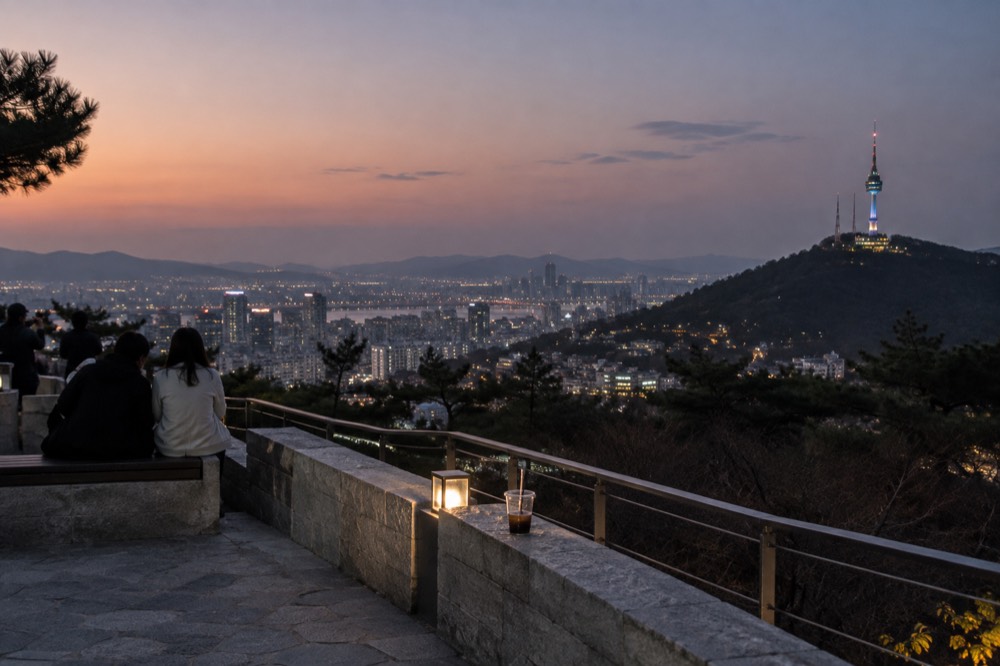
For the deck itself, the ticket options are simple: the observatory ticket on its own from US$15.25, a version bundled with the cable car, a fast-track version, and a version with a cocktail included. The cable car bundle requires collecting a physical ticket at a partner shop in Myeongdong before you ride, and collection closes at 18:00, which matters if your plan is an evening ascent. The full set of options is on the live booking page.
Whichever option fits your evening, the shape of the day stays the same: eat low, ride or walk up, and let the deck be the last course rather than the first. A Myeongdong street food dinner followed by the night view from the observatory is the combination most visitors end up wishing they had planned, and it costs less than a single restaurant meal in many cities. The three options below cover the same deck with different extras, so the choice comes down to how you want to arrive.
Common questions about food in Seoul
What Food Is Seoul Famous For?
Tteokbokki, gimbap, Korean fried chicken, bulgogi and grilled meats, buckwheat and hand-cut noodles, and the stew culture of kimchi jjigae and sundubu. Around Namsan specifically, the food clusters are Myeongdong's street stalls, Namdaemun Market's kalguksu alley, and the cafes, chicken shop and restaurants at the Seoul Tower Plaza and inside the tower itself.
Can you eat at N Seoul Tower without a ticket?
Yes. The Seoul Tower Plaza at the base, with its convenience store, Starbucks, chicken, noodles, cutlet and snack shops, is open to anyone, and The Place Dining on Tower 2F is confirmed by the operator as usable without an observatory ticket. Only the observation deck inside the tower requires a ticket.
Is there a restaurant at the top of N Seoul Tower?
Yes. n.Grill, a French restaurant, sits on Tower 7F and rotates, completing one full turn in 1 hour 40 minutes. Below it, HanCook serves Korean grill food on Tower 3F, and The Place Dining serves Italian on Tower 2F. An advance n.Grill reservation includes free observatory admission.
Where is the best street food near Namsan?
Myeongdong, on the mountain's northern side, is the best-known street food street, with hotteok, grilled skewers, tornado potatoes and more through the afternoon and evening. Namdaemun Market to the west is the traditional-market alternative, famous for its kalguksu noodle alley.
What is chimaek?
Chimaek is the Korean pairing of fried chicken and beer, a standard evening meal across the city. A version of it is available at the Namsan summit, where a fried chicken chain operates in the Seoul Tower Plaza and the renewed N Burger serves its own lager.