Is It Free To Go Up Namsan Tower?
The park, the summit plaza, the terraces and the trails on Namsan are free. Only the observation deck inside N Seoul Tower needs a ticket. Here is exactly where the free line sits.
Is It Free To Go Up Namsan Tower?
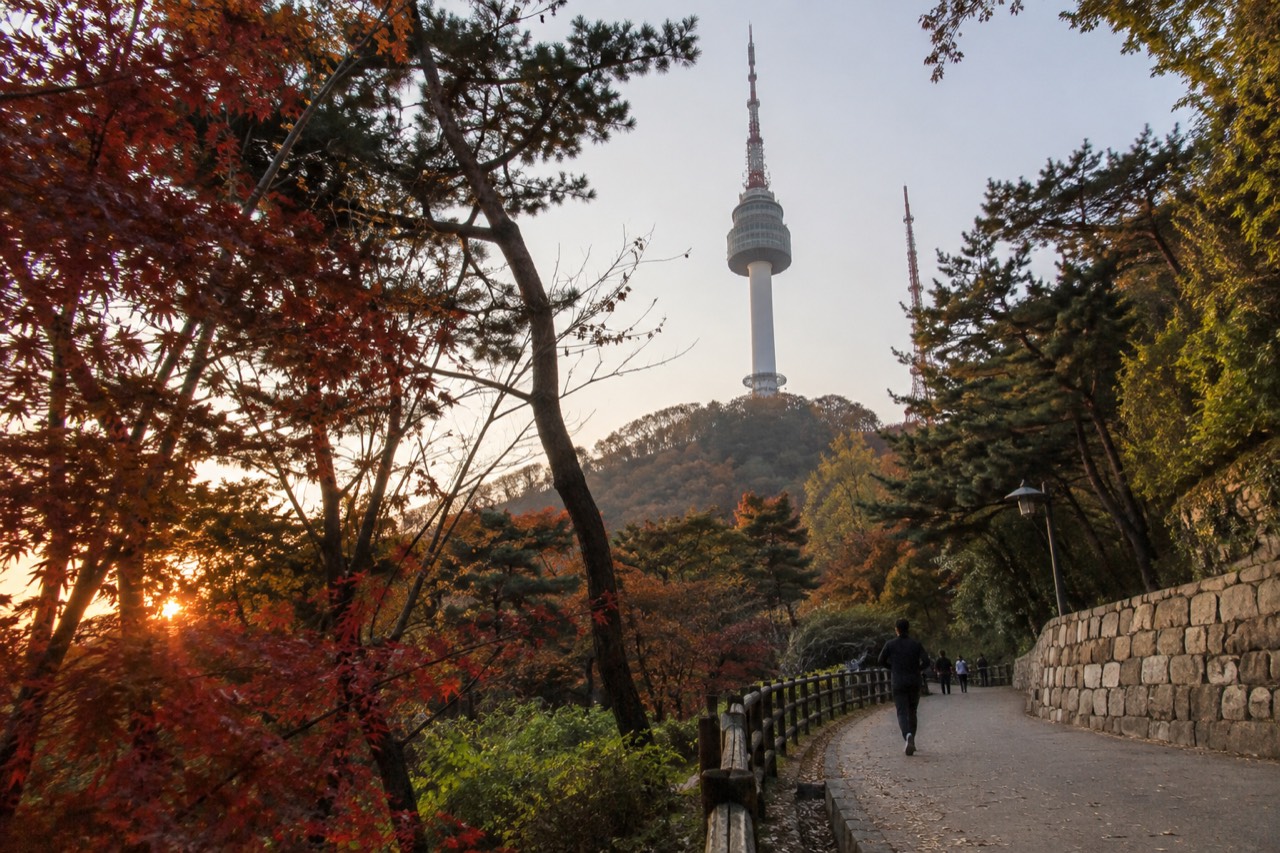
Yes and no, and the split is cleaner than most visitors expect. Going up Namsan, standing on the summit plaza, walking the trails, seeing the love locks and looking out over Seoul from the terraces around the tower base all cost nothing. The only thing that needs a ticket is the observation deck inside N Seoul Tower itself, which the operator prices at KRW 29,000 for adults at the gate.
That single sentence settles the question, but the detail around it is where visitors lose money they did not need to spend. Seoul's official tourism site answers the underlying question directly: the entrance to Namsan Park is free. The park is the whole mountain, and it wraps around the tower on every side. What sits behind a ticket gate is narrow: the enclosed observation levels inside the tower structure, entered from Plaza 5F or from the Tower 1F ticket booth.
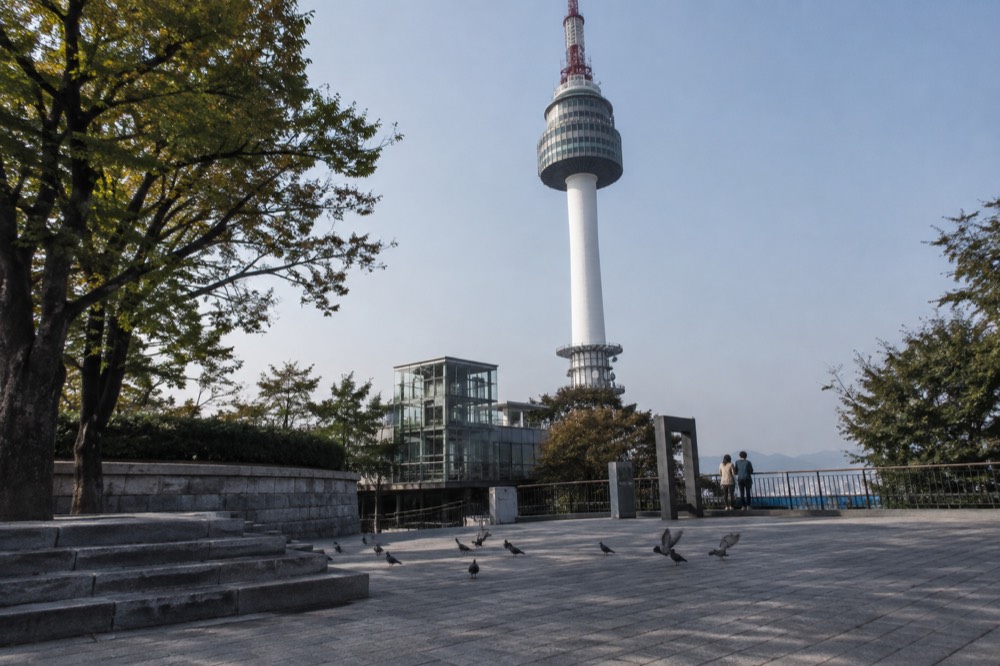
The distinction matters because a first-time visitor arriving from Myeongdong often assumes the mountain itself is an attraction with an entrance fee, the way a theme park or a palace grounds might be. It is not. Namsan is a public civic park, the largest in Seoul, divided into four districts: Jangchung, Yejang, Hoehyeon and Hannam. You can spend a full afternoon and evening on it, see the city from several angles, eat, photograph and walk home, and never once be asked for a ticket.
What you are paying for, if you choose to pay, is the indoor experience: the enclosed deck levels inside the tower, the digital telescopes with optical zoom up to 36x, and the glass-walled view from inside the structure. Whether that is worth KRW 29,000 is a separate question, one this site covers in its guide to N Seoul Tower tickets and prices. For the free-versus-paid question, the boundary is what matters.
What exactly is free on Namsan?
Everything outside the tower's ticket gates: the park and its trails, the summit plaza, the terraces around the tower base, the Palgakjeong pavilion area, the love lock deck, the Bongsudae beacon mound, the Seoul City Wall path, the Seoul Tower Plaza shops and cafes, the Namsan Ormi inclined elevator and the cable car company's Myeongdong shuttle bus. None of these requires a ticket, and a visitor can reach the summit and enjoy the view for nothing.
The free list is longer than most published guides suggest, and it is worth spelling out because each item is genuinely usable. The Seoul Metropolitan Government's own April feature on Namsan groups the park trail, the Locks of Love, the heart chairs, the sticker photo booths and the Palgakjeong night view together as things to do on the mountain, and prices only the observatory. The city's tourism portal states plainly that the park entrance is free, as its Namsan Park page confirms.
Around the tower base, the free ground includes Seoul Tower Plaza, the retail building at the tower's foot. YTN Seoul Tower, which owns and operates that building, lists an open directory on its lower floors: Starbucks, GS25, Mom's Touch, bhc Chicken, Gong Cha, a tteokbokki counter, a buckwheat noodle shop, Cinnabon and more, on Plaza 1F and 2F. Anyone can walk in, buy a coffee and sit looking at the mountain. The tower operator's own FAQ confirms that The Place Dining on Tower 2F can be used without buying an observatory ticket, which is only possible because the ticket gates the deck and nothing else.
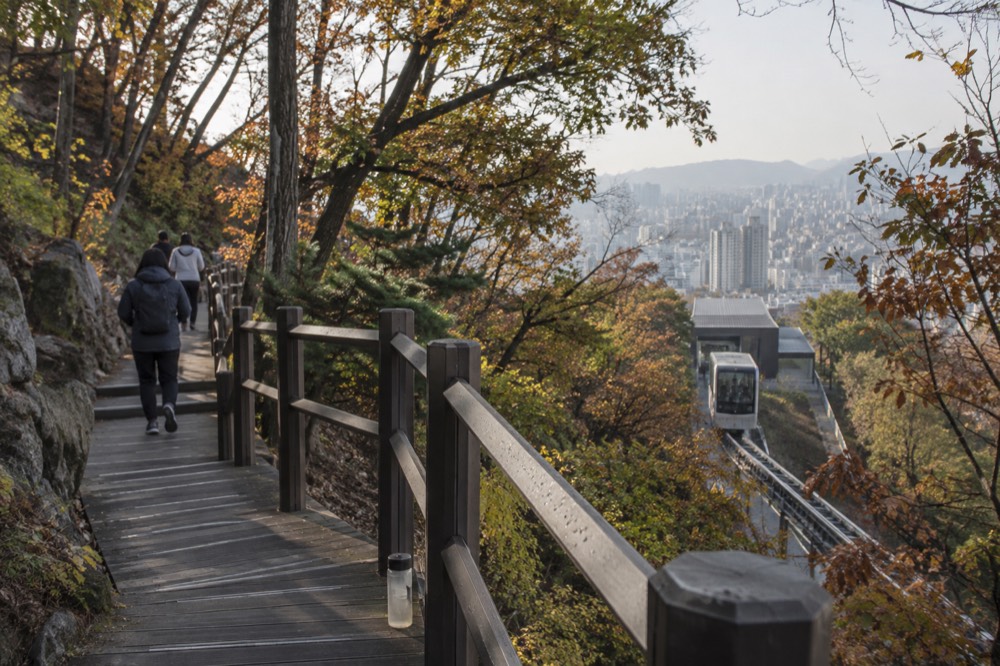
The free side of the boundary even extends to movement. The Namsan Ormi, the glass-walled inclined elevator that runs between Namsan Tunnel 3 and the cable car's lower station, is free of charge; the Seoul Metropolitan Government, which began operating it in June 2009, built it specifically to improve pedestrian access to the mountain. The cable car company also runs a free shuttle bus between Myeongdong Station and the cable car platform. Neither the elevator nor the shuttle asks for a fare.
What does the observatory ticket actually cost?
At the gate, the operator's own fee page prices the observatory at KRW 29,000 for adults aged 13 and over, KRW 23,000 for children aged 3 to 12, and KRW 23,000 for seniors aged 65 and over, with children under 36 months free, limited to one per accompanying adult. Online, the same deck ticket starts from US$15.25 per adult through the operator's live listing.
Two prices, two currencies, stated separately, because that is the honest way to state them. The gate price is the operator's own published figure, read from its Korean and English fee pages, which agree exactly. The online figure is what the live listing charges for its base observatory option. Neither number is a discount on the other, and no saving should be inferred from seeing them side by side.
| Who | Gate price (operator's fee page) |
|---|---|
| Adult, 13 and over | KRW 29,000 |
| Child, 3 to 12 | KRW 23,000 |
| Senior, 65 and over | KRW 23,000 |
| Under 36 months | Free, one child per accompanying adult |
A few concessions sit around the edges of that table. Kindergarten groups pay the child price. Disability discount card holders in welfare grades 1 to 3 get 30% off for the holder plus one companion, and grades 4 to 6 get 30% off for the holder alone. A coupon in the Seoul City Tour Bus guidebook gives 10% off. There are also two restaurant routes into the deck that do not involve buying a standard ticket at all: an advance n.Grill reservation includes free observatory admission, and dining at HanCook gets a discount on admission.
The online listing offers the deck ticket in several forms, and the differences between them are worth understanding before you buy. The base option is the observatory ticket alone. A second bundles the observatory with the Namsan cable car, and it carries a practical catch: the physical ticket must be collected at a partner shop in Myeongdong first, and collection closes at 18:00. A third is a fast-track version, which skips the ticket counter but, as one buyer of it reported, offered no visible fast-track lane beyond that. This site compares the options in detail in its N Seoul Tower observatory guide.
Can you see the view without paying anything?
Yes, and from several places. The terraces around the tower base, the summit plaza, the Palgakjeong pavilion area and the walking trails all give open views over Seoul without a ticket. The paid deck's advantage is that it is enclosed, higher and equipped, not that it is the only place on Namsan with a view.
The clearest way to see this is to look at what the city itself promotes. The Seoul Metropolitan Government's Namsan feature lists the Palgakjeong night view as one of the mountain's attractions, priced at nothing, and describes the park trail, the locks and the photo booths in the same breath. The operator's own FAQ directs visitors who bring their own food to the plaza in front of Palgakjeong, treating that plaza as open ground for anyone. The Bongsudae beacon mound, a restored Joseon-era signal station designated Seoul Monument No. 14, sits below the tower and is free to walk around.
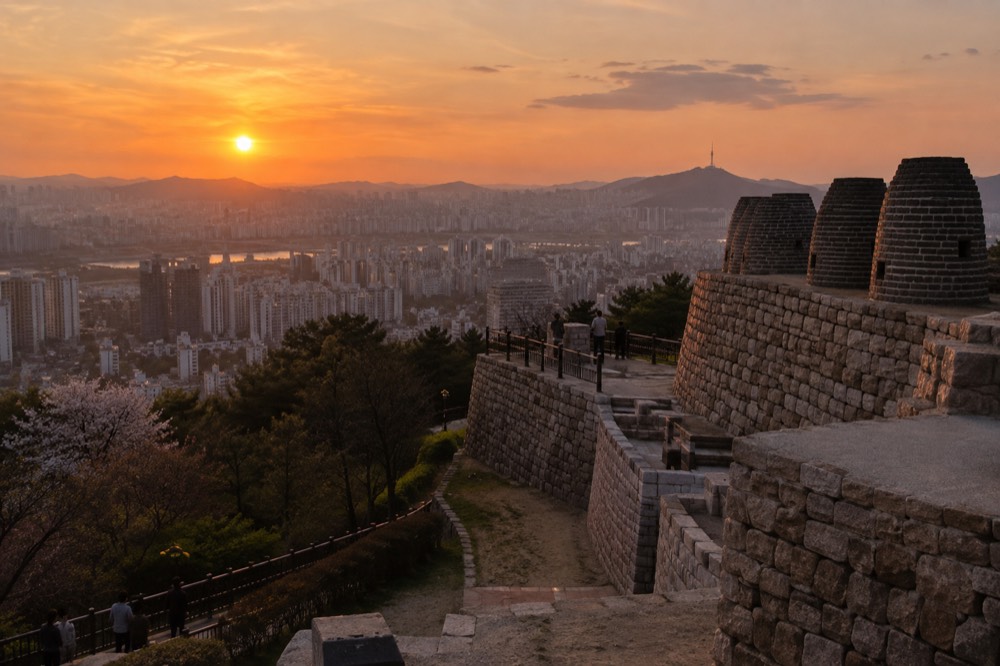
The honest comparison is about what the paid deck adds rather than what the free terraces lack. Inside the tower, the view is through glass on enclosed levels, with digital telescopes on the 4F and 5F levels and the roof terrace at 2F, and the operator states that on a clear day you can see up to 50 km, naming Achasan and Ttukseom to the east, Yanghwa Bridge and Ilsan to the west, Gwanaksan to the south and Bukhansan to the north. Outside, the view is open-air and free, but you are standing at the mountain's summit altitude rather than inside the structure built on top of it.
For visitors weighing the two, the question is rarely "is the view better inside" but rather "do I want the enclosed tower experience or the mountain experience". Many do both in one visit: walk the free trails, stand on the free terraces, and only cross the ticket gate if the deck itself matters to them. Others skip the deck entirely and lose nothing of the mountain. The deck's story, its rotating restaurant and its telescopes are covered in the site's guide to things to do at Namsan Tower.
What are the free ways to get up the mountain?
Walking is free, the Namsan Ormi inclined elevator is free, and the cable car company's Myeongdong shuttle bus is free. The paid options are the cable car itself, at KRW 15,000 adult round trip or KRW 12,000 one way, and the Namsan circular buses 01A and 01B, at KRW 1,500 per ride. Private cars cannot drive up at all.
General vehicle access to Namsan has been restricted since 1 May 2005 for ecological protection, and the circular road has been further restricted since August 2021 for tour buses. So every visitor arrives on foot, by shuttle, by cable car or by one of the two circular buses, and the free-versus-paid question starts at the bottom of the hill, not at the top.
| Way up | Cost | Notes |
|---|---|---|
| Walking trails | Free | Several official trails, including the Sam-soon Steps and the Namsan Public Library route |
| Namsan Ormi inclined elevator | Free | Glass-walled, between Namsan Tunnel 3 and the cable car station; suspended Mondays 09:00 to 14:00 for maintenance |
| Myeongdong shuttle bus | Free | Run by the cable car company between Myeongdong Station and the cable car platform |
| Cable car | KRW 15,000 adult round trip, KRW 12,000 one way | Separate company from the tower; child and concession fares are lower |
| Circular buses 01A and 01B | KRW 1,500 | Board at Chungmuro Station or Dongguk University Station; 01A every 9 minutes, 01B every 14 minutes |
The walking routes deserve a note, because the mountain is easier to climb than its reputation suggests and the city has recently made it easier still. In October 2025 the Seoul Metropolitan Government opened the Namsan Sky Forest Trail, a barrier-free timber deck path built with the Korea Forest Service so that wheelchair users, older visitors and anyone who cannot manage the steep older paths can get up Namsan. It links the Huam-dong Namsan Fitness Center to the Namsan Library, passing named stops including the Sunset Observatory, a glass-fenced photo point, and the Wind View Bridge over a metasequoia stand. As part of the same works the city closed the unofficial side paths that had been worn into the mountain, ecologically restored them, and now directs walkers onto the official trails only.
The city's own sourced walking figures, for readers who want them, cover the approach to the cable car station: 590 m, about 12 minutes, from Myeong-dong Station Exit 4 via Banpo-ro and Namsan Tunnel 3, and 790 m, about 15 minutes, from Hoehyeon Station Exit 1 through the underground shopping centre to the Namsan Ormi. For the summit trails, YTN Seoul Tower's own times run from 30 to 40 minutes depending on the route. Everything else on the mountain should be judged by feel: uphill, shaded, and often longer than it looks.
Is there anything new and free on Namsan?
Yes, and it is days old: from September 2026, Seoul runs a free guided night walk over the summit of Namsan itself, passing N Seoul Tower and the love lock deck and finishing at Palgakjeong. It has two evening departures, at 18:00 and at 20:00, every day, led by a licensed city culture-and-tourism guide.
This is the strongest free-versus-paid story on the mountain, and almost no published guide knows about it yet. The city's walking-tour programme added the Namsan City Wall night course in September 2026, taking its night courses from nine to ten. The route, from the city's own description, starts at the Namsan Sky Forest Trail entrance near the Sowol poetry monument garden, passes the Zelkova Observatory, the Sunset Observatory and the Wellness Garden, then N Seoul Tower and the love lock deck, and finishes at Palgakjeong, deliberately linked to a descent toward Namdaemun Market so walkers can carry on eating there afterwards. The city's media hub announcement carries the full detail.
The programme is free, it is running now, and it is booked in advance through the city's own walking-tour site rather than on the day. The same announcement extended the whole night-tour season from a summer-only window to mid-March through mid-November. For a visitor asking whether Namsan is free, the honest answer now includes a free, city-run, guided evening presence on the summit that did not exist a year ago.
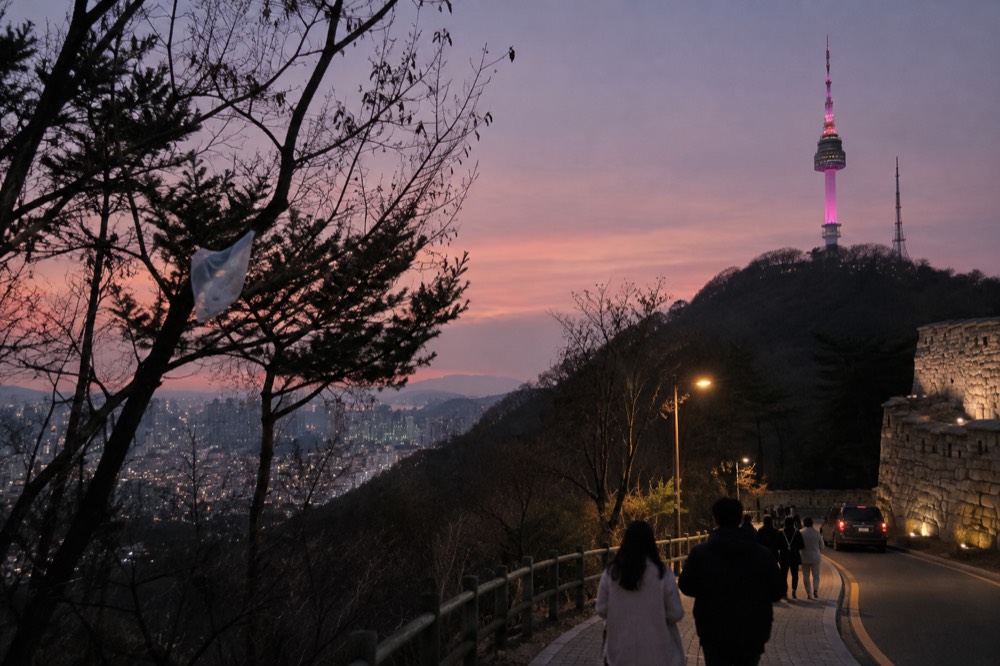
The night walk also settles a quieter question about the love locks: the fact that a city government channel routes an official walk past the love lock deck by name, between the tower and Palgakjeong, is fresh evidence that the locks are neither removed nor off limits. Seoul's own visitor page for the tower still lists the Locks of Love among its attractions. No removal programme has been announced by any operator or city body, and no source says the locks are cleared on a cycle. Visitors report still buying padlocks on site, including branded locks engraved there.
What do visitors get wrong about the free line?
Three things, repeatedly: assuming the ticket includes the cable car, assuming you must buy a ticket to enjoy Namsan at all, and assuming the combined observatory-plus-cable-car product is the tower operator's own. The ticket buys the deck only, the mountain is free, and the combo is a reseller package, not an operator product.
The first misunderstanding is the most expensive. Nothing on either operator's site sells a combined deck-plus-cable-car product: the tower's fee page and the cable car company's fare table are entirely separate, and the cable car is run by a different company from the tower. Combined tickets exist only through third-party resellers. If you buy the observatory ticket alone and then ride the cable car, you pay the cable car company's own fare at its own window, and the two purchases never meet.
The second misunderstanding works in the visitor's favour once it is corrected. Namsan Tower Seoul exists as a site precisely because the free line is so often misread. A visitor who knows the park, the plaza, the terraces, the Ormi elevator and the shuttle bus are all free can plan a full Namsan evening around them and treat the deck ticket as an optional extra rather than the price of admission to the mountain.
The third is subtler. The observatory-plus-cable-car option sold online is convenient, and for many visitors it is a sensible buy, but it is a platform package rather than an official operator product, and it carries the Myeongdong pick-up requirement described earlier. Reviewers also contradict each other on whether the cable car ride it includes is round trip or one way, and that question is genuinely unresolved, so no answer should be assumed. The cable car itself, its history and its current state are covered in the site's guide to the Namsan cable car.
One more boundary worth knowing: pets. The two operators differ because they run different spaces. The tower operator states pets may not be brought inside N Seoul Tower because there is no space to keep them, while YTN Seoul Tower allows leashed pets in its shared plaza area, subject to each store's own rules. So the free plaza is pet-friendly ground and the paid tower interior is not, which is the free-versus-paid boundary expressed one more way, this time in paws.
Common questions about free entry to Namsan Tower
Is It Free To Go Up Namsan Tower?
Going up the mountain is free: the park, the trails, the summit plaza, the terraces, the love locks, the Ormi elevator and the Myeongdong shuttle bus all cost nothing. The only ticketed part is the observation deck inside N Seoul Tower, priced at KRW 29,000 for adults at the gate.
Is the cable car included in the observatory ticket?
No. The tower operator and the cable car company are separate businesses with separate fee pages, and neither sells a combined product. Combined tickets exist only through third-party resellers, and the cable car fare is paid separately at the cable car's own window.
Can you see Seoul from Namsan without a ticket?
Yes. The terraces around the tower base, the summit plaza, the Palgakjeong pavilion area and the walking trails all give open views over the city for free. The paid deck is enclosed, higher inside the tower structure, and equipped with digital telescopes.
Is the Namsan Ormi elevator free?
Yes. The glass-walled inclined elevator between Namsan Tunnel 3 and the cable car station is free of charge, operated by the Seoul Metropolitan Government. It runs 09:00 to 23:00 and is suspended every Monday from 09:00 to 14:00 for maintenance, and also in strong wind or heavy rain.
Do you have to pay to walk the trails on Namsan?
No. All of the official walking trails, including the Sam-soon Steps and the Namsan Public Library route, are free. The city closed the unofficial side paths in its recent trail works and directs walkers onto the official routes, which are also free.
Is there a free way to reach the summit without walking?
Partly. The free Myeongdong shuttle bus takes you from Myeongdong Station to the cable car platform, and the free Namsan Ormi elevator lifts you from street level to the cable car station. From there to the summit, the paid options are the cable car or the KRW 1,500 circular bus, or you walk.