Namsan Tower Height: How Tall N Seoul Tower Really Is
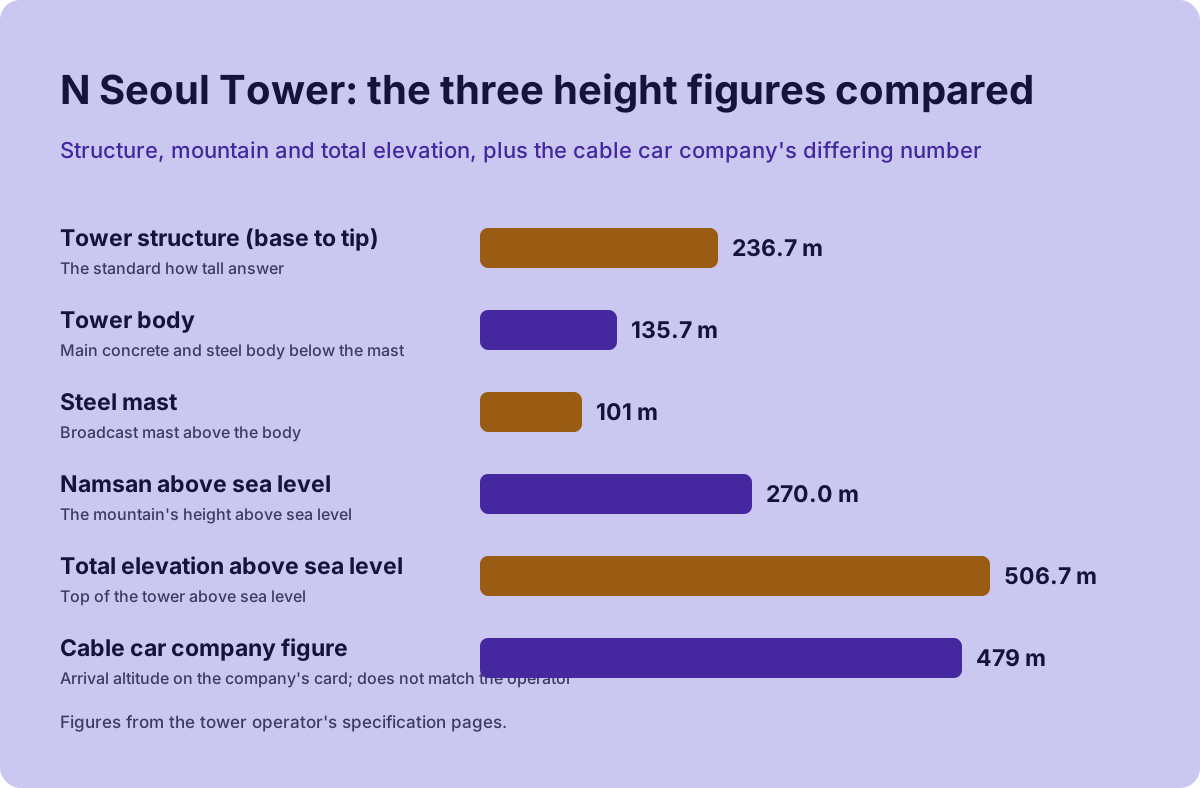
N Seoul Tower is 236.7 metres tall as a structure, standing on Namsan, a mountain that reaches 270 metres, which puts the observatory complex at a total elevation of 506.7 metres above sea level. Three different numbers circulate for this tower and most guides mix them up.
Short answer
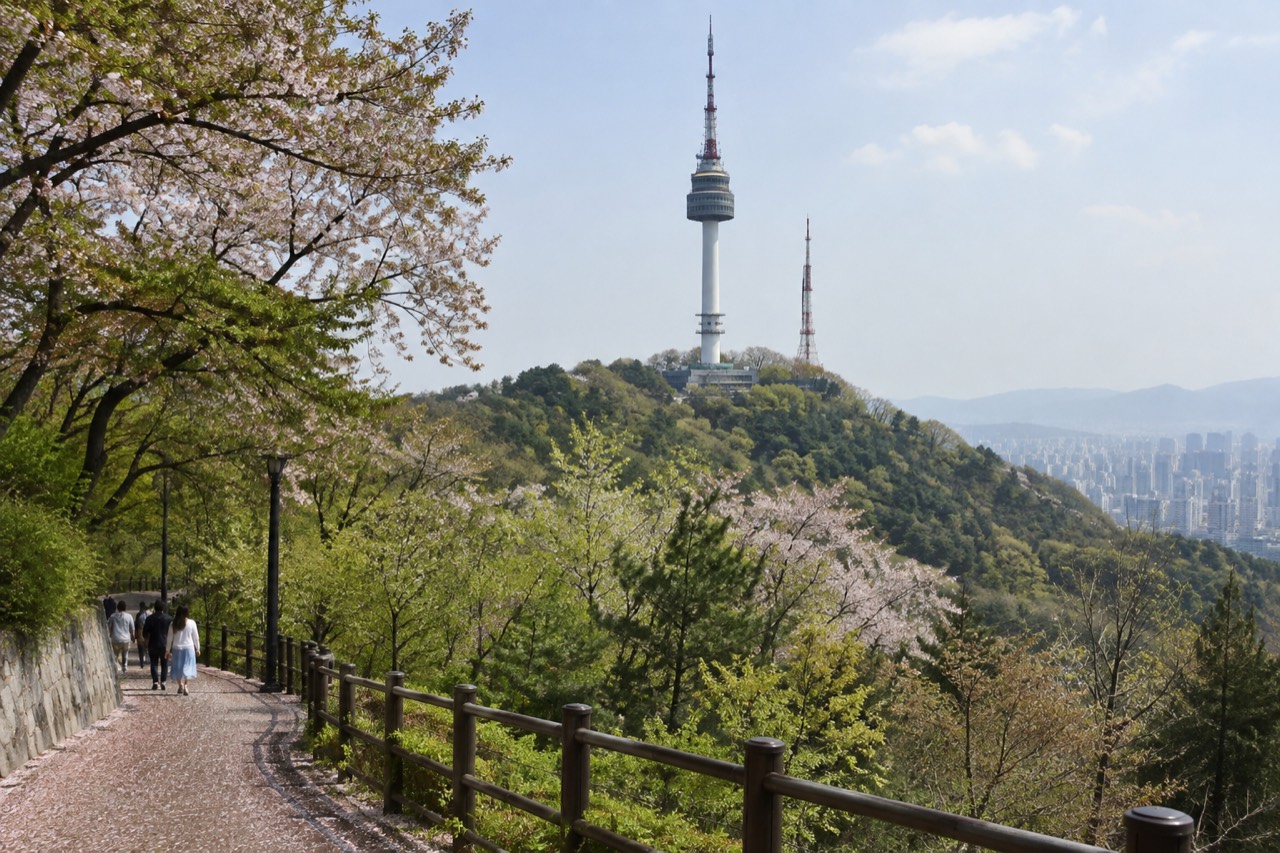
N Seoul Tower stands 236.7 metres (777 ft) tall as a structure: a 135.7 metre tower body plus a 101 metre steel mast. It sits on Namsan, which rises 270 metres, so the tower's total elevation is 506.7 metres above sea level. It was built as a broadcast tower, completed in 1975, and opened to the public in October 1980.
N Seoul Tower is 236.7 metres tall as a structure, made up of a 135.7 metre tower body and a 101 metre steel mast. That is the tower itself. The mountain it stands on, Namsan, rises 270 metres above sea level, which is why the tower's total elevation is quoted as 506.7 metres. Most of the confusion around the Namsan tower height comes from these three numbers being used interchangeably, when each one describes something different.
The tower was not built as a tourist attraction at all. It went up between 1969 and 1975 as a television and radio transmission mast for the capital, and it only opened to the paying public in October 1980. The name most visitors use today, N Seoul Tower, is younger than many of the people visiting: the tower was renamed in December 2005 after a full renovation. This guide sets out the verified figures, the build history, and why a cable car company's marketing number keeps muddying the picture.
How tall is N Seoul Tower?
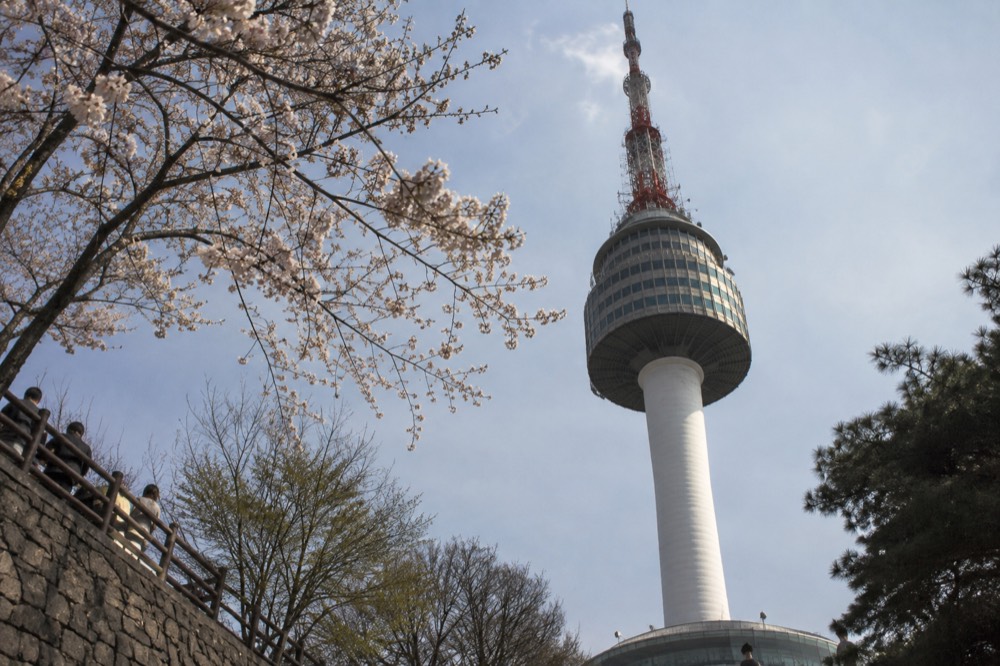
N Seoul Tower's structure is 236.7 metres, or 777 feet, tall. The operator breaks that down into a 135.7 metre tower body and a 101 metre steel mast, on a site area of 8,456 square metres with a building footprint of 3,986 square metres. The tower's total elevation above sea level, counting the mountain, is 506.7 metres, or 1,662 feet.
Those figures come straight from the tower operator's own specification pages, which publish them in both Korean and English, and they are the only height numbers for the tower that should be trusted. The 236.7 metre figure is the one that answers the plain question "how tall is the tower", in the same way you would measure any building or mast from its base to its tip. The 506.7 metre figure answers a different question: how high the top of the tower sits above sea level, once you include the 270 metres of mountain underneath it.
The distinction matters in practice. When people compare N Seoul Tower with other towers around the world, they usually compare structure heights, and on that measure this is a mid-sized tower. When people talk about the view, the elevation figure matters more, because the observatory sits near the top of a structure that is already perched on the highest point in central Seoul. The mountain is doing a lot of the work.
| Measurement | Figure | What it measures |
|---|---|---|
| Tower structure | 236.7 m / 777 ft | Base to tip, the standard "how tall" answer |
| Tower body | 135.7 m / 445 ft | The main concrete and steel body below the mast |
| Steel mast | 101 m / 332 ft | The broadcast mast above the body |
| Namsan | 270.0 m / 885 ft | The mountain's height above sea level |
| Total elevation | 506.7 m / 1,662 ft | Top of the tower above sea level |
Why do three different height numbers exist for this tower?
Three numbers circulate because they measure three different things: 236.7 metres for the structure, 506.7 metres for total elevation above sea level, and a 479 metre figure the cable car company prints on its own marketing card. The operator's numbers are the verified ones. The 479 metre figure is the cable car company's own number for the tower and does not match the operator's figures.
The 479 metre number deserves its own explanation, because it trips up more guides than any other figure on this mountain. The cable car company's homepage displays an "arrival altitude" of 479 metres above sea level on its N Seoul Tower card. It is the company's own published number, and it does not agree with the tower operator's 506.7 metre total elevation. Some third-party pages have repeated the 479 metre figure as if it were the tower's height or the cable car's upper station altitude, and neither use is supported. The honest position is simple: the operator says 506.7 metres, the cable car company says 479 metres on one card, and no source reconciles the two.
This is a mountain with three separate operators publishing "official" information, and they do not always agree. CJ Foodville runs N Seoul Tower itself, the observatory and the restaurants. YTN Seoul Tower owns the tower building and the plaza at its base. The Namsan Cable Car is a third, independent company. When a height figure matters to you, take it from the organisation that owns the thing being measured, which for the tower's height means the tower operator's own specification page.
If reading about heights has you planning the trip, the observatory ticket is the product that gets you up inside the structure. The standard option is from US$15.25 per adult, a fast-track version exists at US$40.85, and there is a package combining the observatory with a cable car ride at US$28.05. Each one buys the observation deck, and the differences between them are about how you arrive and how you enter.
How tall is Namsan, the mountain under the tower?
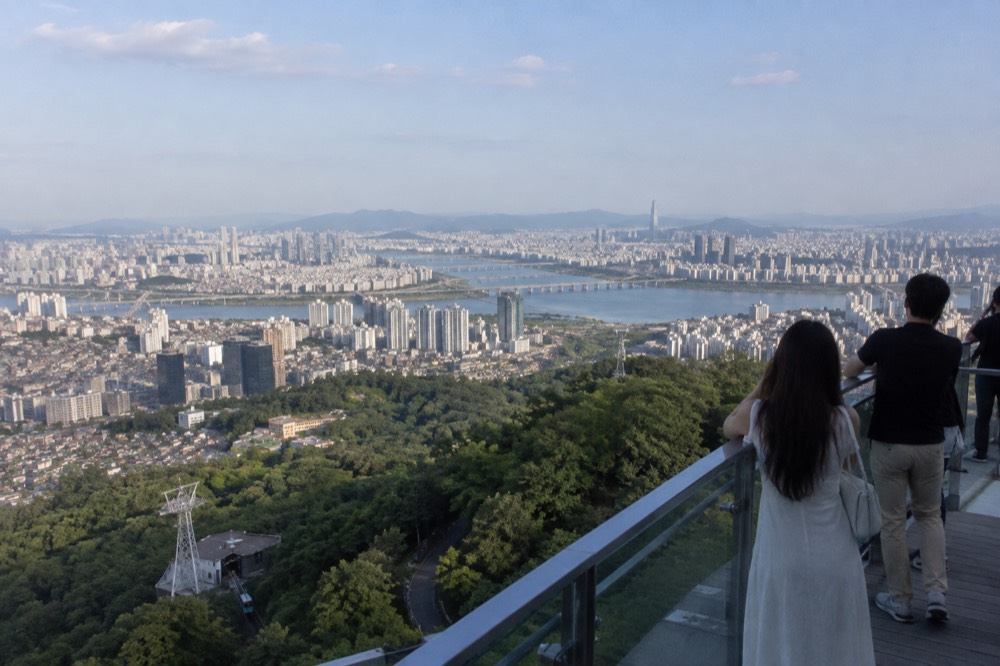
Namsan rises 270.0 metres, or 885 feet, above sea level, and the tower is built at the mountain's high point. Namsan is the largest civic park in Seoul, divided into four districts: Jangchung, Yejang, Hoehyeon and Hannam. The mountain, the park and the summit plaza around the tower base are all free to enter.
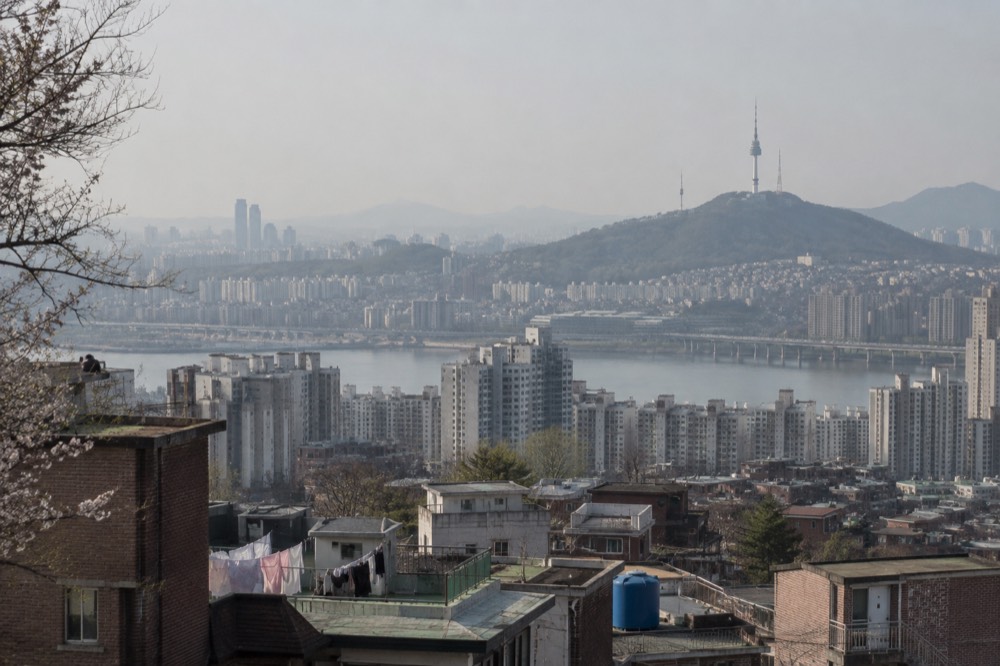
The mountain is the reason the tower feels so dominant on the skyline. A 236.7 metre structure on flat ground would be an ordinary tall building in a city like Seoul. The same structure on a 270 metre hill in the middle of the city, with nothing else of that height nearby, becomes a landmark visible from almost everywhere in central Seoul. The mountain also explains why so much of what visitors enjoy at Namsan costs nothing: the park, the trails, the summit plaza, the terraces around the tower base and the love locks are all free, and only the observation deck inside the tower needs a ticket. Our guide to walking up through Namsan Park covers the free side of the mountain in detail.
Namsan's slopes have changed recently in ways most published guides predate. In October 2025 the Seoul Metropolitan Government opened the Namsan Sky Forest Trail, a barrier-free timber deck path linking the Huam-dong Namsan Fitness Center to the Namsan Library, built so wheelchair users and older visitors can reach the upper mountain. The city closed and ecologically restored the unofficial side paths that had been worn into the slopes, and now directs walkers onto official trails only. The mountain is the same height it always was, but the way up it is more managed than it was a few years ago.
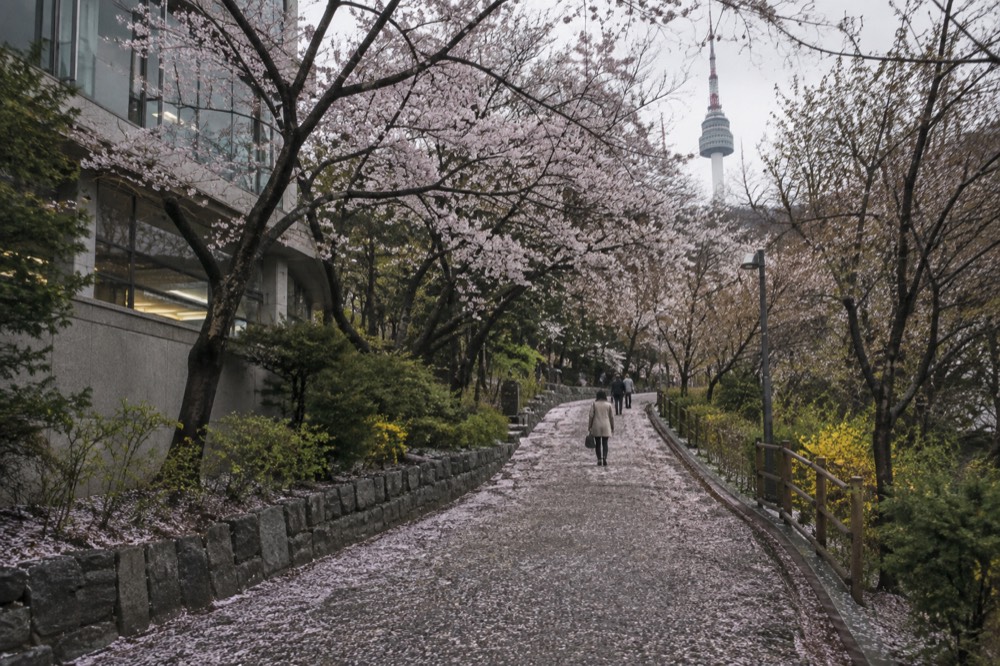
When was N Seoul Tower built?
Construction of the tower's steel mast finished in October 1971, and TV antenna installation completed the following month. MBC-TV began transmitting in April 1972 and KBS-TV in August 1972. The observatory was completed in July 1975, and the tower opened to the public in October 1980.
The build was a broadcast infrastructure project, not a tourism one. South Korea's broadcasters needed a single tall transmission point that could serve the capital, and Namsan's summit was the obvious site. The mast went up first, in 1971, and the transmission equipment followed in 1972. The observatory, the part that visitors now pay to enter, was not finished until July 1975, and even then the tower did not open to the public for another five years.
| Date | Event |
|---|---|
| October 1971 | Steel mast completed |
| November 1971 | TV antenna installation completed |
| April 1972 | MBC-TV transmission begins |
| August 1972 | KBS-TV transmission begins |
| July 1975 | Observatory completed |
| October 1980 | Tower opens to the public |
| February 1989 | Joins the World Federation of Great Towers |
| April 2000 | YTN acquires the tower |
The gap between the observatory's completion in 1975 and the public opening in 1980 is worth noticing, because it tells you the tower's tourism role was an afterthought. The structure existed to send television signals, and the observation levels were a bonus built into the top of a working broadcast mast. That origin still shapes the building today: the tower remains a working broadcast and communications tower, and one reason it looms so large in the city's imagination is that it is infrastructure the whole city can see.
The early milestones the operator records after opening include the ten millionth observatory visitor in May 1990 and the twenty millionth in April 2001. SBS-TV added its transmission in November 1991. In April 2000 the broadcaster YTN acquired the tower, which is why the tower building and the plaza at its base are run today by YTN Seoul Tower while the observatory and restaurants are operated by CJ Foodville under the name N Seoul Tower.
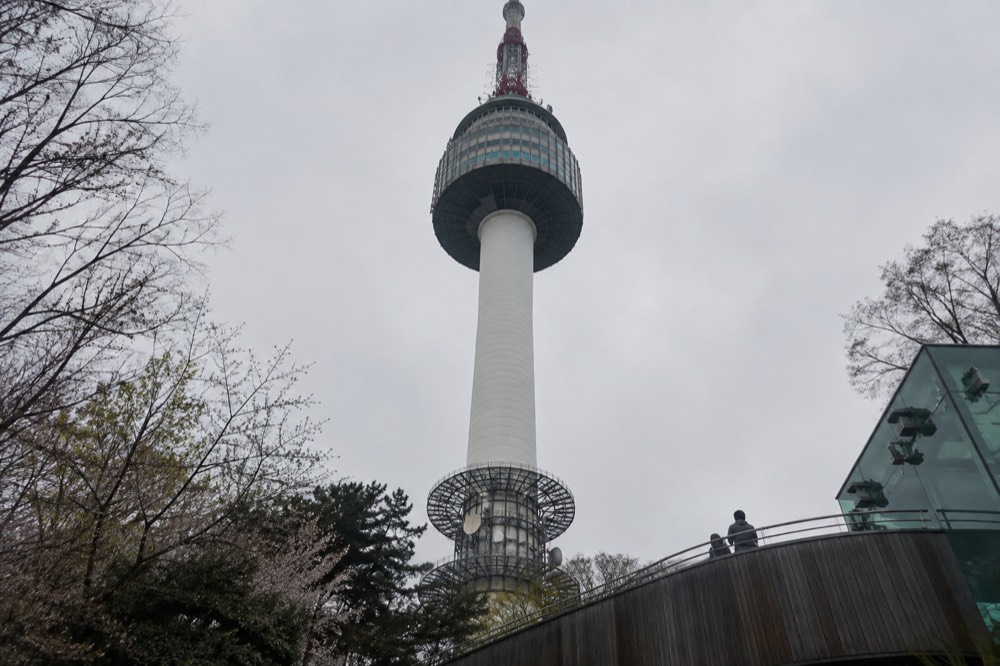
What happened in the 2005 renovation and rebrand?
A renovation contract was signed in April 2005, the full renovation ran from April to November 2005, and the tower was renamed "N Seoul Tower" in December 2005. In January 2011 the tower body's lighting began signalling Seoul's fine-dust level, and the observatory floors were renewed in April 2011.
The 2005 works transformed a 25-year-old broadcast tower into a modern visitor attraction. The renovation rebuilt the observatory levels and the commercial floors, and the rebrand that followed gave the tower the name visitors use today. Before December 2005 the structure was generally known as Seoul Tower or Namsan Tower, and those older names still circulate, which is why so many people ask whether Seoul Tower and Namsan Tower are the same thing. They are, and our piece on Seoul Tower and Namsan Tower being the same untangles the naming history.
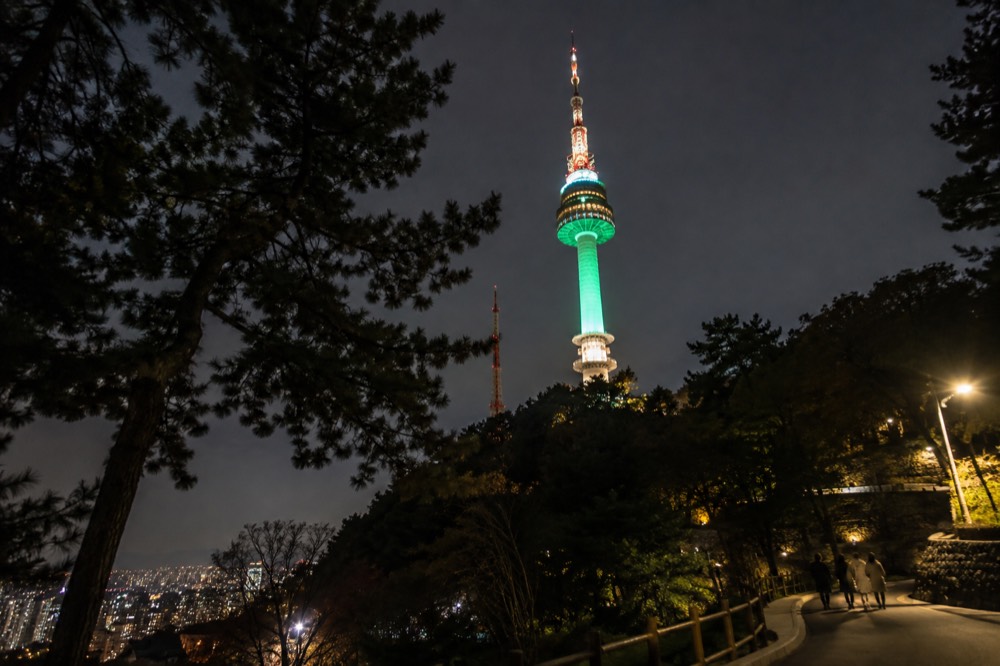
The lighting system installed in that era became one of the tower's signatures. Since January 2011 the tower body's lighting colour has signalled Seoul's fine-dust level, a public-information function no other tower in the city performs. The tower is also used for one-off commemorative light-ups requested by outside bodies: the Korean and Japanese foreign ministries staged a commemorative lighting for the sixtieth anniversary of their diplomatic relations. No official source publishes a switch-on time for the nightly lighting, so treat any exact timing you read elsewhere with caution; the honest statement is that the tower is lit after dark.
The tower's later recognition has been cultural as much as structural. It was named a Korea Tourism Star by the Ministry of Culture, Sports and Tourism in December 2015 and designated a Seoul Future Heritage in December 2018. And in 2025 the tower reached an audience no plaque anticipated: Netflix's own locations guide for the film KPop Demon Hunters gives the tower its own section, describing a climax staged on the hill of Namsan, with the director quoted calling the tower "a beacon at the heart of the city, summoning everybody."
How does the height affect the view from the observatory?
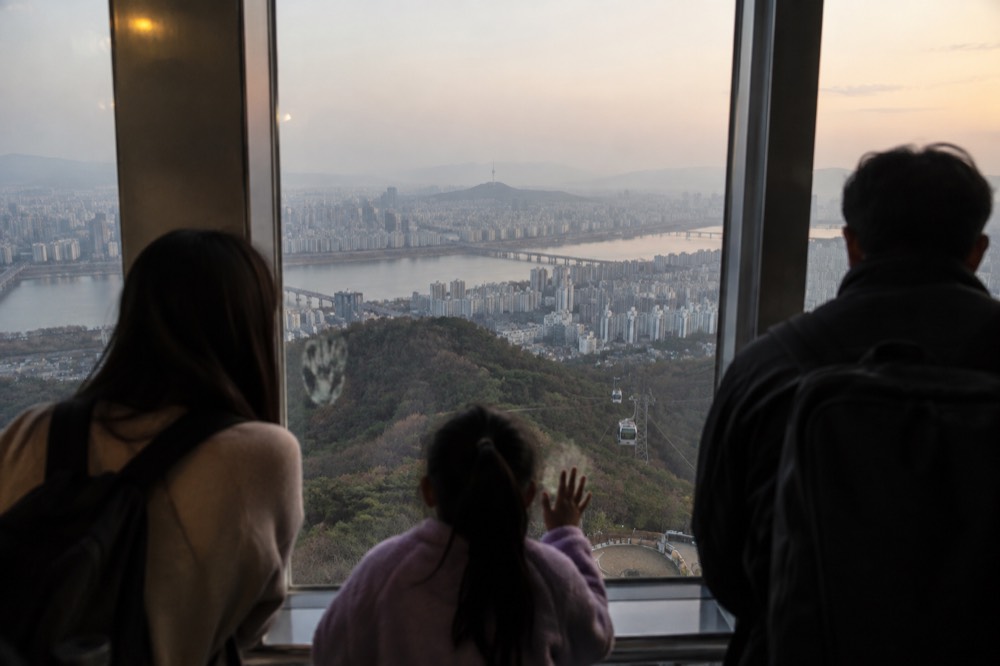
The operator states that on a clear day the observatory's view extends up to 50 kilometres, naming Achasan and Ttukseom to the east, Yanghwa Bridge, Nanjido and Ilsan to the west, Gwanaksan and the Seoul Arts Center to the south, and Bukhansan and Cheonggyecheon to the north. The observatory closes at 22:30 on weekdays and 23:00 on weekends and public holidays.
Height alone does not guarantee a view; clarity does. The total elevation of 506.7 metres above sea level puts the observation levels above almost everything in central Seoul, but haze is the variable that decides what you actually see. On a clear day the operator's 50 kilometre claim runs from Bukhansan in the north to Gwanaksan in the south, taking in the Han River crossings and the western districts. On a hazy day the same deck shows a soft grey horizon, which is why the cable car company's own guidance recommends sunset into night as the time to ride: the city lights read better than a washed-out daytime skyline.
The deck itself is larger than most visitors expect. The observatory's total floor area is 2,403 square metres, spread across observation levels of 450, 460, 466 and 271 square metres, of which 149 square metres rotates. Digital telescopes with optical zoom up to 36x sit on the Tower 2F roof terrace, Tower 4F and Tower 5F, letting visitors pull distant landmarks into focus. The rotating element belongs to n.Grill, the French restaurant on Tower 7F, where one full rotation takes 1 hour 40 minutes.
The observatory ticket is the one paid product that puts you inside all of this. If the deck is the reason you are reading about heights, the N Seoul Tower Observatory Ticket is the standard option, from US$15.25 per adult, rated 4.6 across 34,365 reviews.
How strong is a tower that tall?
The tower is rated safe in winds up to 56 metres per second, was safety certified by an international body on 21 May 1973, and is inspected at least annually, with a recorded check in January 2005. The total floor area of the tower building is 15,378 square metres on a site of 8,456 square metres.
A 236.7 metre mast on an exposed summit has to be engineered for weather, and the operator publishes the numbers. The 56 metres per second wind rating is the headline figure: that is a wind speed well beyond anything Seoul's climate routinely produces, and the tower has stood through more than five decades of typhoon seasons since the mast was completed in 1971. The international safety certification in May 1973 came while the structure was still a pure broadcast facility, two years before the observatory was finished.
The building statistics round out the picture of what stands on the summit. The footprint of 3,986 square metres on an 8,456 square metre site means the tower occupies less than half the land it sits on, leaving room for the plaza levels that ring the base. Those plaza floors, run by YTN Seoul Tower, hold a full retail directory open to anyone: Starbucks, GS25, bhc Chicken, Gong Cha and more on Plaza 1F and 2F, all reachable without an observatory ticket.
| Specification | Figure |
|---|---|
| Wind safety rating | 56 m per second |
| International safety certification | 21 May 1973 |
| Inspection schedule | At least annually |
| Site area | 8,456 m² |
| Building footprint | 3,986 m² |
| Total floor area | 15,378 m² |
| Observatory floor area | 2,403 m² |
| Digital telescope zoom | Up to 36x |
| n.Grill full rotation | 1 hour 40 minutes |
Is the Namsan tower height the same as other Seoul towers?
No. N Seoul Tower's 236.7 metre structure is much shorter than Seoul's tallest towers, but its total elevation of 506.7 metres above sea level comes from standing on a 270 metre mountain. Comparisons usually confuse structure height with elevation, which is also why people ask whether Seoul Sky and Seoul Tower are the same attraction. They are not.
Seoul Sky is the observation deck in the Lotte World Tower in Jamsil, a different building in a different part of the city, and the comparison between the two decks is a genuine traveller's question rather than a trivia point. The two attractions offer very different experiences: one is a modern supertall skyscraper deck, the other is a broadcast tower on a mountain in the middle of the city. Our comparison of Lotte Tower versus N Seoul Tower works through the trade-offs, and the short version is that the Namsan experience is as much about the mountain, the walk or cable car up, and the free summit plaza as it is about the deck itself.
What N Seoul Tower has that no taller building can copy is position. The mountain puts the tower at the centre of the city's field of view, visible from the Han River, from the palaces, from countless streets in between. The structure's height makes it visible; the mountain's height makes it unavoidable. That combination, not raw metres, is why the tower became the city's default landmark, and why a film like KPop Demon Hunters staged its climax on the hill of Namsan rather than on any of the taller buildings in the same skyline.
Planning a visit around the height and the view
The observatory opens at 10:00 and closes at 22:30 on weekdays and 23:00 on weekends and public holidays, with last admission 30 minutes before closing. The tower is open 365 days a year. The cable car runs 10:00 to 23:00 daily, and the Namsan Ormi inclined elevator is free, running 09:00 to 23:00 except Monday mornings for maintenance.
Getting up the mountain is the part of the trip the height figure really describes. Private cars have been barred from Namsan since 1 May 2005, so everyone arrives on foot, by cable car, by the free Ormi elevator, or on the 01A and 01B circular shuttle buses from Chungmuro or Dongguk University stations. The cable car, a separate company's product, costs KRW 15,000 adult round trip or KRW 12,000 one way at the gate. The observatory ticket at the tower's own booth is KRW 29,000 for adults and KRW 23,000 for children and seniors. Welfare-card holders get 30% off admission, and grades 1 to 3 also cover one companion. Online, the same deck is bookable from US$15.25 per adult. Both prices are stated here as themselves; the choice between them is yours.
If you are weighing the bundle, the observatory-plus-cable-car package at US$28.05 covers the deck and a cable car ride together, with one catch worth knowing in advance: it requires collecting a physical ticket at a partner shop in Myeongdong first, and collection closes at 18:00.
For visitors who want the fast-track version of the deck ticket at US$40.85, one honest note: it skips the ticket counter, which is all any ticket option can promise. A buyer of it reported no visible fast-track lane beyond that, so treat it as a convenience purchase rather than a queue guarantee. Riders still queue for the cable car whatever ticket they hold.
The height also shapes the timing question. Evenings are the busy window at both the tower and the cable car, along with weekends and public holidays, while weekday visits and the early or late ends of the day are quieter. From September 2026 there is a new reason the summit has a scheduled evening crowd: Seoul's free guided night walk now passes over the summit, starting at the Namsan Sky Forest Trail entrance, passing N Seoul Tower and the love lock deck, and finishing at Palgakjeong, with departures at 18:00 and 20:00. It is free, city-run, and bookable through the city's own walking tour site, and it is a way to experience the mountain's height on foot without paying for the deck at all.
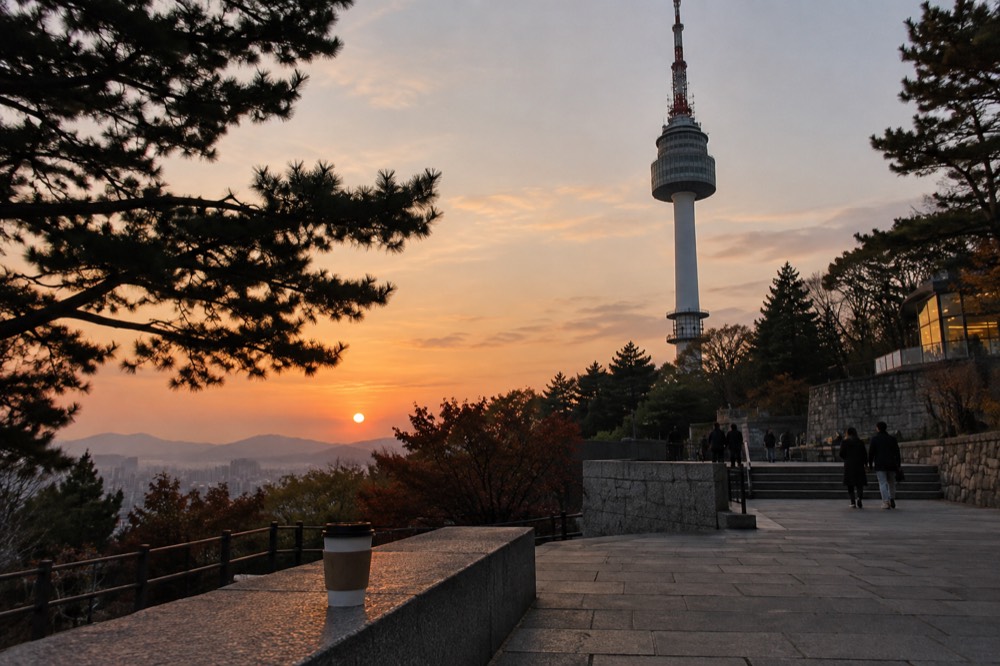
Whether you buy the deck ticket or enjoy the free summit, the numbers in this guide come from the operators' own pages. Namsan Tower Seoul keeps them current so the height you read here is the height you will find on the mountain. The tower's own specification pages publish the full breakdown if you want the primary source, and the cable car company's fare and hours pages cover the ride up.
Common questions about Namsan tower height
How tall is N Seoul Tower in metres and feet?
The tower structure is 236.7 metres, or 777 feet, tall: a 135.7 metre tower body plus a 101 metre steel mast. Counting the 270 metre mountain it stands on, the tower's total elevation is 506.7 metres, or 1,662 feet, above sea level.
Is N Seoul Tower 236 metres or 506 metres?
Both figures are correct, but they measure different things. The 236.7 metre figure is the height of the structure itself, from base to tip. The 506.7 metre figure is the total elevation of the top above sea level, which includes Namsan, the 270 metre mountain underneath the tower.
What is the 479 metre figure sometimes quoted for the tower?
The Namsan cable car company prints an "arrival altitude" of 479 metres above sea level on its own N Seoul Tower marketing card. It is the company's own number and it does not match the tower operator's 506.7 metre total elevation. Use the operator's figures for the tower's height.
How tall is Namsan mountain?
Namsan rises 270.0 metres, or 885 feet, above sea level, and the tower is built at the mountain's high point. Namsan is the largest civic park in Seoul, divided into the Jangchung, Yejang, Hoehyeon and Hannam districts, and the park itself is free to enter.
When was N Seoul Tower built and opened?
The steel mast was completed in October 1971, TV transmission began in 1972, and the observatory was completed in July 1975. The tower opened to the public in October 1980. It was renamed N Seoul Tower in December 2005 after a full renovation that ran from April to November 2005.
How far can you see from the top of N Seoul Tower?
The operator states that on a clear day the view extends up to 50 kilometres, reaching Achasan and Ttukseom to the east, Yanghwa Bridge, Nanjido and Ilsan to the west, Gwanaksan and the Seoul Arts Center to the south, and Bukhansan and Cheonggyecheon to the north. Haze reduces that range considerably.