Do They Remove The Locks At Namsan Tower?
No removal programme for the Namsan love locks has been announced. Here is what is actually verified about the locks, what is free around them, and how to plan a visit.
Do They Remove The Locks At Namsan Tower?
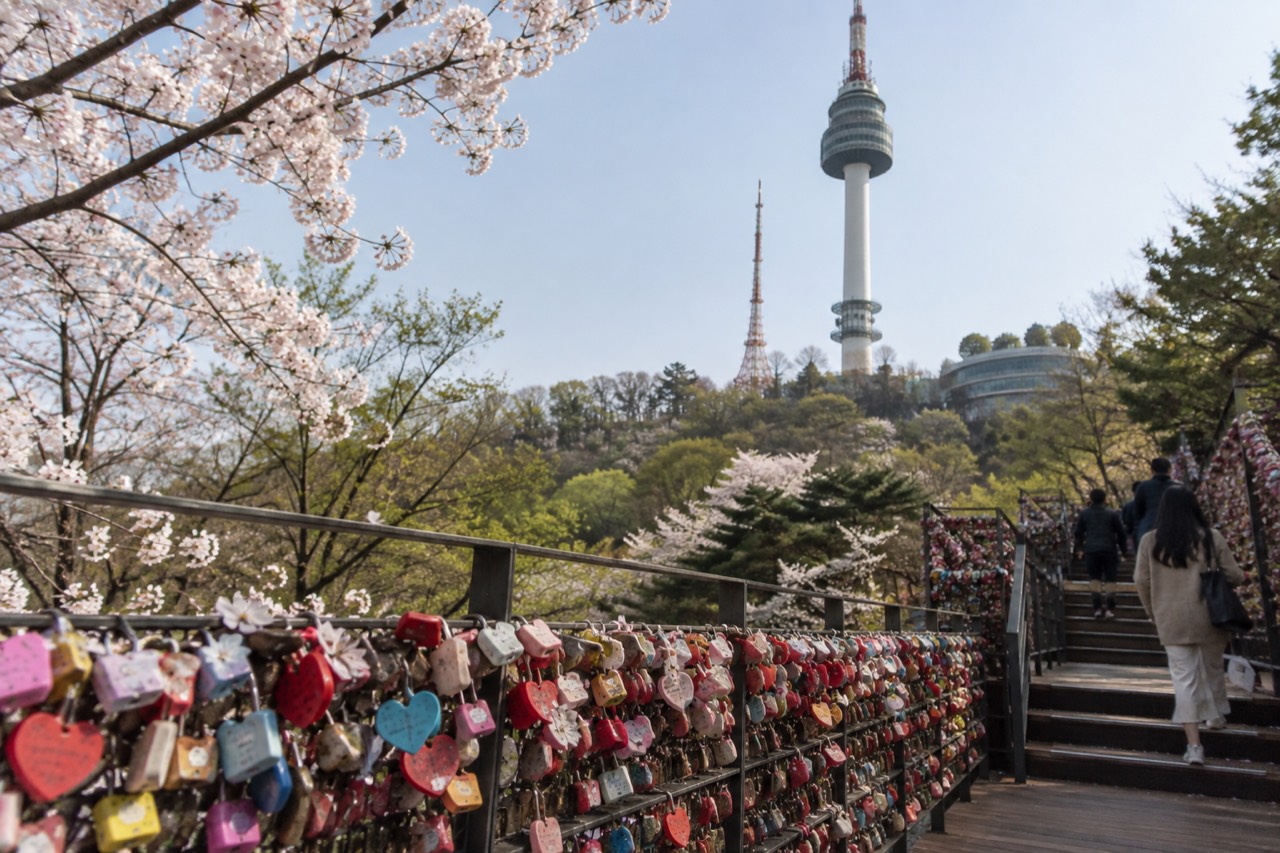
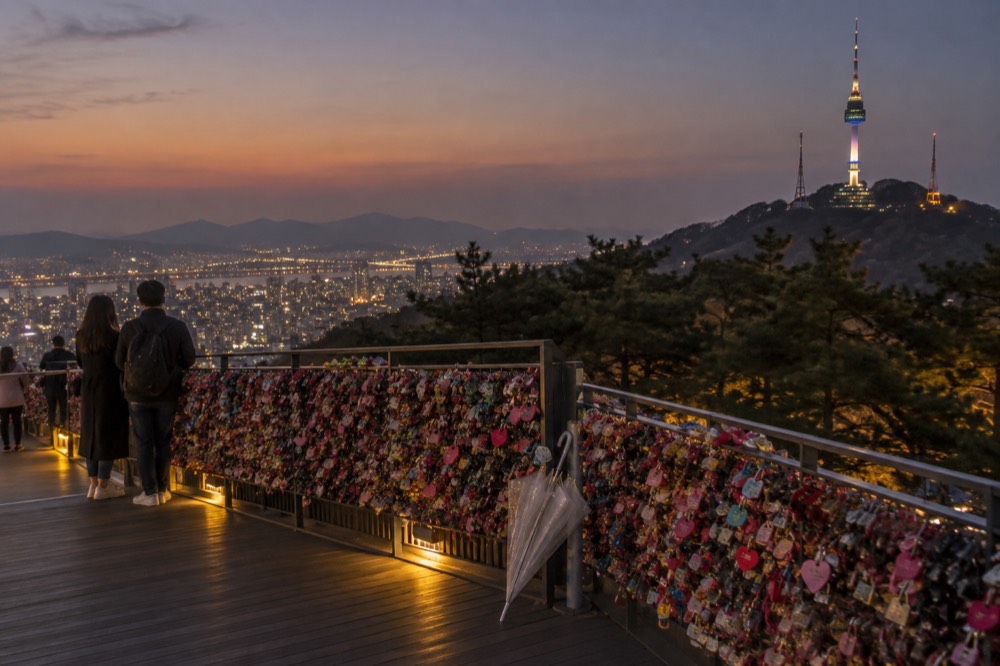
No removal programme has been announced. Neither the tower operator, YTN Seoul Tower nor the Seoul Metropolitan Government has published any notice of a periodic clear-out, a scheduled cutting, a weight programme or a recycling scheme for the locks, and no source says the practice has stopped. The locks remain on the summit, and the city itself still promotes them.
That is the short answer, and it is worth being precise about why it can be given with confidence. No official removal notice appears on the operator's notice boards, and Seoul city still promotes the locks, YTN Seoul Tower's site, Seoul city channels and news coverage, looking specifically for any statement about restricting, ending or clearing the locks. Neither read found one. Neither read found a source claiming the opposite either, which matters just as much: the honest position is that no removal programme has been announced, and no source says the locks are cleared on a cycle. Anything more definite than that, in either direction, is someone guessing.
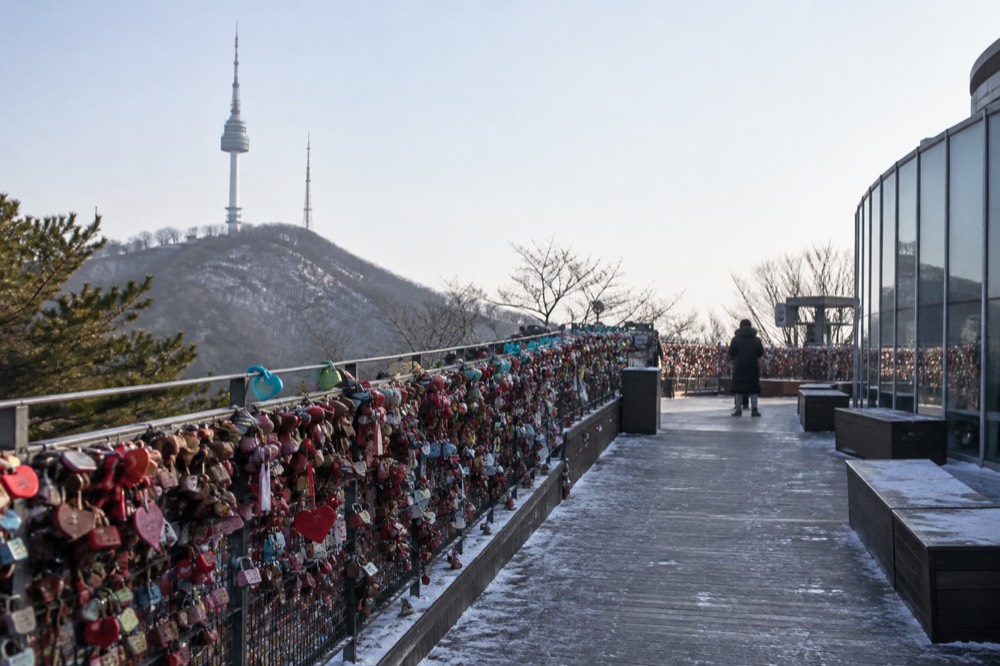
The strongest evidence is fresher than most published guides. In September 2026 Seoul launched a free guided night walk over the summit of Namsan, and the city's own description of the route names the love lock deck, in Korean, as a stop between N Seoul Tower and the Palgakjeong pavilion. A city government channel putting the locks on an official, currently running tour route settles the practical question: they are neither removed nor off limits. Seoul's own visitor page for the tower likewise still lists the Locks of Love among the attraction's highlights.
Stories claiming the locks were cut down do circulate on social media. The locks themselves are real, and Seoul's city government promotes them today, because the claims could not be verified in either direction. What can be said, and said plainly, is what the primary sources show: the locks are present, the practice continues, and the city promotes it. For everything about the ritual itself, the terrace culture and the history visitors assume, the dedicated N Seoul Tower love locks guide goes deeper than this page needs to.
If the locks are part of why you are climbing Namsan, the observatory deck above them is the one paid thing on the summit, and it can be booked ahead: Check availability. The locks themselves, like everything outside the tower, cost nothing.
Is there a structural problem with all that metal?
No operator or city source states one. The question gets asked because the terraces carry a dense, visible mass of padlocks, but no verified figure exists for how many locks there are, what they weigh or when the practice began, and no official body has published a safety or weight assessment of them. The absence of a removal programme is the only confirmed fact on the subject.
This is where a lot of travel content goes wrong, so it is worth slowing down. Writers facing a wall of metal often reach for a number: a total weight, a lock count, a start date, a periodic clear-out that "must" happen. None of those figures is verified for Namsan. The tower operator does not publish them, YTN Seoul Tower does not publish them, and the city does not publish them. A page that states a lock count or a tonnage is inventing it, and a page that describes a scheduled cutting is describing something no official source has ever announced.
What the official record does contain is structural information about the tower itself, which is a different subject. The tower structure stands 236.7 m tall on Namsan, which rises to 270.0 m, giving the summit its total elevation of 506.7 m above sea level, figures published by the operator on its own specification pages. Those numbers describe the building, not the fences around its base. The observatory opened to the public in October 1980, and the tower was renamed N Seoul Tower in December 2005 after a full renovation. Nothing in the operator's published history connects the locks to any structural intervention.
The practical takeaway for a visitor is straightforward. If you attach a lock this year, no announced process exists that will remove it on a schedule, and no source says otherwise. Whether an individual lock stays attached forever is not something any honest page can promise, because no policy covering it has been published. What can be said is that the terraces are not being stripped, the practice is not being phased out, and the city treats the locks as a living feature of the mountain rather than a problem to be managed.
Where are the locks, and what does reaching them cost?
The locks sit on terraces around the tower base on the summit of Namsan, and reaching them costs nothing. Namsan Park, the summit plaza, the terraces, the love locks, the beacon mound and the Palgakjeong pavilion area are all free and need no ticket. Only the observation deck inside the tower is paid, at KRW 29,000 for an adult at the operator's own booth.
This free-versus-paid boundary is the single most misunderstood thing about Namsan, and it matters to anyone visiting for the locks. The paid product is narrow: the ticket buys the observation deck inside the tower, and nothing else. Seoul's official tourism site answers the question directly, stating that the entrance to Namsan Park is free, and the Seoul Metropolitan Government's own Namsan feature groups the locks, the heart chairs, the photo booths and the Palgakjeong night view together as things to do on the mountain, pricing only the observatory.
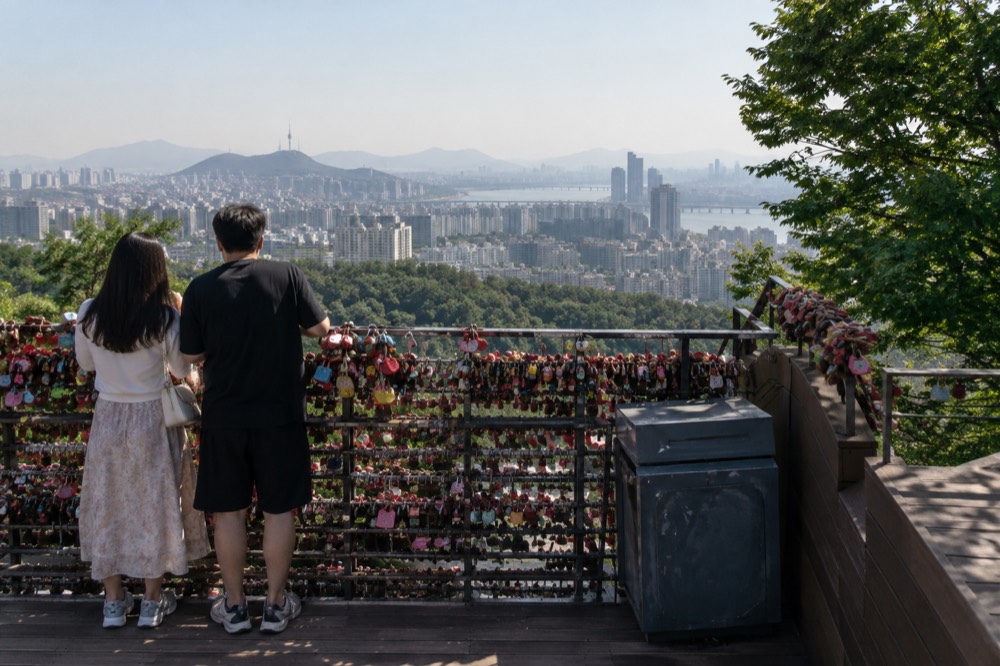
So a visitor can reach the summit, stand at the locks, photograph the view and walk the terraces without spending anything beyond transport. The observatory entrance sits at Plaza 5F, with a second ticket booth at Tower 1F, and every shop, cafe and terrace below and outside that gate is open without a ticket. YTN Seoul Tower's plaza directory lists a full retail floor, including a Starbucks, a GS25, a Gong Cha and several food outlets, all open to anyone on the summit. The operator's own FAQ confirms that The Place Dining on Tower 2F can be used without buying an observatory ticket, which is only possible because the ticket gates the deck and nothing else.
| What | Free or paid | Notes |
|---|---|---|
| Namsan Park and its trails | Free | Confirmed by Seoul's official tourism site |
| Summit plaza and terraces around the tower base | Free | Open without any ticket |
| The love locks | Free | Part of what the city itself promotes on Namsan |
| Palgakjeong pavilion area and beacon mound | Free | The beacon mound is a restored Joseon-era signal station |
| Observation deck inside the tower | Paid | KRW 29,000 adult, KRW 23,000 child or senior, at the operator's booth |
| Cable car, if you ride it | Paid | KRW 15,000 adult round trip, a separate company |
| Circular bus 01A or 01B, if you take it | Paid | KRW 1,500 per ride |
The deck itself is worth separating from the locks, because they are different experiences at different heights. The observatory runs 10:00 to 22:30 on weekdays and 10:00 to 23:00 on weekends and public holidays, with last admission 30 minutes before closing, and on a clear day the operator states you can see up to 50 km, naming Bukhansan to the north and Gwanaksan to the south among the landmarks. The full picture of the deck, its floors and its telescopes is in the N Seoul Tower observatory guide.
Can you still buy and attach a lock in 2026?
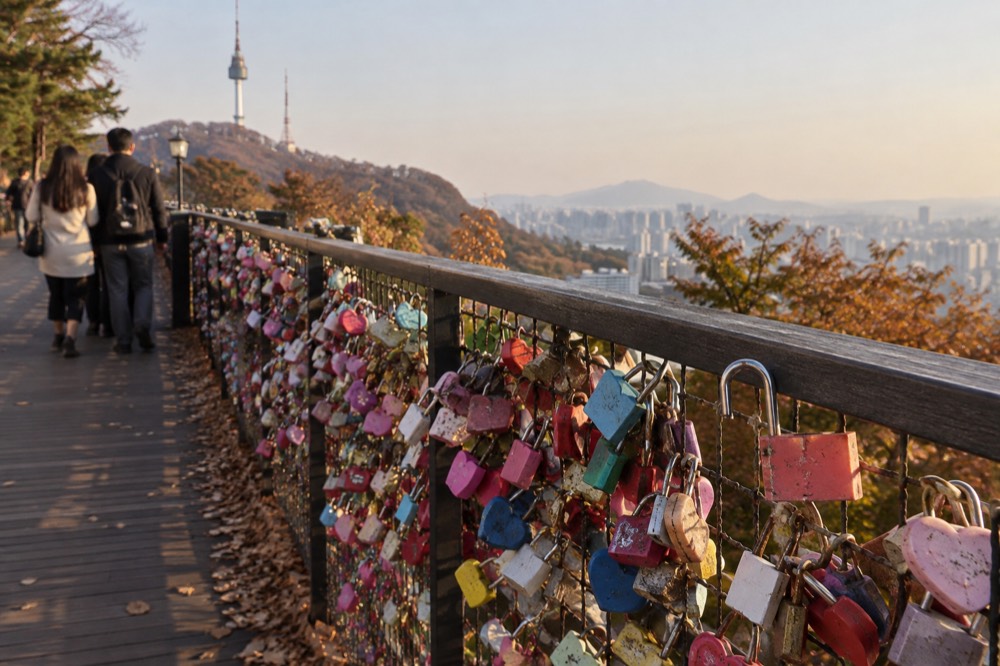
Yes, according to visitors who did exactly that this year. Visitor accounts from 2026 describe buying padlocks on site, including branded locks engraved on the spot, and attaching them to the terraces. What the locks cost and exactly where they are sold is not verified, so this page does not state either, but the ritual itself is current and active.
The distinction matters. There is a difference between a practice that exists and a practice that has a published price list, and the locks fall on the first side of that line. What visitors report, in accounts dated to 2026, is the full ritual: choosing a lock, having it engraved there, clipping it on. Nothing in any official source restricts the practice, and as covered above, the city's new night walk routes people straight past the lock deck as a named stop.
A few practical notes sit around the ritual. The whole Namsan area is non-smoking under the National Parks Act, with a stated fine of KRW 100,000. Outside food cannot be eaten inside the tower itself; the operator's FAQ directs visitors carrying packed food to the open plaza in front of Palgakjeong. Wheelchairs and strollers can be borrowed by asking at the information desk. None of this touches the locks directly, but it shapes the hour a visitor spends around them.
For readers weighing whether the ritual is still worth doing, the companion piece can you still put locks on the love lock bridge works through the question in full, including what the locks are competing with on the terraces and how the summit has changed around them.
What Seoul's new night walk says about the locks
In September 2026 Seoul added a free guided night walk over the Namsan summit, and its published route passes the love lock deck by name between N Seoul Tower and Palgakjeong. The walk runs daily with departures at 18:00 and 20:00, led by a licensed city culture-and-tourism guide, and is booked in advance through the city's own walking tour site.
This is the freshest fact on the whole subject, and it is worth understanding what it does. Before this month, the freshest official statement about the locks was the city's April Namsan feature and its visitor pages, both of which list them as an active attraction. Now a city government channel has gone further and built the locks into a running, guided, official route. A government does not schedule nightly groups past an attraction it intends to remove.
The route, from the city's own description, starts at the Namsan Sky Forest Trail entrance near the Sowol poetry monument garden, passes the Zelkova Observatory, the Sunset Observatory and the Wellness Garden, then N Seoul Tower and the love lock deck, and finishes at Palgakjeong. The city deliberately tied the finish to a descent toward Namdaemun Market so walkers can carry on eating there afterwards. The night-tour season as a whole was extended at the same time, from a summer-only window to mid-March through mid-November. The city's announcement carries the full detail.
The Sky Forest Trail itself is new too, opened on 25 October 2025, a barrier-free timber deck path built so that wheelchair users and older visitors can get up Namsan. As part of the same works the city closed the unofficial side paths that had been worn into the mountain, restored them ecologically, and now directs walkers onto the official trails only. Anyone heading up expecting to freestyle a route up the hillside will find that option gone, which is worth knowing before you set off.
For the locks specifically, the night walk adds something practical: an evening presence on the summit that did not exist a year ago. Visitors reporting on crowding through 2026 consistently describe weekends, public holidays and evenings as the busy windows at the tower and the cable car, and weekday visits and the early or late ends of the day as the quiet ones. No source anywhere states a wait in clock terms, so this page does not either, but the pattern is consistent across visitor reports and the cable car company's own qualitative advice.
Planning a visit around the locks
Budget for the deck, not the mountain. The locks, terraces and views are free; the observatory starts at US$15.25 per adult through the live listing, or KRW 29,000 at the operator's own booth; the cable car is a separate KRW 15,000 adult round trip; and the circular bus is KRW 1,500. Only the deck ticket needs a decision in advance.
The ticket options sold through the live listing are worth a quick comparison, because they answer different needs. The plain observatory ticket is the from-price option at US$15.25. A fast-track version exists at US$40.85, though it is honest to note what it actually does: it skips the ticket counter, and a buyer of it reported no visible fast-track lane beyond that, so it should not be bought on the expectation of a shorter wait. A package combining the observatory with the cable car sells at US$28.05, and it requires collecting a physical ticket at a partner shop in Myeongdong first, with collection closing at 18:00. Note that this package is a reseller bundle, not an operator product: the tower operator and the cable car company sell separately and publish separate fare tables.
| Option | Price | What to know |
|---|---|---|
| Observatory ticket | From US$15.25 | The from-price option, deck only |
| Fast-track observatory | US$40.85 | Skips the ticket counter; no separate lane is reported |
| Observatory plus cable car | US$28.05 | Physical ticket collected in Myeongdong, collection closes 18:00 |
Getting to the summit is its own subject, and Namsan Tower Seoul covers it in depth across the site. The short version: private cars cannot drive up, as general vehicle access has been restricted since 2005. The cable car runs 10:00 to 23:00 every day, the Namsan Ormi inclined elevator is free, and the circular buses 01A and 01B board at Chungmuro or Dongguk University stations. The full route-by-route breakdown, including the official walking times, is in the how to get to N Seoul Tower guide.
One transport fact belongs on this page because it interacts with the combo option: the cable car company runs a free shuttle between Myeongdong Station and the cable car platform, first departure 12:00 and last 20:30. Anyone holding the combo package needs the Myeongdong pick-up before 18:00, so the shuttle and the pick-up window need to be planned together.
Whichever option fits, the planning order stays the same: decide how you are getting up the mountain, decide whether the deck is worth the ticket to you, and leave the locks themselves as the free, unhurried part of the visit. They are the one thing on the summit that needs no booking, no timing and no spending, and as of this month the city is still walking groups past them every single evening.
Common questions about the Namsan love locks
Do They Remove The Locks At Namsan Tower?
No removal programme has been announced. Neither the tower operator, YTN Seoul Tower nor the Seoul Metropolitan Government has published any notice of a periodic clear-out, a scheduled cutting or a recycling scheme, and no source says the locks are cleared on a cycle. The locks remain on the summit, and the city still promotes them.
Can you still attach a love lock at N Seoul Tower?
Yes. Visitor accounts from 2026 describe buying padlocks on site, including branded locks engraved on the spot, and attaching them. No official source restricts the practice, and Seoul's new night walk routes walkers past the love lock deck by name.
Do the love locks cost anything to see?
No. The locks, the summit plaza, the terraces around the tower base and all of Namsan Park are free. Only the observation deck inside the tower requires a ticket, at KRW 29,000 for an adult at the operator's booth.
Is there a weight or safety limit on the locks?
No verified figure exists for how many locks there are or what they weigh, and no official body has published a safety or weight assessment of the terraces. No operator or city source states a structural problem connected to the locks.
Where exactly are the locks located?
The locks sit on terraces around the tower base on the Namsan summit, on the route between N Seoul Tower and the Palgakjeong pavilion. Their exact level is not verified, and reaching them requires no ticket of any kind.
What is the best time of day to see the locks?
Visitor reports through 2026 consistently describe weekends, public holidays and evenings as the busy windows, and weekday visits and the early or late ends of the day as the quiet ones. The observatory stays open until 22:30 on weekdays and 23:00 on weekends, with last admission 30 minutes before closing.