What Is Myeongdong Famous For?
Myeongdong is famous for cosmetics shopping, street food and its position at the foot of Namsan, where the cable car station sits up the hill behind the district. Here is what to expect.
What Is Myeongdong Famous For?
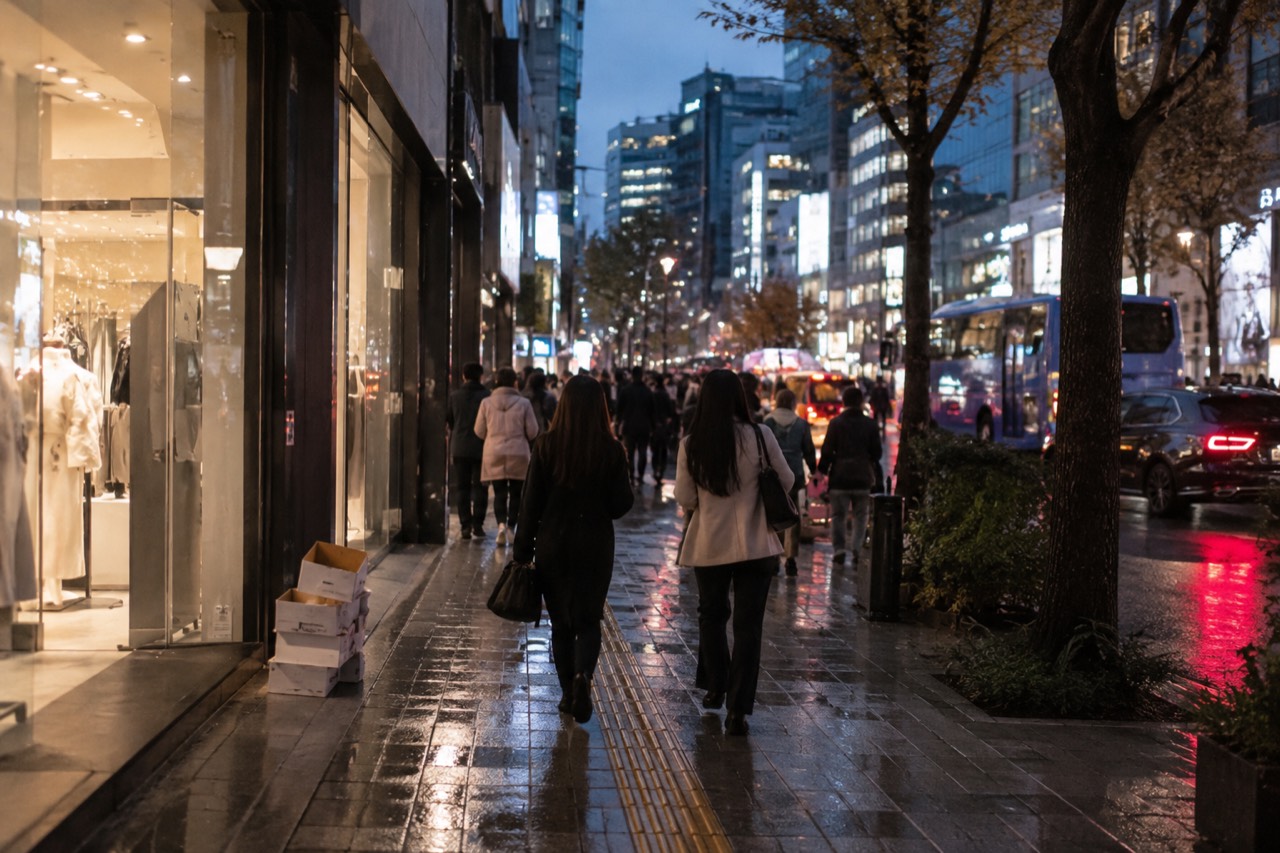
Myeongdong is famous for three things at once: cosmetics shopping, street food and its position at the foot of Namsan. The district is a compact grid of skincare and makeup stores, food stalls and fashion retailers in central Seoul, and the base station of the Namsan cable car sits up the hill behind it, carrying visitors toward N Seoul Tower.
Most first-time visitors encounter Myeongdong as a wall of illuminated shopfronts somewhere between the department stores and the hill. The district sits in Jung-gu, close to Seoul's medieval gate Sungnyemun and to the Seoul City Wall trail that runs over Namsan, and it works as a base camp for the mountain as much as a shopping destination. The two identities feed each other: people come down from the summit into the food stalls, and people finish shopping and decide to ride up.
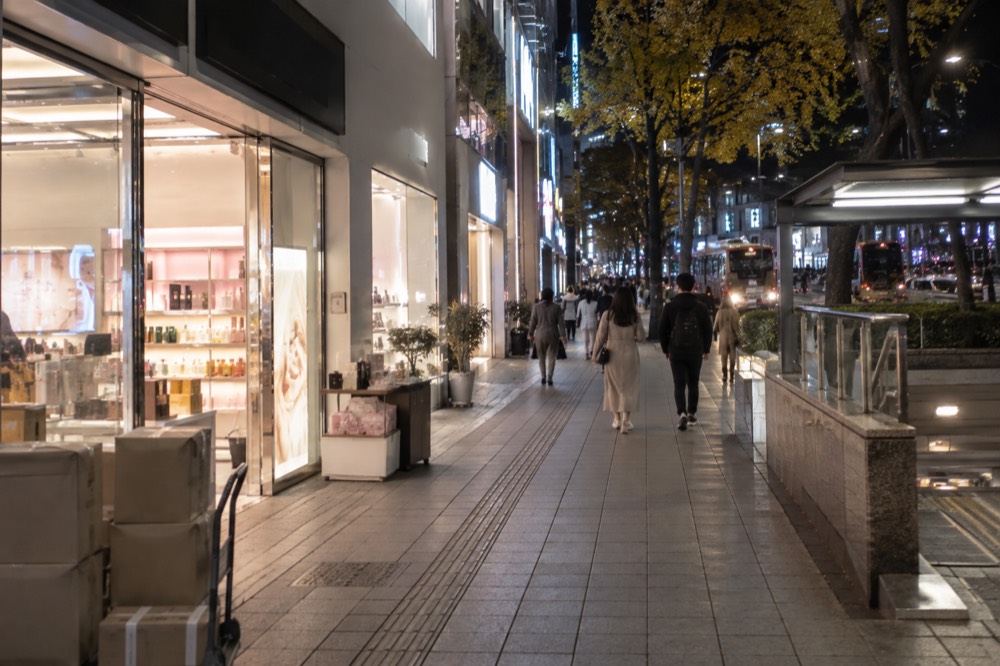
The shopping side is dominated by Korean beauty brands. Skincare and makeup stores stand several deep on the main streets and side lanes, many with staffed counters, sampling tables and multilingual assistants, and the density is what makes the district famous rather than any single shop. In March 2026 Olive Young, Korea's largest health and beauty chain, opened a large Central Myeongdong Town store in the district, adding another flagship to a street that was already saturated with them.
The food side is equally concentrated. In the evening the central streets fill with food carts and stalls, and the smell of grilled squid, hotteok and cheese-scrambled dishes carries blocks. Visitors describe the evening street food scene as one of the most intense in Seoul, and it runs alongside, not instead of, the sit-down restaurants tucked into the buildings above and below street level.
The mountain side is the part people underestimate. Myeongdong Station is the standard starting point for the Namsan cable car, the free inclined elevator called the Namsan Ormi, and several of the walking routes up to the summit. A visitor can sleep, shop, eat and reach the top of Namsan without leaving a one-kilometre radius, which is exactly why so many Seoul itineraries put a night in Myeongdong next to a visit to Namsan Tower Seoul.
For anyone planning to combine the district with the observation deck, the ticket options below cover the one part of the summit that actually costs money.
Why is Myeongdong the cosmetics capital of Seoul?
Myeongdong holds its reputation because of concentration, not exclusivity. The district packs an unusual number of Korean beauty flagships, multi-brand stores and duty-free counters into a few walkable blocks, with sampling culture and multilingual staff as standard, so it became the place international visitors associate with K-beauty. Nothing here is unavailable elsewhere in Seoul, but nowhere else matches the density.
The typical pattern, as visitors describe it, is a loop: a flagship store on the main street, a multi-brand store around the corner, a pharmacy-style beauty retailer above it, and a duty-free floor in a department store at the end. Staff hand out samples freely, and many counters offer trial application and skin analysis on the spot. The result is a shopping experience that rewards browsing in a way that mall beauty floors do not.
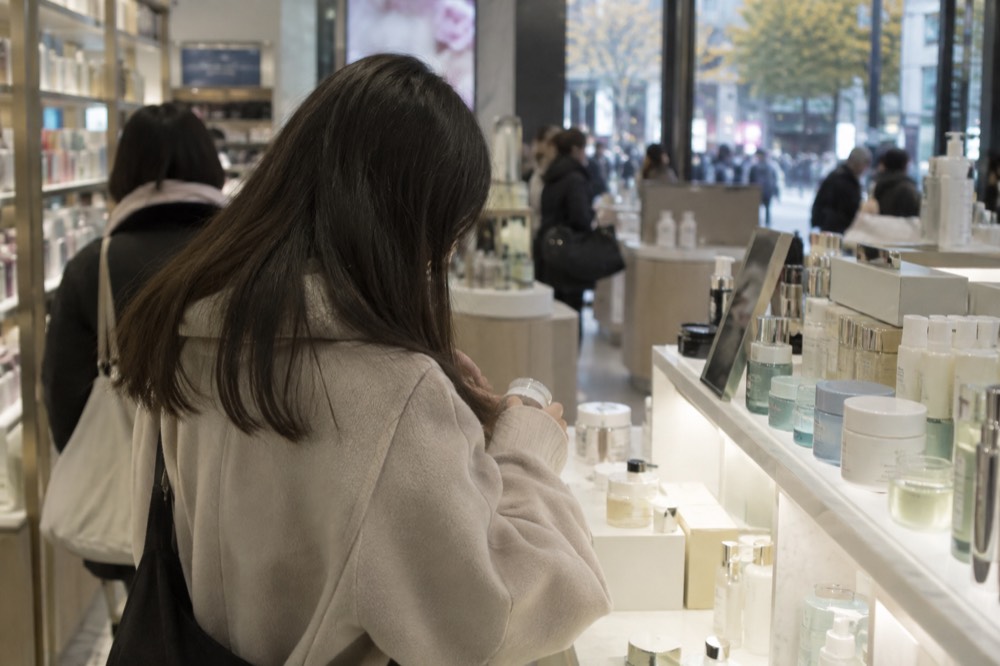
The district's retail mix is not frozen. Beyond the Olive Young opening in March 2026, the streets keep turning over, with pop-ups and brand takeovers appearing and disappearing between visits. Fashion and streetwear sit alongside the beauty stores, and the underground shopping centre near Hoehyeon, one station or a short walk away, adds a cheaper layer of clothing and accessories under the pavement.
One practical note for anyone shopping here before heading up the mountain: the tower operator does not allow outside food inside N Seoul Tower, and beauty hauls are easier to manage before a cable car ride than after one. Many visitors do their shopping first, drop bags at a hotel or locker, then go up in the evening when the observatory runs later, until 23:00 on weekends and public holidays with last admission 30 minutes before closing.
If the observatory is the evening plan, the standard ticket covers the deck inside the tower.
What street food is Myeongdong known for?
Myeongdong is known for its evening street food stalls rather than any single dish. The carts set up along the central pedestrian streets and serve grilled seafood, hotteok sweet pancakes, tornado potatoes, cheese and corn dogs, tteokbokki and grilled cheese skewers, with the busiest stretch in the evening when the shops are still lit.
The scene is a moving target. Stall positions shift, vendors rotate, and the same street can feel like a food market at 19:00 and a quiet shopping lane by 23:00. What stays constant is the format: order at the cart, eat standing or walking, and move to the next one. Visitors who want a sit-down meal instead will find restaurants in the buildings above the stalls, including chains and local specialists, and the Myeongdong side of the city centre also picks up late-night demand from the surrounding hotels.
The stalls sit inside a wider food neighbourhood rather than replacing it. Nearby Namdaemun Market, beside Sungnyemun, is the traditional market alternative, and Seoul's own new guided night walk over Namsan was deliberately routed to finish near a descent toward Namdaemun so walkers can carry on eating there afterwards, a detail from the city's own description of the route. Myeongdong's stalls are the louder, more tourist-facing layer of that same food geography.
| Food experience | Where it sits | What to expect |
|---|---|---|
| Street food carts | Central Myeongdong streets, evening | Grilled squid, hotteok, tornado potatoes, corn dogs, skewers, eaten standing |
| Cosmetics flagships | Main streets and side lanes | Sampling counters, multilingual staff, trial application |
| Sit-down restaurants | Upper and lower floors of buildings | Korean chains, barbecue, noodle specialists |
| Namdaemun Market | Beside Sungnyemun, short trip away | Traditional market stalls, the city's own night walk ends toward it |
Prices at the stalls are set by each vendor and change often, so treat any figure heard second-hand as a rough guide and check the cart's own board. What is stable is the shape of the evening: shops, then stalls, then the walk or ride up the hill.
How does Myeongdong connect to Namsan and the cable car?
Myeongdong is the standard gateway to the Namsan cable car. The cable car's base station sits up the hill behind the district, reached from Myeongdong Station, and the same area gives access to the free Namsan Ormi inclined elevator, the cable car company's free shuttle bus and several walking trails to the summit. The cable car costs KRW 15,000 adult round trip or KRW 12,000 one way.
The geography confuses people, and the official sources are careful about it. The cable car base station is not next to Myeongdong Station but above it, on the slope. The tower operator directs visitors from Myeongdong Station Exit 3 along the street on the right-hand side of the Pacific Hotel, with its Korean page giving 10 minutes to the cable car and its English page about 10 to 15 minutes. The cable car company gives Exit 3 to walk or Exit 4 for the Namsan Ormi, turning left at Hoehyeon intersection to the boarding point near the Namsan Tunnel 3 commemorative monument. YTN Seoul Tower instead directs visitors from Exit 5 toward Hoehyeon intersection, then left to the outdoor escalator and the cable car. The exits differ because the routes differ, so follow one source's route end to end rather than mixing them.
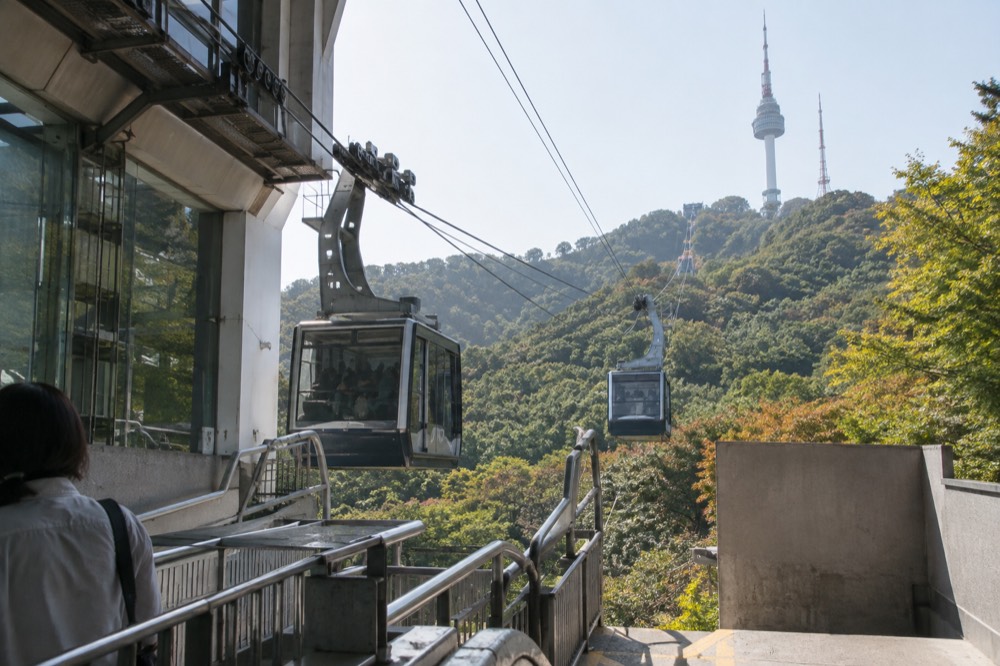
The free options are real and worth knowing. The Namsan Ormi inclined elevator, a glass-walled slanted outdoor lift running between Namsan Tunnel 3 and the cable car station, has been free of charge since Seoul's city government began operating it in 2009, running 09:00 to 23:00 with maintenance suspension every Monday from 09:00 to 14:00. The cable car company also runs a free shuttle bus between Myeongdong Station and the cable car platform, first departure 12:00 and last 20:30. Neither the elevator nor the shuttle costs anything, and the cable car company's own usage page documents both.
The cable car itself opened on 12 May 1962 and the company presents it as Korea's first passenger cable car, with cabins carrying up to 48 people on a line about 600 m long. It runs 10:00 to 23:00 every day of the year, with the last ticket sold 30 minutes before closing, and service can stop or end early in bad weather. Visitors consistently report that boarding waits get long at weekends, and the company's own advice says mornings are quieter than afternoons.
What the cable car does not do is include the observation deck. The ticket buys the ride, and the deck inside the tower is sold separately by the tower operator. Nothing on either operator's site sells an official combined product, and the deck is the only thing on the summit that needs a ticket: the summit plaza, the terraces, the love locks and the walking trails are all free. The observatory ticket, rated 4.6 from 34,365 reviews and from US$15.25 per adult, is the one purchase to plan for, and there is more detail in the guide to N Seoul Tower tickets and prices, with the full option set on the observatory ticket page.
One more thing worth knowing before you plan the climb: Seoul's city government opened the Namsan Sky Forest Trail on 25 October 2025, a barrier-free timber deck path built so wheelchair users, older visitors and anyone who cannot manage the steep old paths can get up Namsan, linking the Huam-dong Namsan Fitness Center to the Namsan Library. It is the newest way up the mountain, on the Huam-dong side, and the city's own guided night walk announcement uses its entrance as the route's starting point.
What else is around Myeongdong in 2026?
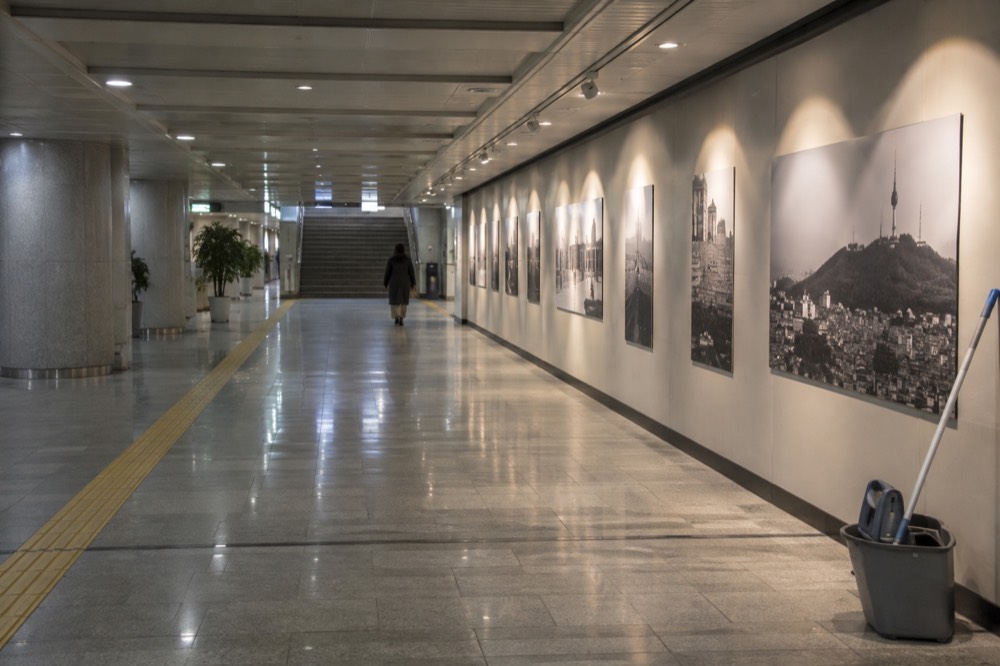
The Myeongdong area gained a genuinely new attraction in September 2026: K-Culture Station, a 335-metre underground passage 13 metres below Seoul Plaza that had been sealed for more than four decades, opened on 7 September 2026 as a cultural venue. It sits between City Hall and Euljiro 1-ga stations, a short walk from the Myeongdong side of the city centre, and launched with an immersive exhibition for Big Bang's twentieth anniversary.
That is the kind of addition no older guide mentions. The passage connects two metro stations under the city's central square, and its opening gives the Myeongdong area a covered, weather-proof cultural stop within walking distance of the shopping streets. Visitors staying in the district can pair a shopping afternoon with an exhibition evening without crossing the city.
The hotel picture has also moved. The Plaza, the landmark hotel on Sogong-dong in Jung-gu immediately beside Myeongdong, ceases operations on 30 September 2026 for a multi-year full remodel, so any recommendation of it is now out of date. The wider question of where to base yourself near the mountain is covered in the guide to where to stay near Namsan.
Transport advice has changed too. Seoul's flat-rate 30-day Climate Card, which many published itineraries still recommend, was discontinued: the card could be recharged only until 31 August 2026, and the replacement Climate Pass released on 1 September 2026 is for Seoul residents, with eligibility based on place of residence. Visitors can still use short-term passes of one, two, three, five and seven days on existing cards, and the city's own Climate Card page lists the current fares. For a Myeongdong trip the practical point is simpler: a standard T-money-style transport card covers the metro ride in and the Namsan circular bus 01A or 01B from Chungmuro or Dongguk University stations toward the tower, at KRW 1,500 a ride.
Finally, entry paperwork is easier than many guides suggest. The temporary K-ETA exemption for nationals of visa-exempt countries has been extended until 31 December 2026, so those travellers may enter South Korea without applying, per the Korea Tourism Organization's own notice.
How much time should you spend in Myeongdong?
Most visitors spend half a day to a full day in Myeongdong, split between shopping, eating and going up Namsan. A common pattern is a cosmetics and street food afternoon, then the cable car or a trail up to the summit for the evening view, with the observatory open until 22:30 on weekdays and 23:00 on weekends. The district itself is compact, so the time goes into queues and eating, not distances.
The efficient version of a Myeongdong day, assembled from what visitors report and what the operators publish, looks like this: arrive by metro, shop while the flagships are fully staffed in the afternoon, eat from the stalls as they build up in the early evening, then go up the hill. The cable car runs until 23:00 with the last ticket 30 minutes before closing, and the observatory's last admission is 30 minutes before its own closing time, so the late window is real but tight. Anyone wanting a sit-down dinner at one of the tower's restaurants, such as n.Grill, whose advance reservations include free observatory admission, should book rather than gamble on the evening.
Weekends and public holidays are the busy windows at both the tower and the cable car, according to visitor reports through mid-2026, and weekday visits, or the early and late ends of the day, are the quiet ones. That is qualitative, and no official source states a wait in clock terms, so plan around the pattern rather than a number. Visitors who want the deck with the least friction sometimes take the fast-track observatory option, though one buyer of it reported no visible fast-track lane; what any online ticket reliably skips is the ticket counter, not the cable car queue.
For a longer Seoul plan that puts Myeongdong in context, the three-day Seoul itinerary builds the district into a route with the palaces, the markets and the river.
An evening at the tower can also stretch beyond the deck itself. The summit plaza, the terraces and the love locks cost nothing and stay lively after dark, and from September 2026 the city runs a free guided night walk over the summit at 18:00 and 20:00 departures, passing N Seoul Tower and the love lock deck and finishing at Palgakjeong, booked in advance through the city's own walking tour site. That gives a Myeongdong evening two free layers below the paid deck: the summit itself, and now a city-run guided walk across it.
Common questions about Myeongdong
What Is Myeongdong Famous For?
Myeongdong is famous for cosmetics shopping, street food and its position at the foot of Namsan. The district packs Korean beauty flagships, multi-brand stores and evening food carts into a few walkable blocks, and the Namsan cable car base station sits up the hill behind it, making the district the standard gateway to N Seoul Tower.
Is Myeongdong near Namsan Tower?
Yes. Myeongdong sits directly below Namsan, and Myeongdong Station is the standard starting point for the cable car, the free Namsan Ormi inclined elevator and several walking trails to the summit. The cable car base station is up the hill from the station, not beside it, so follow one operator's route end to end.
Is the street food in Myeongdong expensive?
Prices are set by each vendor and change often, so check the cart's own board rather than a second-hand figure. The format is order-at-the-cart and eat standing, which keeps individual items modest, and the stalls sit alongside sit-down restaurants in the buildings for anyone wanting a full meal.
Can you walk from Myeongdong to N Seoul Tower?
Yes, on the official trails. The Sam-soon Steps route up to Palgakjeong takes about 40 minutes per the tower company's own figures, and the Namsan Public Library route about 30 minutes. Seoul also opened the barrier-free Namsan Sky Forest Trail in October 2025, a timber deck path designed for wheelchair users and visitors who cannot manage steep paths. The city closed the unofficial side paths worn into the mountain and directs walkers onto official trails only.
Is Myeongdong good for buying Korean cosmetics?
It is the densest cosmetics shopping district in Seoul, with flagships, multi-brand stores and sampling counters several deep on the main streets, plus a large Olive Young Central Myeongdong Town store opened in March 2026. Nothing is exclusive to the district, but the concentration and the sampling culture are what made it famous.
Do you need a ticket for Namsan if you visit from Myeongdong?
Only for the observation deck inside the tower. Namsan Park, the summit plaza, the terraces, the love locks and the trails are all free. The paid items are the observatory ticket, the cable car if you ride it at KRW 15,000 adult round trip or KRW 12,000 one way, the circular bus fare, parking, and food and shopping.