Three Days in Seoul: An Itinerary Built Around Namsan
Three days is enough to see Seoul properly if you group the city by neighbourhood instead of chasing a list. This itinerary keeps each day inside one or two subway hops, and it puts the Namsan evening on the day when it fits the geography, not the day when it looks tidy on paper.
Short answer
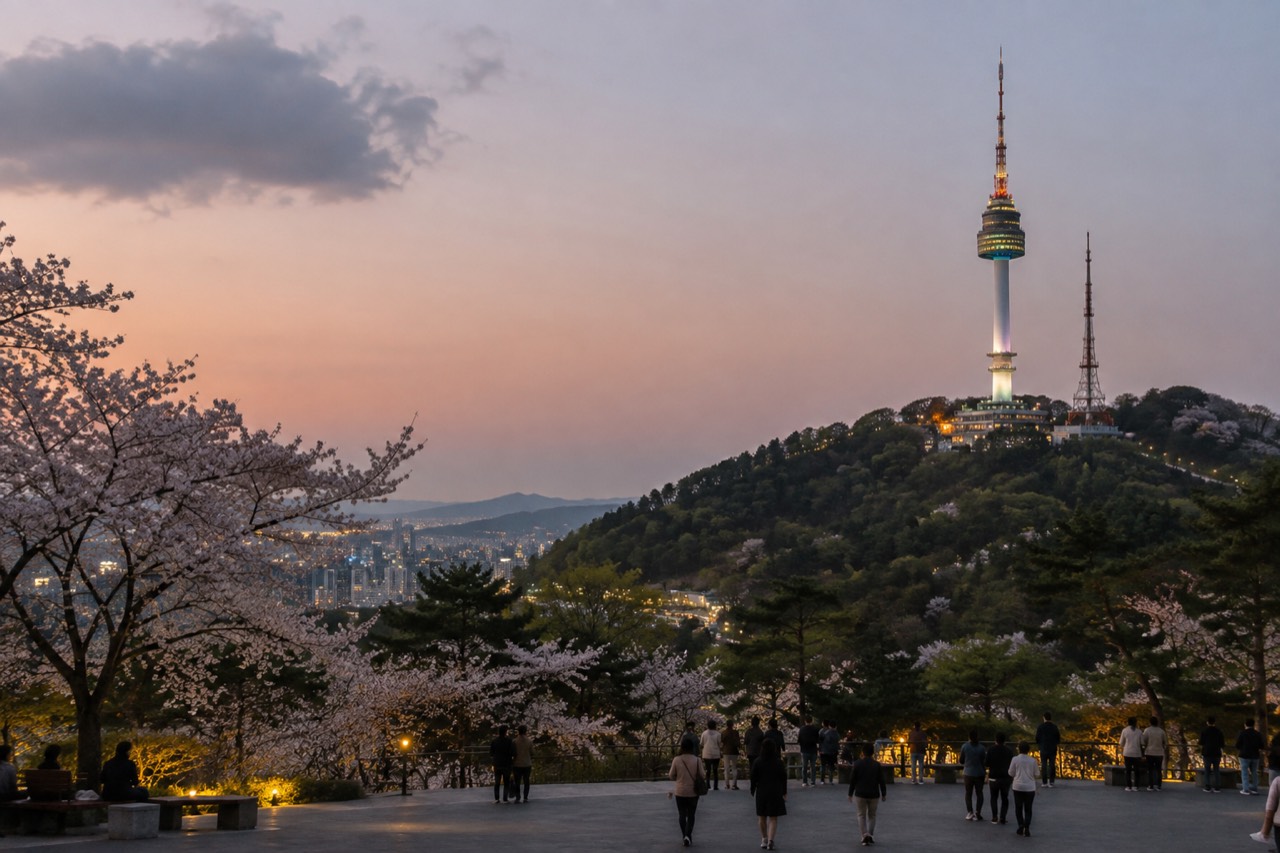
Spend Day 1 on the palaces, Gwanghwamun, Bukchon and Insadong, Day 2 on Changdeokgung or Dongdaemun, Myeongdong and the Namsan evening, and Day 3 on Myeongdong, a market and the river. The N Seoul Tower observatory costs from US$15.25 online or KRW 29,000 at the gate, and the summit plaza, park and views around the tower base are free.
Seoul rewards walkers and punishes optimists. The city is enormous, its highlights are spread across at least five distinct districts, and a first-time visitor who tries to see everything in three days ends up spending most of the trip underground, changing trains. The fix is simple: build each day around one area, keep the subway legs short, and let one anchor event, the Namsan evening, sit on whichever day the surrounding neighbourhoods make natural.
This itinerary does exactly that. Day 1 stays in the palace quarter north of Gwanghwamun. Day 2 runs through Changdeokgung or Dongdaemun and Myeongdong and finishes on Namsan, because the mountain sits directly south of that stretch and the cable car base station is one subway stop from where the afternoon ends. Day 3 stays in Myeongdong and the market district with an optional river finish. Nothing here requires a car, and private cars cannot drive up Namsan anyway, a restriction in place since 1 May 2005 for ecological protection.
A few structural facts shape the whole plan. The observatory inside N Seoul Tower is open 10:00 to 22:30 on weekdays and 10:00 to 23:00 on weekends and public holidays, with last admission 30 minutes before closing. The mountain itself, its trails, the summit plaza, the terraces around the tower base and the love locks are all free; only the deck inside the tower is ticketed. And since September 2026 there is a new reason to be on the summit in the evening: Seoul's own free guided night walk now crosses Namsan, a development most published guides do not yet mention.
How should you structure three days in Seoul?
Group the city into three zones and give each one a full day: the palace quarter around Gwanghwamun, the hanok-and-market belt of Bukchon and Insadong flowing into the Namsan evening, and the Myeongdong shopping district with a market or river finish. This cuts total travel time dramatically, because every stop on each day sits within one or two subway stops of the others, and it leaves one flexible evening on the mountain.
The common mistake is the opposite approach: a checklist that puts a palace, a market, a theme street and a viewpoint on the same day. Seoul's subway is excellent but the city is big, and a checklist day means four or five long legs. A zoned day means one or two short ones.
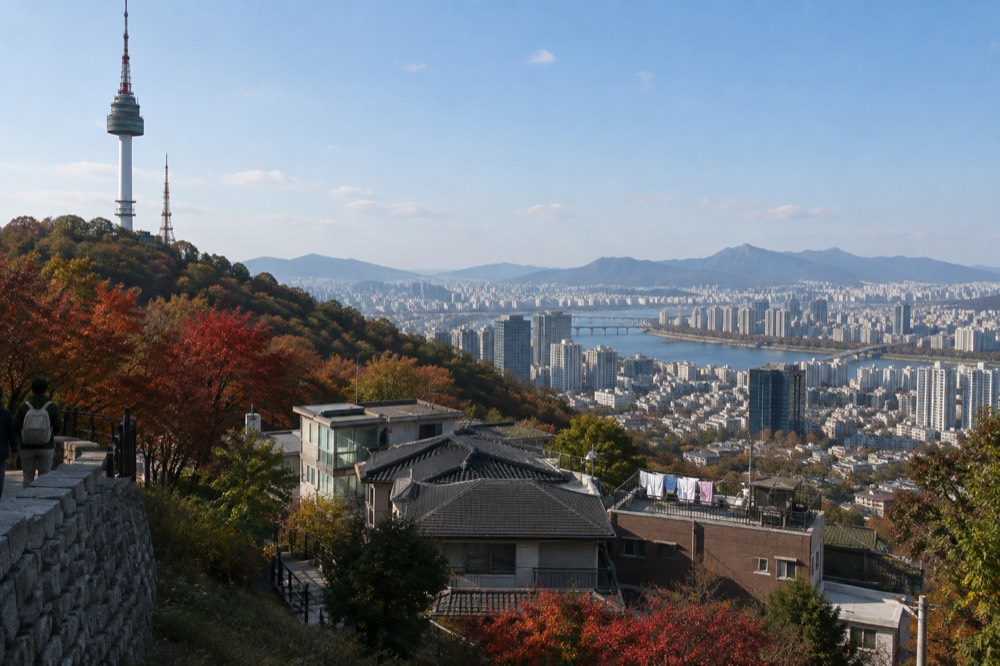
There is one scheduling decision to make early, and it drives everything else: which evening you go up Namsan. The tower's lighting comes on after dark, and the observatory stays open late, so the evening is the natural slot. But the cable car company's own advice is that weekends and holiday evenings are the busy windows, which means a weekday evening on the mountain is the calmer choice if your dates allow it. No official source anywhere publishes a queue time, so plan around the calendar rather than a clock estimate.
| Day | Zone | Anchor stops | Evening |
|---|---|---|---|
| 1 | Jongno north | Gyeongbokgung, Bukchon's far end, Insadong | Cheonggyecheon stream walk |
| 2 | Jongno south to Namsan | Changdeokgung garden or Dongdaemun, Myeongdong | N Seoul Tower and the summit |
| 3 | Myeongdong and beyond | Myeongdong market streets, Namdaemun Market | Han river park or Dongdaemun night market |
The order above is deliberate. Day 1 ends near Cheonggyecheon because the stream is free, always open, and sits between the palace quarter and your likely hotel base. Day 2 carries the Namsan evening because Bukchon, Insadong and Myeongdong form a natural southward drift toward the mountain. Day 3 is the loosest, built for shopping, eating and whatever you missed.
What should Day 1 look like: the palace quarter?
Start at Gyeongbokgung and the Gwanghwamun square in the morning, walk north into Bukchon's hanok lanes around midday, then drift east into Insadong for tea, crafts and dinner. Every one of these stops sits inside a single walkable belt north of Cheonggyecheon, so the whole day involves no subway at all after you arrive, and the evening stream walk hands you straight to Day 2's territory.
Gwanghwamun is the city's ceremonial centre, and Line 5's Gwanghwamun Station drops you at its edge. The square, the statue of Admiral Yi Sun-sin and the approach to the palace gate are all free to see. The palace itself is the morning anchor; arrive early, because visitor reports through mid-2026 consistently describe mornings as the quieter window at major sights, matching the cable car company's own advice on its mountain.
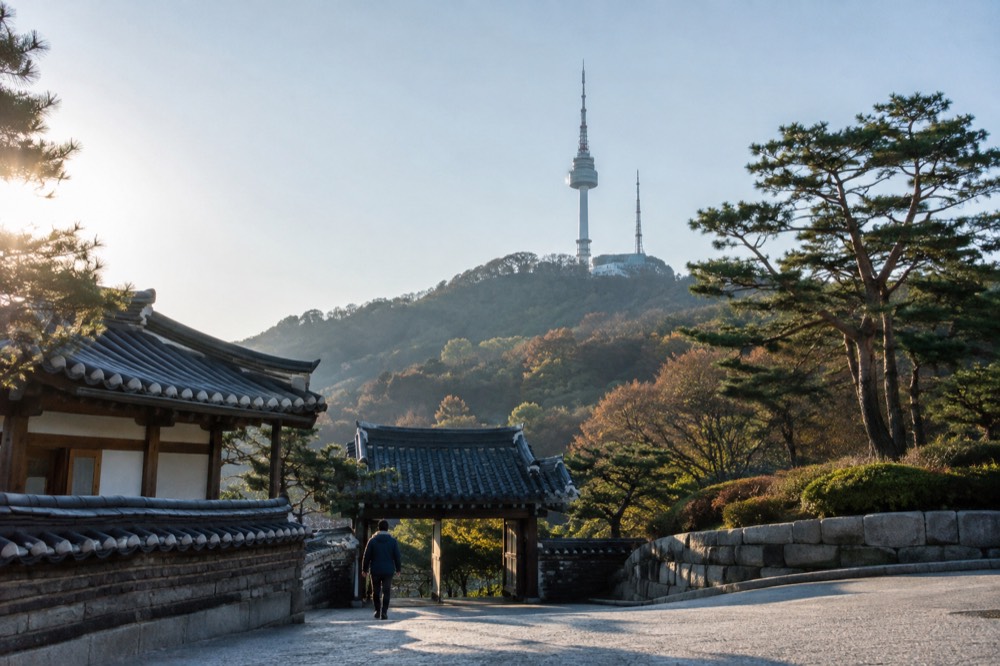
From the palace, the lanes of Bukchon run uphill to the east. This is the neighbourhood preserved for its hanok, the tiled traditional houses, and it flows naturally down into Insadong, the craft-and-tea district. Insadong's main street and its alleys absorb a full afternoon easily: galleries, paper shops, tea houses, street food. It is also the right place to buy anything fragile, because you will carry it the shortest distance today.
The evening belongs to Cheonggyecheon, the restored stream that runs through the city centre. It is free, it is lit at night, and walking a stretch of it delivers you toward the Jonggak and City Hall areas, where Day 2 begins. One genuinely new option nearby: K-Culture Station, a 335-metre underground passage sealed for more than four decades and reopened on 7 September 2026 as a cultural venue 13 metres below Seoul Plaza, launched with an immersive Big Bang twentieth-anniversary exhibition. It sits between City Hall and Euljiro 1-ga stations, a short walk from the Myeongdong side of the centre, and no older guide mentions it.
For the tower evening later in the trip, it pays to have the ticket question settled before Day 2, and the three options below are the practical ones.
Where does Namsan fit into a three day itinerary?
Put Namsan on the evening of Day 2, after Bukchon and Insadong, because the mountain sits directly south of that walk and Myeongdong, the natural base for the cable car, is one subway stop from Insadong's edge. A weekday evening is calmer than a weekend one, and everything on the summit except the indoor deck is free, so the visit can be as cheap or as complete as you choose.
The geography is the argument. Namsan is the wooded hill immediately south of the Jongno and Myeongdong districts. If Day 2 has already taken you through Bukchon's lanes and Insadong's streets, you are already on the mountain's northern shoulder by late afternoon. Myeongdong Station on Line 4 is the standard jumping-off point, and the tower operator's own directions send walkers from Exit 3 along the street beside the Pacific Hotel, a walk it describes as 10 to 15 minutes to the cable car base station.
Be clear about what costs money before you go up, because this is the most misunderstood boundary in Seoul. Namsan Park is free to enter, as Seoul's official tourism site states plainly. The summit plaza, the terraces around the tower base, the Palgakjeong pavilion area, the love locks, the beacon mound and the Seoul City Wall path all need no ticket. A visitor can reach the summit and enjoy the view for nothing. The paid items are the observation deck inside the tower, the cable car if you ride it, the circular bus if you take it, parking, and food.
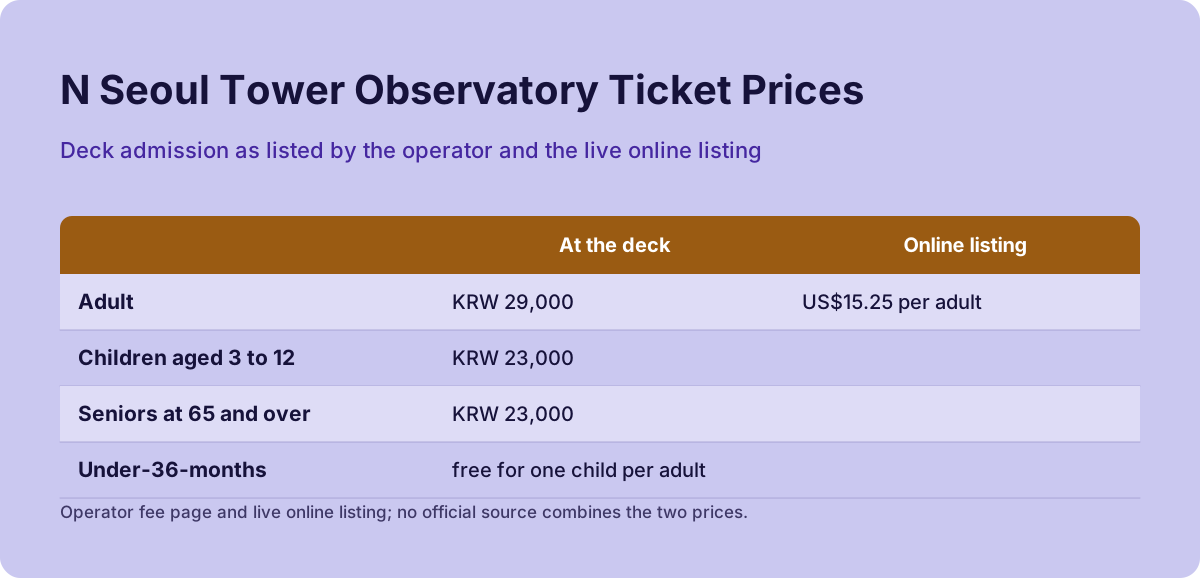
The deck itself is the paid centrepiece. The operator's own fee page lists adult admission at KRW 29,000, with children aged 3 to 12 and seniors at 65 and over paying KRW 23,000, and under-36-months free for one child per adult. Online, the observatory ticket starts at US$15.25 per adult on the live listing. State both prices as they are: no official source combines them into a saving, and the arithmetic is not this site's to do.
If you want the indoor deck, the straightforward option is the standard ticket, and it can be bought ahead.
The ticket buys the observation deck and nothing else, which is worth repeating because many visitors assume it includes the ride up. It does not. The cable car is a separate company with its own fare table, and the observatory ticket skips only the ticket counter, not any queue for transport.
One more reason the Day 2 evening slot now works especially well: since September 2026, Seoul's free guided walking-tour programme runs a Namsan City Wall night course over the summit itself, with departures at 18:00 and 20:00 every day. A licensed city guide leads it past the tower and the love lock deck, finishing at Palgakjeong, and the city deliberately planned the finish so walkers can descend toward Namdaemun Market to eat afterwards. It is free but booked in advance through the city's own walking-tour site, not on the day. If you would rather have a guide than go alone, our Namsan evening and night view guide covers the after-dark options in full.
What should Day 2 look like before the Namsan evening?
Spend the morning at Changdeokgung or in Dongdaemun, lunch in Insadong or near the Jongno end of Myeongdong, then give the afternoon to Myeongdong's market streets before riding up Namsan for sunset and the lit tower. The day's arc runs from east to west and then south, so you never backtrack, and the mountain finish means the day's biggest spectacle arrives last.
Changdeokgung, east of Gyeongbokgung, is the palace most visitors who have seen one palace prefer, and its garden is the quietest green space in central Seoul. The alternative is Dongdaemun Design Plaza and the surrounding wholesale market district further east, which suits visitors who care more for contemporary architecture and shopping than another palace. Either choice keeps you on Line 2 or a short hop from it.
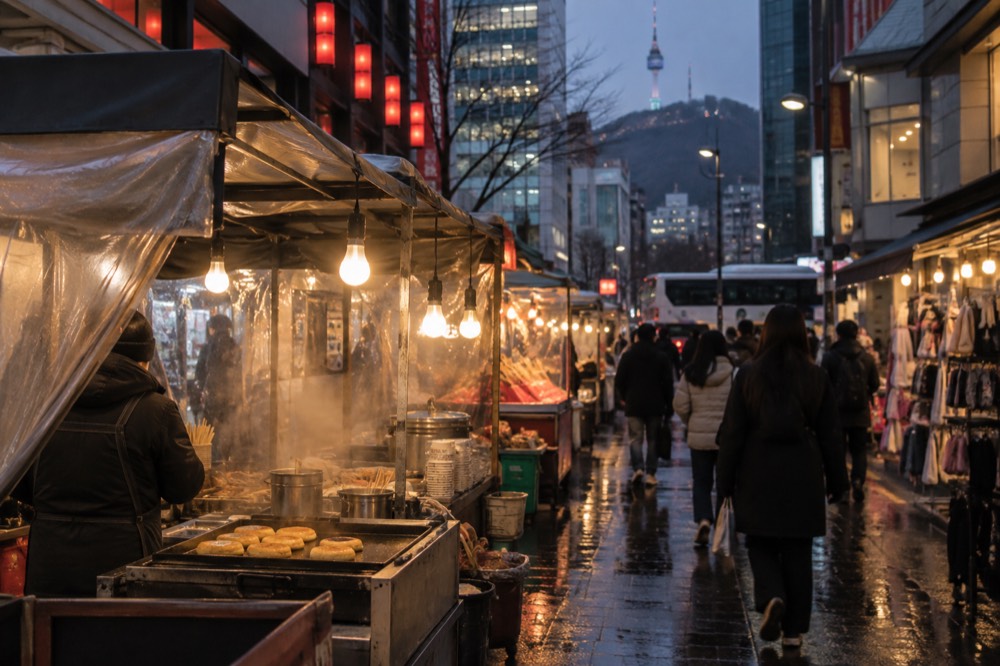
By mid-afternoon the day should have drifted to Myeongdong. This is Seoul's most foreigner-friendly shopping district, dense with skincare stores, street food and, since March 2026, a large new Central Myeongdong Town store from Olive Young, the Korean beauty chain. It is also the practical base for the ascent: the cable car's free shuttle bus runs between Myeongdong Station and the cable car platform, first departure 12:00 and last 20:30, timed from the Namsan cable car car park.
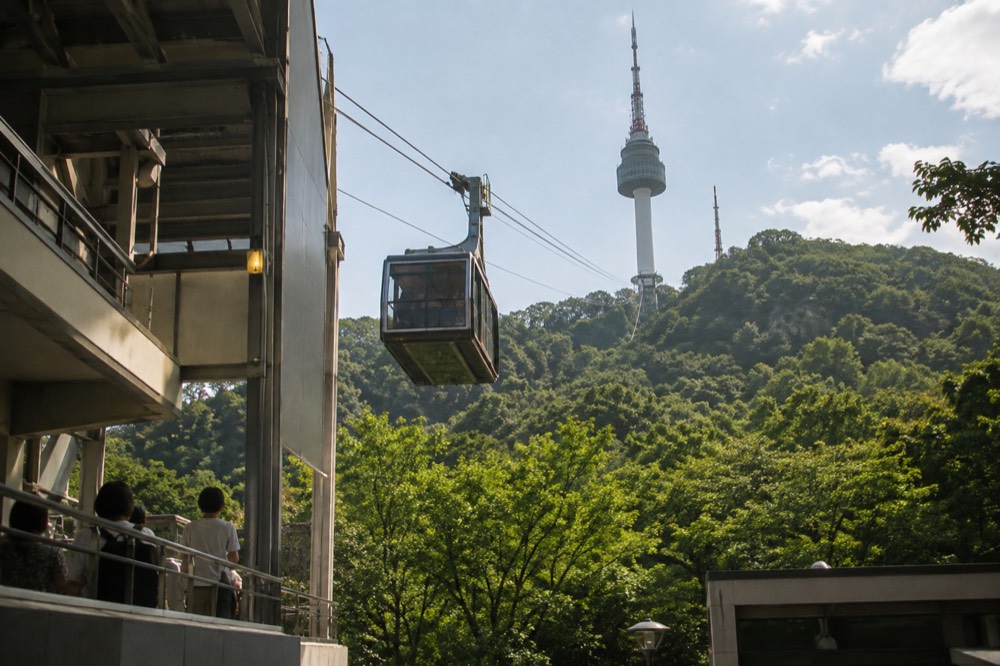
The ascent itself has three realistic forms, and the choice is mostly about legs and budget. The cable car runs 10:00 to 23:00 every day of the year, adult round trip KRW 15,000, one way KRW 12,000, with the last ticket sold 30 minutes before closing. The Namsan circular buses 01A and 01B board at Chungmuro Station or Dongguk University Station and stop at the tower, fare KRW 1,500, running 06:30 to 23:00. Or you walk: the Sam-soon Steps route up to Palgakjeong takes 40 minutes by YTN Seoul Tower's own timing, and the Namsan Public Library entrance route takes 30 minutes, both of them steep, shaded and longer than they look. Our walk-up routes guide compares them properly.
Visitors who want the deck without any counter stop on a busy evening sometimes consider the fast-track observatory option, at US$40.85 on the live listing. One honest note: a buyer of that option reported no visible fast-track lane, so treat it as a ticketing convenience rather than a guaranteed shorter wait, and know that it does not affect the cable car queue, which everyone rides together.
At the top, the free list is long. The love locks are still active, and padlocks are still sold at the tower, as 2026 visitor accounts describe, including branded locks engraved on site. The beacon mound, the city wall path and the Palgakjeong plaza are all open ground. If you bring your own food, the operator's own FAQ directs you to the plaza in front of Palgakjeong, since outside food cannot be eaten inside the tower. And if the evening runs long, the summit's new timber-deck trail network, opened by the city in October 2025, has made the descent gentler than the old paths, though the unofficial side trails have been closed and ecologically restored, so follow the official routes down.
How do you get around Seoul in three days?
Use the subway for everything except the walks inside each daily zone, pay with a rechargeable transport card rather than cash, and ignore the old advice about Seoul's flat-rate monthly pass, which was withdrawn on 31 August 2026 and replaced by a resident-only scheme. Short-term one to seven day passes still exist on the same card system, and the airport express connects directly into the network.
The transport fact most likely to trip up a visitor planning a 2026 trip is the Climate Card change. Seoul's flat-rate 30-day Climate Card could be recharged only until 31 August 2026, and the city's own English page carries the discontinuation notice. The replacement, the Climate Pass released on 1 September 2026, is not for visitors: eligibility is based on place of residence, it is available to Seoul residents, and benefits start the month after registration. A tourist cannot use it. More of these guides are collected on Namsan Tower Seoul.
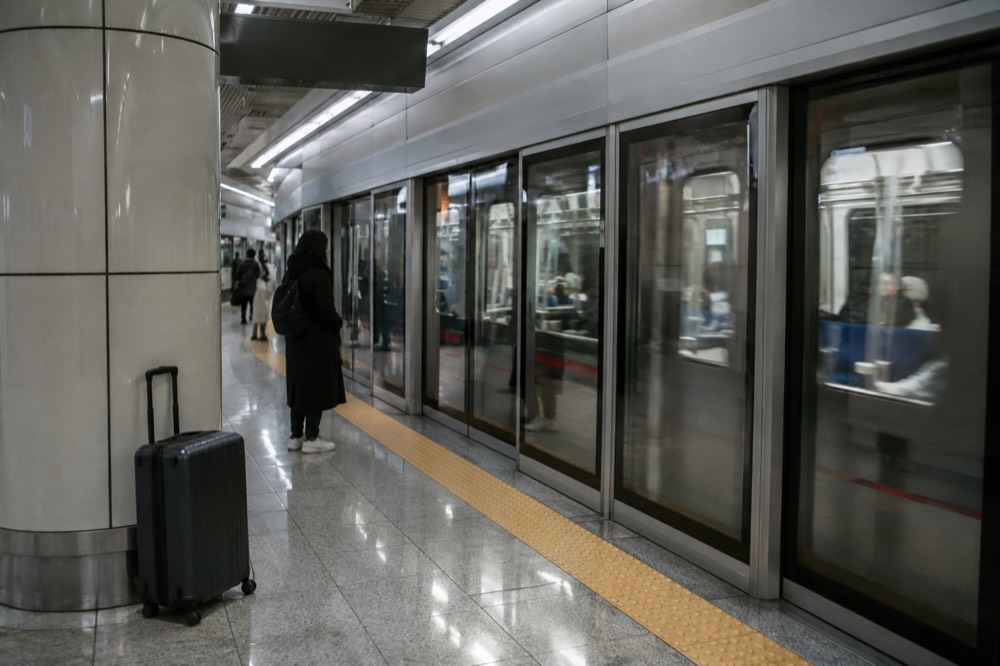
What a visitor can still do, from the same official page, is recharge a card with a short-term pass: one-, two-, three-, five- and seven-day versions exist, each priced on the city's page. The term starts the day you charge the card, so you cannot load one in advance, and the passes exclude the Ttareungi bike share and the Hangang Bus. For a three-day trip the arithmetic between single fares and a short-term pass is worth two minutes with the city's fare table, which this site deliberately does not reproduce.
| Leg of this itinerary | Mode | What it costs |
|---|---|---|
| Airport to city centre | Airport express train | Fare on the operator's page |
| Zone to zone (3 legs a day) | Seoul Metro | Single fare, or a short-term pass |
| Myeongdong to cable car platform | Free shuttle bus | Free |
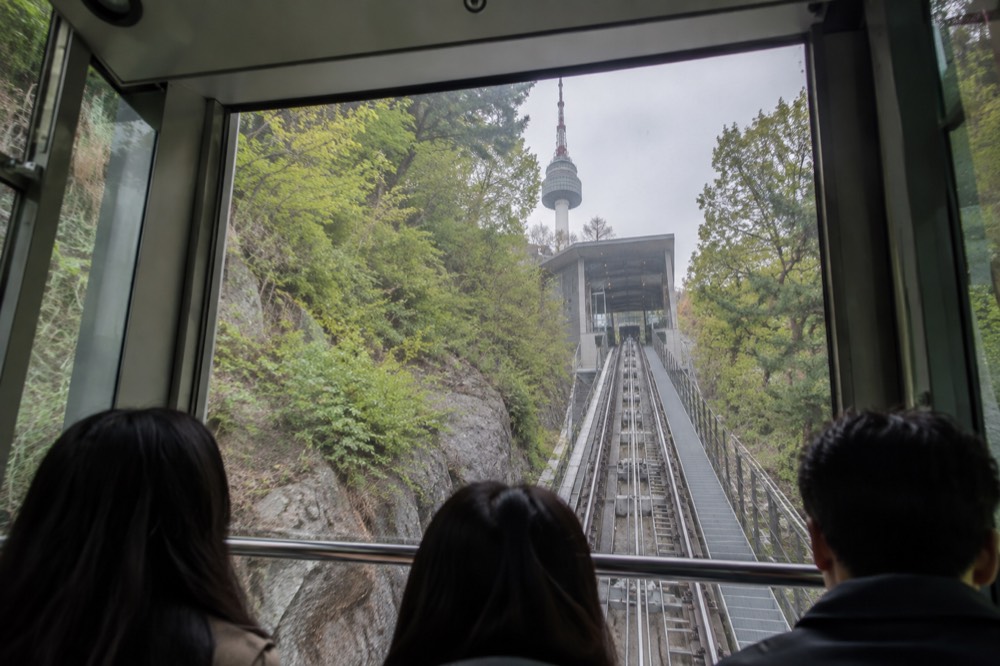
| Base to summit | Cable car | KRW 15,000 adult round trip |
| Base to summit | Circular bus 01A / 01B | KRW 1,500 |
| Base to summit | On foot | Free, steep |
Two entry facts complete the picture. The K-ETA electronic travel authorisation remains waived for nationals of visa-exempt countries until 31 December 2026, per the Korea Tourism Organization's own notice, so most short trips need no application. And within the city, the subway's coverage of this itinerary is total: every anchor stop in this guide sits within a short walk of a numbered line station, which is the whole reason the plan is zoned the way it is. For the Namsan leg specifically, our getting to N Seoul Tower guide lists every station exit pairing, because three official pages give three different exits for three different routes and the exit you want depends on the route you take.
What should Day 3 look like: Myeongdong and the river?
Give Day 3 to Myeongdong's market streets in the morning, Namdaemun Market for lunch and its afternoon slowdown, then finish with the Han River parks or the Dongdaemun night market, whichever direction your energy points. It is deliberately the loosest day, because a three-day trip always accumulates a list of things missed, and both finishes are free, open late and require no ticket.
Myeongdong in the morning is a different district from Myeongdong at night: the skincare counters open, the street food stalls fire up gradually, and the side alleys behind the main drag hold small bakeries and fishcake stands. If the Namsan evening used the cable car two nights before, you already know the geography, and Myeongdong Station's exits put you back at the mountain's foot whenever you want a second look at the summit in daylight.
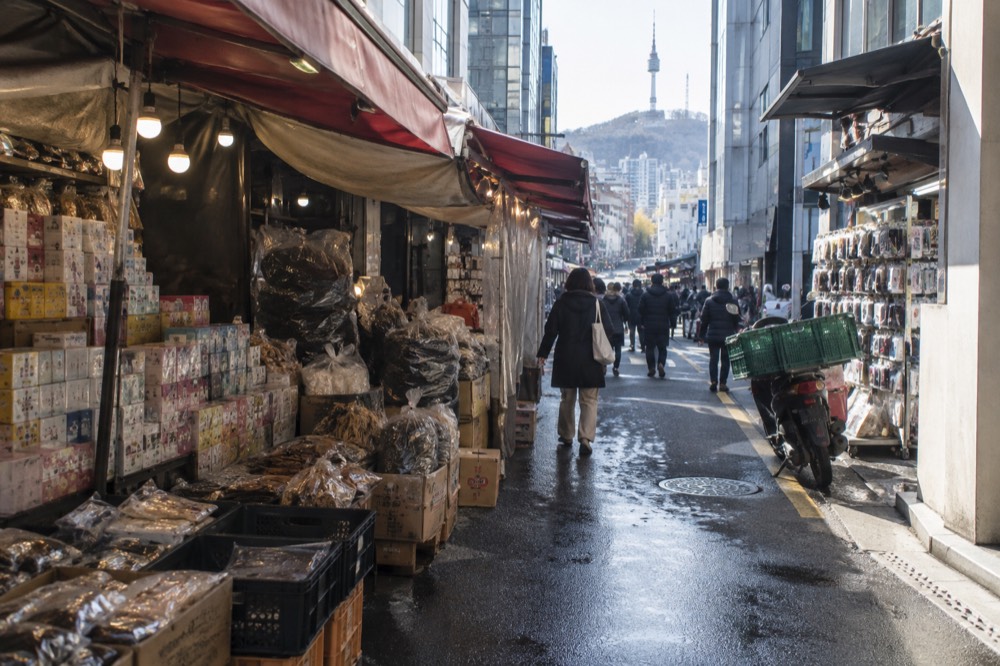
Namdaemun Market, one subway stop or a short walk west, is the traditional counterweight: a sprawling wholesale market around the old city gate, best at lunch when the famous kalguksu alley is at full volume. The market winds down in the afternoon, which is why the plan sends you there early rather than late. It is also, not coincidentally, where the city's new guided night walk is designed to deliver its walkers for food afterwards.
The evening choice splits by temperament. The Han River parks are where Seoul actually spends its summer evenings, picnicking on fried chicken by the water; Yeouido, Ttukseom and the riverside stretches near central Seoul all work, and the riverside is free. Dongdaemun is the other direction: a night market and shopping district that runs late, anchored by the Design Plaza's glowing architecture. Both are one or two subway legs from Myeongdong, and neither needs booking.
A note for December visitors: the city's winter festival dates for the coming season had not been published as of early September 2026, the Seoul Metropolitan Government's English site returning no results for a winter festival page. If your Day 3 falls in December, plan the river or market finish without festival expectations and check the city's pages closer to the date. Our Seoul in December guide covers the honest winter picture.
How much does three days in Seoul cost?
Budget roughly in three layers: transport, which is cheap and capped by a short-term pass; food, which ranges from street stalls to hanwoo barbecue with no ceiling; and sightseeing, where almost everything in this itinerary is free except the N Seoul Tower deck at from US$15.25 online or KRW 29,000 at the gate, and the cable car at KRW 15,000 round trip. The palace admission and any market spending sit on top.
The honest framing is that Seoul's headline sights are unusually generous. Cheonggyecheon, Bukchon's lanes, Insadong, Myeongdong, Namdaemun, the river parks, Namsan Park, the summit plaza, the love locks and the city wall path are all free. The paid list on this itinerary is short: palace admission, the observatory deck, the cable car if you ride it, and whatever you eat and buy.
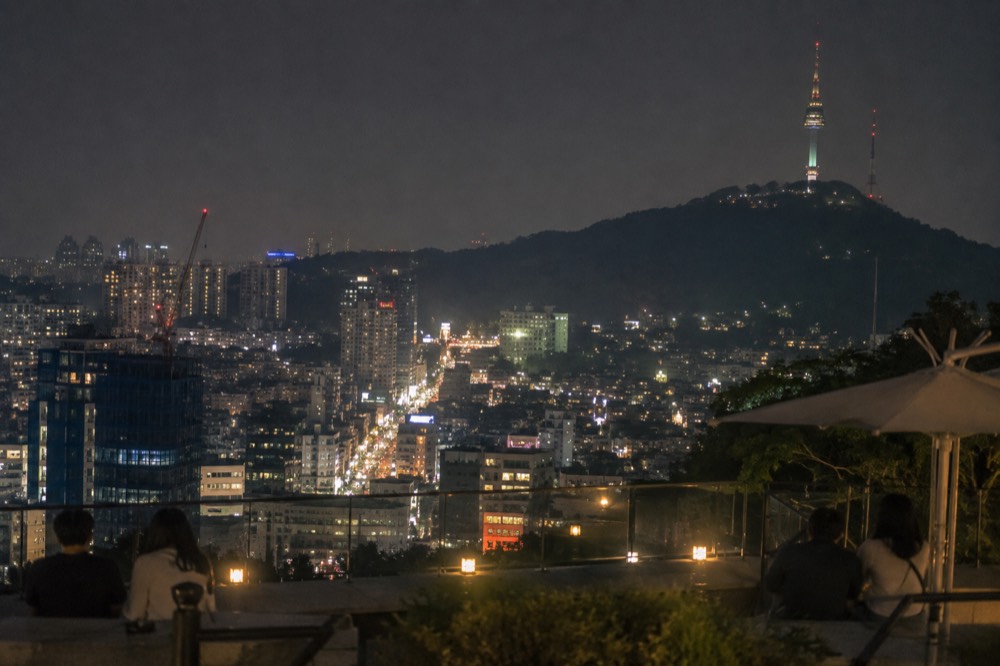
For the tower evening, the four ticket options on the live listing span a real range. The observatory ticket on its own starts at US$15.25. The observatory-plus-cable-car package is US$28.05, and it carries one logistical requirement worth knowing before you commit: a physical ticket must be collected at a partner shop in Myeongdong first, and collection closes at 18:00, which on a long summer evening means collecting before dinner rather than after. The fast-track observatory option is US$40.85. The observatory-plus-cocktail option has no published price; check the live listing for the current figure rather than any number quoted elsewhere.
That bundle suits the Day 2 plan in this itinerary especially well, since it folds the ride up and the deck into one purchase for an evening that already ends at the mountain.
| Item | Cost | Notes |
|---|---|---|
| Namsan Park, summit plaza, love locks, city wall | Free | No ticket of any kind |
| Observatory deck, online | From US$15.25 | Adult, live listing |
| Observatory deck, at the gate | KRW 29,000 | Operator's fee page |
| Cable car, adult round trip | KRW 15,000 | Separate company |
| Circular bus 01A / 01B | KRW 1,500 | Card payment |
| City guided night walk on Namsan | Free | Booked in advance online |
One saving route exists that is worth stating precisely because it is official: an advance n.Grill reservation includes free observatory admission, and dining at HanCook gets a discount on observatory admission, both per the operator's own FAQ. That is a dinner-plus-view play rather than a budget play, but it is the one verified way the deck ticket folds into something else. A Seoul City Tour Bus guidebook coupon also gives 10% off observatory admission.
What if you have less time, or more?
With two days, keep Days 1 and 2 and drop the Day 3 zone, moving Myeongdong's morning into Day 2 before the ascent. With four or five, add a full day further afield, and the natural picks are the river islands, the museums, or a deeper Namsan morning on the new Sky Forest Trail, the barrier-free timber deck path the city opened in October 2025. The itinerary's zoned logic scales in both directions.
The two-day compression works because Day 3 is the loosest day by design. Myeongdong's streets slot into the afternoon before the Namsan ascent without strain, since the district sits at the mountain's foot. What you lose is Namdaemun at lunch pace and the river evening, both of which are pleasant rather than essential.
The extra-day expansions depend on what drew you to Seoul. Art and museum visitors now have a genuinely new option: Centre Pompidou Hanwha opened in Yeouido on 4 June 2026, a Seoul outpost of the Paris museum, confirmed by the Centre's own press release. Film fans have a specific trail to walk, because Netflix's own locations guide for KPop Demon Hunters puts the tower's summit at the story's climax, and the Korea Times has documented visitors retracing the film's Seoul locations, with the tower headed as a battlefield reimagined. Our N Seoul Tower on screen guide traces that thread properly.
For a second Namsan visit in daylight, the new trail network changes what is possible. The Namsan Sky Forest Trail, opened 25 October 2025, is a barrier-free timber deck path built with the Korea Forest Service so that wheelchair users, older visitors and anyone who cannot manage the steep old paths can get up the mountain, linking the Huam-dong Namsan Fitness Center to the Namsan Library. Named stops along it include the Sunset Observatory, a glass-fenced photo point, the Wind View Bridge over a metasequoia stand, and the Wellness Garden. Two shorter deck sections followed in 2025, one along the southern circular road and a northern forest trail from the tower down to the northern circular road.
However long you stay, the planning principle holds: zones, not checklists, and the Namsan evening on the night the geography hands it to you. The tower, 236.7 metres of structure on a 270-metre hill, has been the city's reference point since its observatory opened to the public in October 1980, and every itinerary that includes it, including this one, is really arranged around when the view is best enjoyed.
Common questions about a three day Seoul itinerary
Is three days enough for Seoul?
Three days is enough for the central belt: the palaces, Bukchon, Insadong, Myeongdong, Namdaemun, one river evening and the Namsan night view. It is not enough for the wider metropolitan area, day trips, or the museum district at a relaxed pace. The zoned approach in this itinerary is what makes three days feel sufficient rather than rushed.
Which day should I visit N Seoul Tower?
Put it on the evening of your middle day, after the Bukchon and Insadong walk, because Myeongdong and the cable car sit directly south of that route. A weekday evening is calmer than a weekend one, per visitor reports and the cable car company's own advice. The observatory is open until 22:30 on weekdays and 23:00 on weekends, with last admission 30 minutes before closing.
Do I need to book the Namsan evening in advance?
The observatory ticket can be bought on the day at the Plaza 5F information desk, the Tower 1F booth or a self-service machine, and online options start at US$15.25 per adult. The city's free guided night walk over the summit is the one thing that genuinely needs advance booking, through the city's own walking-tour site, since individual bookings are made ahead rather than on the day.
Can I do this itinerary without a car?
Yes, entirely, and in fact a car cannot reach the summit: general vehicle access to Namsan has been restricted since 1 May 2005. Every stop in this itinerary sits within a short walk of a subway station, the cable car, the circular buses 01A and 01B and the free Myeongdong shuttle cover the ascent, and the walking trails are free.
What is the best way to get up Namsan in this itinerary?
From Myeongdong, the cable car runs 10:00 to 23:00 every day, KRW 15,000 adult round trip. The circular buses cost KRW 1,500 from Chungmuro or Dongguk University stations. Walking is free: the Sam-soon Steps take 40 minutes to Palgakjeong and the library route 30 minutes, both steep. The free Namsan Ormi inclined elevator connects Namsan Tunnel 3 to the cable car station.
How much should I budget for the tower evening?
It can be free: the park, summit plaza, terraces, love locks and views from the base need no ticket. The paid version is the deck, from US$15.25 online or KRW 29,000 at the gate, plus the cable car at KRW 15,000 round trip if you ride it. The observatory-plus-cable-car package is US$28.05, with ticket collection in Myeongdong closing at 18:00.