Is It Better To Go To Namsan Tower At Night Or Morning?
The honest answer to whether Namsan Tower is better at night or in the morning: haze, crowds, queue length and light, and why the answer changes with the season.
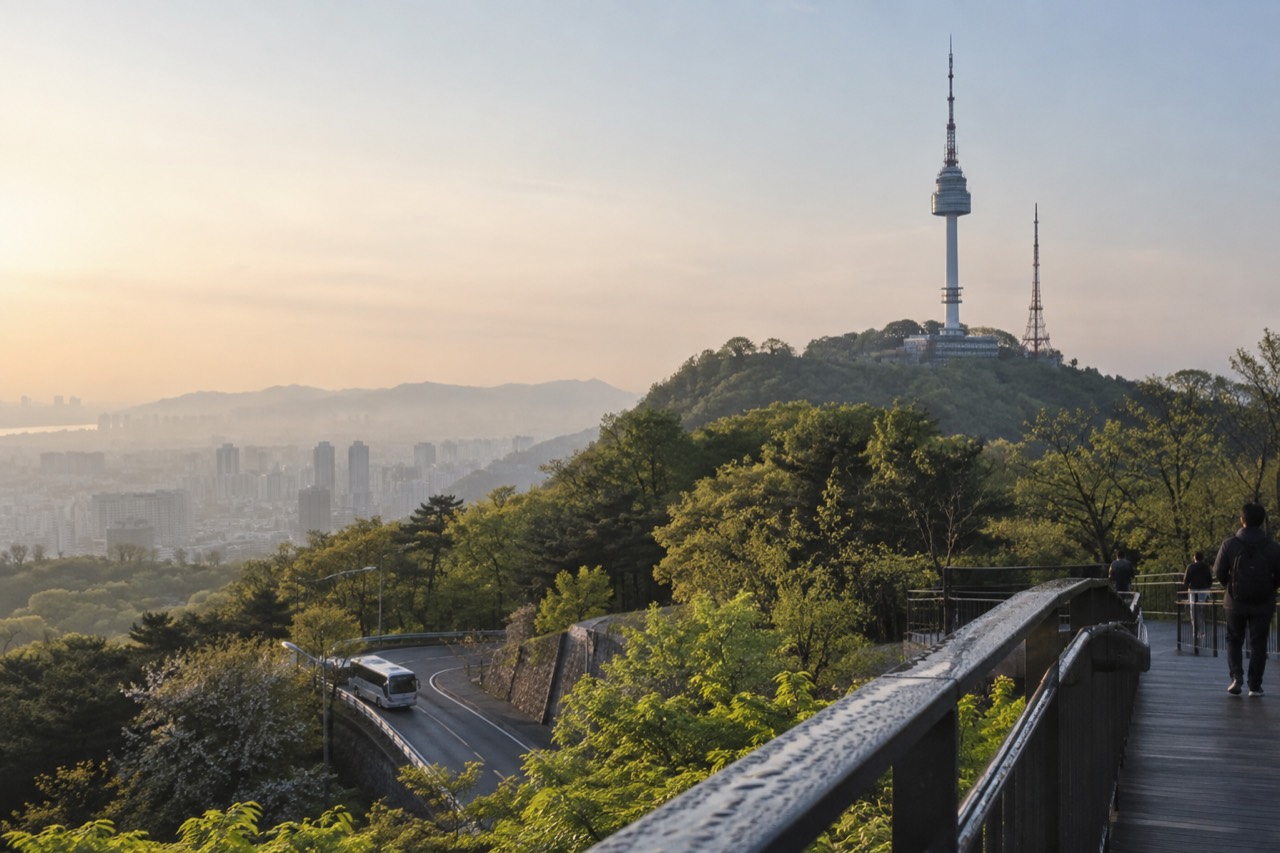
Is It Better To Go To Namsan Tower At Night Or Morning?
The honest answer depends on the season and on what you want from the view, not on a fixed rule. Night delivers the tower's own lighting and the city's light sprawl, and it is also when the summit is busiest. Morning wins on thin haze, thin crowds and a quieter cable car. The deck opens at 10:00, so a morning visit can start the moment the gates do.
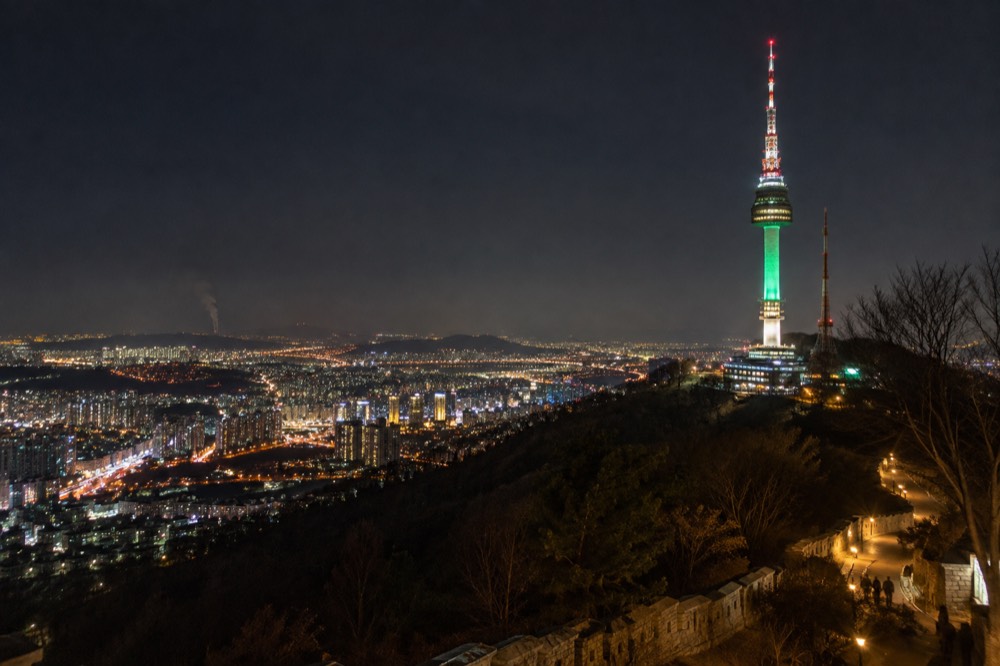
Most guides answer this question with a preference dressed up as advice. They say night, because the night view is the famous one, and stop there. That is half an answer. The full one has three moving parts: what the light is doing, what the air is doing, and what the crowd is doing, and each of those moves differently through the day and through the year.
Start with what is fixed. The observatory opens at 10:00 every day of the year, closing at 22:30 on weekdays and 23:00 on weekends and public holidays, with last admission 30 minutes before closing. Those hours are published by the tower operator itself on its official hours page, and they are the only fixed clock facts in this whole debate. Everything else, the lighting, the haze, the queues, shifts around them.
Then there is the part nobody tells you: the ticket and the mountain are two different things. The observation deck inside the tower is the paid product. The summit plaza, the terraces around the base, the love locks, the beacon mound and the park trails are all free, and they are open to the sky at any hour of the day or night. So the night-versus-morning question is really two questions: when to be on the mountain, and whether the enclosed deck is worth adding on top of it. This site's Namsan Tower Seoul guide collection exists to keep that boundary clear, because blurring it is the single most common mistake visitors make.
If you already know you want the deck, the ticket options are straightforward:
The basic observatory ticket starts at US$15.25 per adult. The fast-track version costs more and skips the ticket counter, though it does not guarantee a shorter wait at the deck itself, and one buyer reported no visible fast-track lane. The third option bundles the deck with a cable car ride, and it comes with a catch worth knowing before you buy: the physical ticket must be collected at a partner shop in Myeongdong first, and collection closes at 18:00, which makes that option awkward for a late-evening visit.
Why mornings are the quiet, clear window
Mornings are the best time for the view itself. Visitor reports through mid-2026 consistently describe weekday mornings as the quietest window at both the tower and the cable car, while weekends, holidays and evenings are the busy ones. The air over Seoul also tends to be clearest early in the day, before haze builds, and the observatory opens at 10:00, so a morning visit can begin right then.
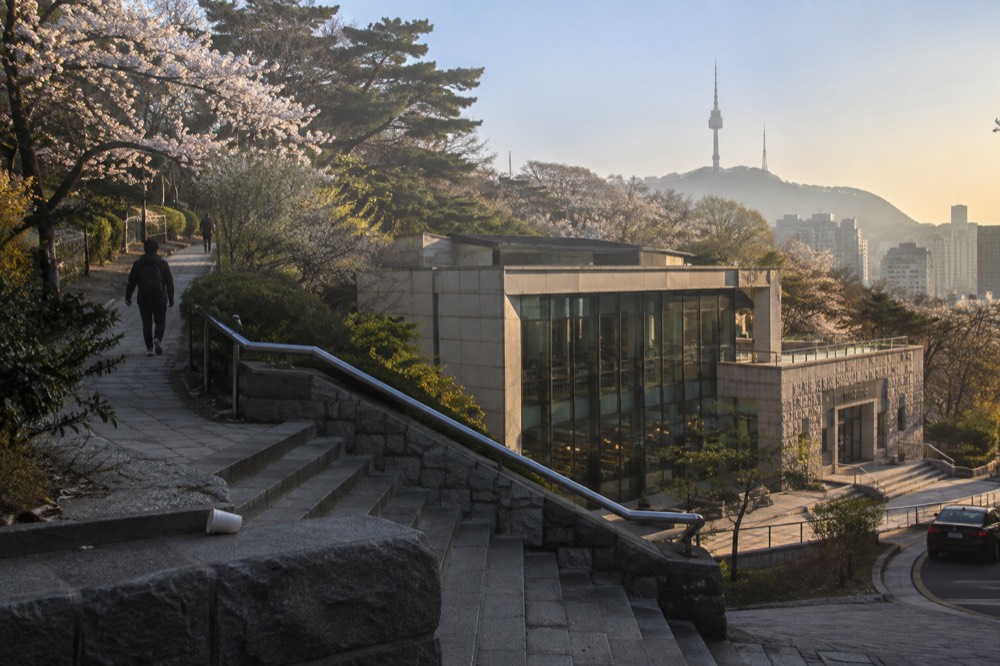
The crowd pattern is not folklore. The cable car company's own visitor guidance says plainly that mornings are quieter than afternoons and that boarding waits can get long at weekends, and visitor accounts from July and August 2026 agree with it. No source anywhere states a wait in minutes, so none is given here, but the direction of the pattern is settled: early is calmer, late is busier, and the busiest of all is a weekend evening.
The air matters more than most visitors expect. The tower operator states that on a clear day you can see up to 50 km from the deck, naming landmarks from Achasan in the east to Bukhansan in the north. That word, clear, is doing a lot of work. Seoul's air is not uniformly clear across a day, and the long-distance view that sells the deck is the first thing haze takes away. A morning visit is the closest thing to a hedge against that: you trade the light show for a better chance of actually seeing the far side of the city.
There is a seasonal wrinkle too. In summer, the morning is the only comfortable window for the walk up, because the Namsan slopes are steep and exposed in places, and afternoon heat on those paths is punishing. In winter the calculation flips: the mornings are bitter, the light goes early, and an afternoon-into-evening visit lets you catch the last daylight and the lighting in one trip. The answer to this question genuinely changes with the calendar, which is why any guide that gives you one fixed answer is guessing.
What the night actually gives you
Night gives you two things the morning cannot: the tower's own lighting, which has signalled Seoul's air quality since January 2011, and the city's light sprawl seen from above, the view that made the summit famous. The cable car company itself recommends the sunset-to-night window. The cost is crowds, because evenings are the busiest time at both the tower and the cable car.
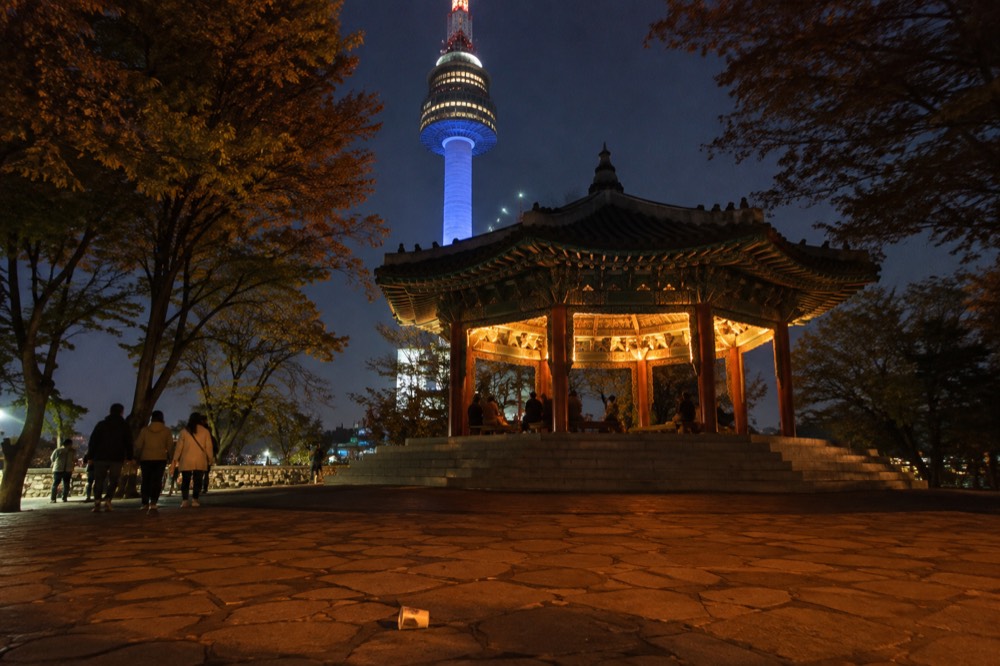
The lighting is the tower's signature. The tower body's colour has signalled Seoul's fine-dust level since January 2011, according to the operator's own history timeline, and the tower is also used for one-off commemorative light-ups requested by outside bodies. Nobody official publishes a switch-on time: no operator or city source publishes a fixed time for when the tower's lights come on for when the exterior lighting comes on, and the switch-on times that circulate in third-party guides just repeat each other. The honest position is that the tower is lit after dark, and that the observatory's published closing time is the only fixed clock fact. If you want to dig into that, our piece on when the tower lights up covers what is and is not verifiable.
The night view from the deck is a different experience from the day view, not a dimmer version of it. By day you read the geography: the river, the wall, the ring of mountains. By night you read the city itself, street grids and tower blocks laid out in light, and the far distances that haze steals by day matter less because the spectacle is closer in. That is the real reason night wins for many visitors, and it is a legitimate one. The trade is simply that you share it with the most people.
One genuinely new thing has changed the evening calculus. From September 2026, Seoul runs a free guided night walk over the summit itself, with two departures an evening at 18:00 and 20:00, passing N Seoul Tower and the love lock deck and finishing at Palgakjeong. The city's own media hub announcement describes the route, which starts at the Namsan Sky Forest Trail entrance and threads past the Zelkova Observatory, the Sunset Observatory and the Wellness Garden before reaching the tower. It is free, it is led by a licensed city guide, and it is booked in advance through the city's own walking-tour site. This means the summit now has a scheduled, city-run evening presence it did not have a year ago, and it gives a visitor who wants the night atmosphere without the deck ticket a way to get it for nothing.
Haze, season and the honest trade-off
Haze is the hidden variable in this whole debate. The operator's 50 km clear-day visibility claim is real but conditional, and the long-distance view is what suffers first when the air thickens. Night is partly immune, because the lit city reads well even at moderate haze, while a hazy morning can reduce the deck to a short-range view. In summer, lean evening, because haze builds with the heat.
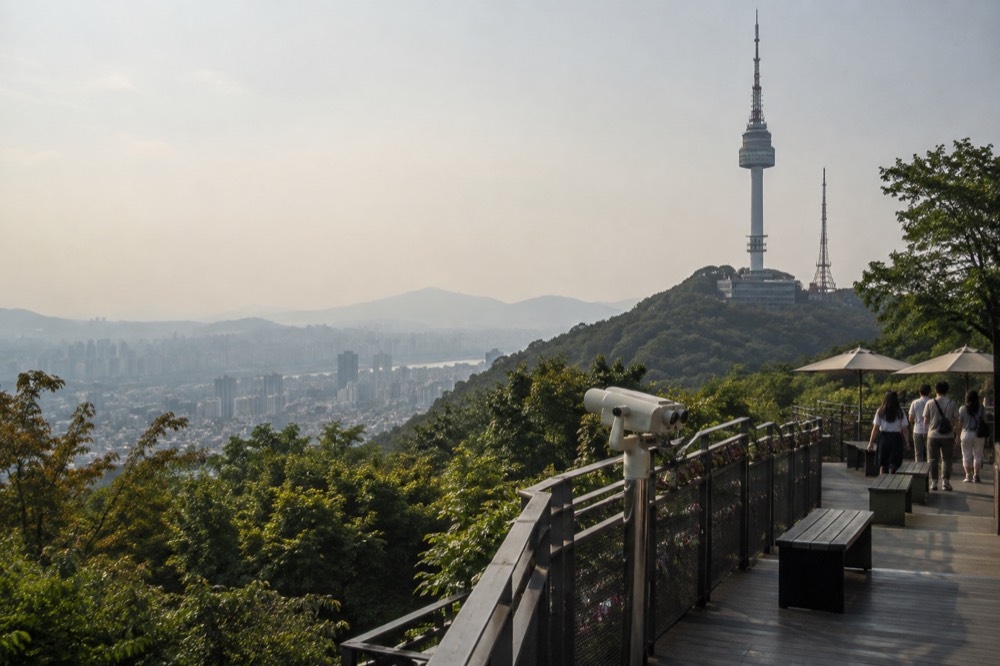
It helps to lay the two windows side by side. The table below is a planning summary of what each part of the day offers, built only from what the operators and the city publish and from what visitors consistently report.
| Factor | Morning from 10:00 | Evening to closing |
|---|---|---|
| Crowds at the tower | Quietest window, especially weekdays | Busiest window, especially weekends and holidays |
| Cable car boarding | Mornings quieter than afternoons | Long waits possible at weekends |
| The view | Best chance of long-distance clarity, up to 50 km on a clear day | The lit city, closer in and partly haze-proof |
| The tower's lighting | Off, the tower is unlit by day | Lit after dark; no official switch-on time exists |
| Deck hours | Opens 10:00 | Last admission 30 min before 22:30 or 23:00 close |
| Free summit extras | Trails, locks and beacon mound in daylight | The new free city night walk, 18:00 and 20:00 |
| Summer comfort | The only cool window for the walk up | Warm but shaded after sunset |
Notice what is not in that table: any wait in minutes, any sunset time, any golden-hour window. None of that is published by anyone official, and the numbers that circulate online are third-party guesses. The qualitative pattern is solid; the clock figures are not.
The seasonal logic, in words. In spring, the city describes the Namsan blossom path from the public library up to the tower as a famous walk, and Seoul's cherry blossom long-term average is flowering on 8 April and full bloom on 10 April, measured at the standard King cherry tree at the Seoul Weather Observatory, which is a Seoul-wide figure and not a Namsan-specific one. A morning walk up in that window pairs the blossom with the quiet deck. In summer, evenings win on heat and lose on haze. In autumn, either window works and the mornings get steadily crisper. In winter, the evening is the pragmatic choice, because the daylight window is short and the lighting comes on early relative to the cold.
What your ticket buys either way
Whether you go at 10:00 or at 21:00, the observatory ticket buys the same thing: the enclosed observation deck inside the tower, entered from Plaza 5F, with the second ticket booth at Tower 1F. It does not buy the mountain. The summit plaza, the terraces, the love locks, the beacon mound and the park trails are free at every hour, and a visitor can reach the summit without a ticket at all.
The deck itself holds digital telescopes with optical zoom up to 36x on the Tower 4F and 5F levels and on the 2F roof terrace, and a gift shop sells postcards and stamps for the Sky Post Office, with the operator stating domestic delivery takes 2 to 3 days and overseas about 15. Those work the same at noon and at night, though the telescopes are obviously a day feature. The rotating n.Grill on Tower 7F, one full rotation every 1 hour 40 minutes, includes free observatory admission with an advance reservation, which is one way to buy the night view and dinner in a single booking.
The basic ticket is the one most visitors want, and it is the cheapest of the live options:
Rated 4.6 across 34,365 reviews and priced from US$15.25 per adult, it is the straightforward version of the product: one deck ticket, no extras, valid on the day of purchase. If you are deciding between morning and night and have not decided whether you want the deck at all, remember the free side of the boundary first. Many visitors find the summit plaza at night, the tower lit above them and the city below, is the experience they came for, and it costs nothing.
Getting up, and getting down, at either hour
The transport up Namsan runs late enough for either window. The cable car operates 10:00 to 23:00 every day of the year, the Namsan Ormi inclined elevator runs 09:00 to 23:00 free of charge, and the circular buses 01A and 01B run 06:30 to 23:00 from Chungmuro or Dongguk University stations. A morning visitor can ride up from opening; a night visitor has until the last departures.
The free Namsan Ormi elevator, the glass-walled slanted lift between Namsan Tunnel 3 and the cable car station, is suspended every Monday from 09:00 to 14:00 for maintenance, which matters if your morning plan is a Monday. It also stops in strong wind or heavy rain. The circular buses cost KRW 1,500 with a transport card, 01A running every 9 minutes and 01B every 14. There is also the cable car company's free shuttle between Myeongdong Station and the cable car platform, first departure 12:00 and last 20:30, which is an afternoon-and-evening service and useless for a 10:00 start.
One combination option carries a timing trap that bites night visitors specifically. The observatory-plus-cable-car package requires collecting a physical ticket at a partner shop in Myeongdong before riding, and collection closes at 18:00. If your plan is dinner in Myeongdong followed by an evening ascent, that pick-up deadline comes early in your evening. The plain observatory ticket has no such step, which is one quiet argument for keeping the two purchases separate and deciding your hour first, your ticket second.
For a fuller comparison of the ascent options, including the walk-up trails and their official times, see our guide to walking up Namsan Park to the tower. The short version for this question: the walk is a daylight activity for most visitors, the cable car and elevator serve both windows, and the buses run the widest hours of all.
The verdict, by visitor type
Go in the morning if the long-distance view is the point, if you are visiting in summer, if you hate crowds, or if you are walking up. Go at night if the lit city is the point, if you are visiting in winter, or if you want the tower's lighting in the frame. Split the difference by going late afternoon: daylight on the way up, the lighting on the way down, paying only if the deck still tempts you.
That split-the-difference plan deserves a sentence more, because it is what the closing hours quietly encourage. A visitor who reaches the summit in the last hour of daylight can watch the city lights come on from the free terraces, walk the love lock deck as the tower lights above, and then decide, with the deck entrance at Plaza 5F right there, whether the enclosed view is worth the ticket at that moment. The last admission is 30 minutes before closing, so the decision window is real but finite.
For whichever window you choose, the live options are here:
And for planning the rest of the evening or the rest of the day around it, our guide to N Seoul Tower at night covers the lighting, the night walk and the after-dark summit in detail.
Common questions about visiting Namsan Tower at night or in the morning
Is It Better To Go To Namsan Tower At Night Or Morning?
It depends on the season and what you want. Morning gives you the quietest crowds, the best chance of a clear long-distance view and the only cool walking window in summer. Night gives you the lit city, the tower's own lighting and a warmer visit in winter. Evenings are the busiest time; weekday mornings are the calmest.
What time does the observatory open and close?
The observatory opens at 10:00 every day of the year. It closes at 22:30 on weekdays and 23:00 on weekends and public holidays, with last admission 30 minutes before closing. The operator states hours can change with weather and with Namsan vehicle-access restrictions.
Does the cable car run late enough for a night visit?
Yes. The cable car operates 10:00 to 23:00 every day of the year, with the last ticket sold 30 minutes before closing. Service can stop or end early in bad weather. The free Namsan Ormi inclined elevator runs 09:00 to 23:00, and the circular buses 01A and 01B run 06:30 to 23:00.
Is the summit free at night as well as during the day?
Yes. The summit plaza, the terraces around the tower base, the love locks, the beacon mound and the park trails are free at every hour. Only the observation deck inside the tower needs a ticket. From September 2026 there is also a free city-run guided night walk over the summit, departing at 18:00 and 20:00.
When do the tower's lights come on?
No operator or city source publishes a switch-on time. The tower is lit after dark, and its body colour has signalled Seoul's fine-dust level since January 2011, but the switch-on times that circulate in third-party guides have no official source behind them. The observatory's published closing time is the only fixed clock fact.
Are mornings really less crowded than evenings?
Yes, according to both the cable car company's own guidance and consistent visitor reports. Mornings are quieter than afternoons, weekends and holidays are busier than weekdays, and evenings are the busiest window at both the tower and the cable car. No official source states any wait in minutes.