Where Is The Most Famous Love Lock Bridge? Why the Answer Moved East to Seoul
The most famous love lock bridge question has a new answer. Paris took its padlocks down, while Namsan in Seoul kept its terraces, and the city now routes official tours past them.
Where Is The Most Famous Love Lock Bridge? Why the Answer Moved East to Seoul
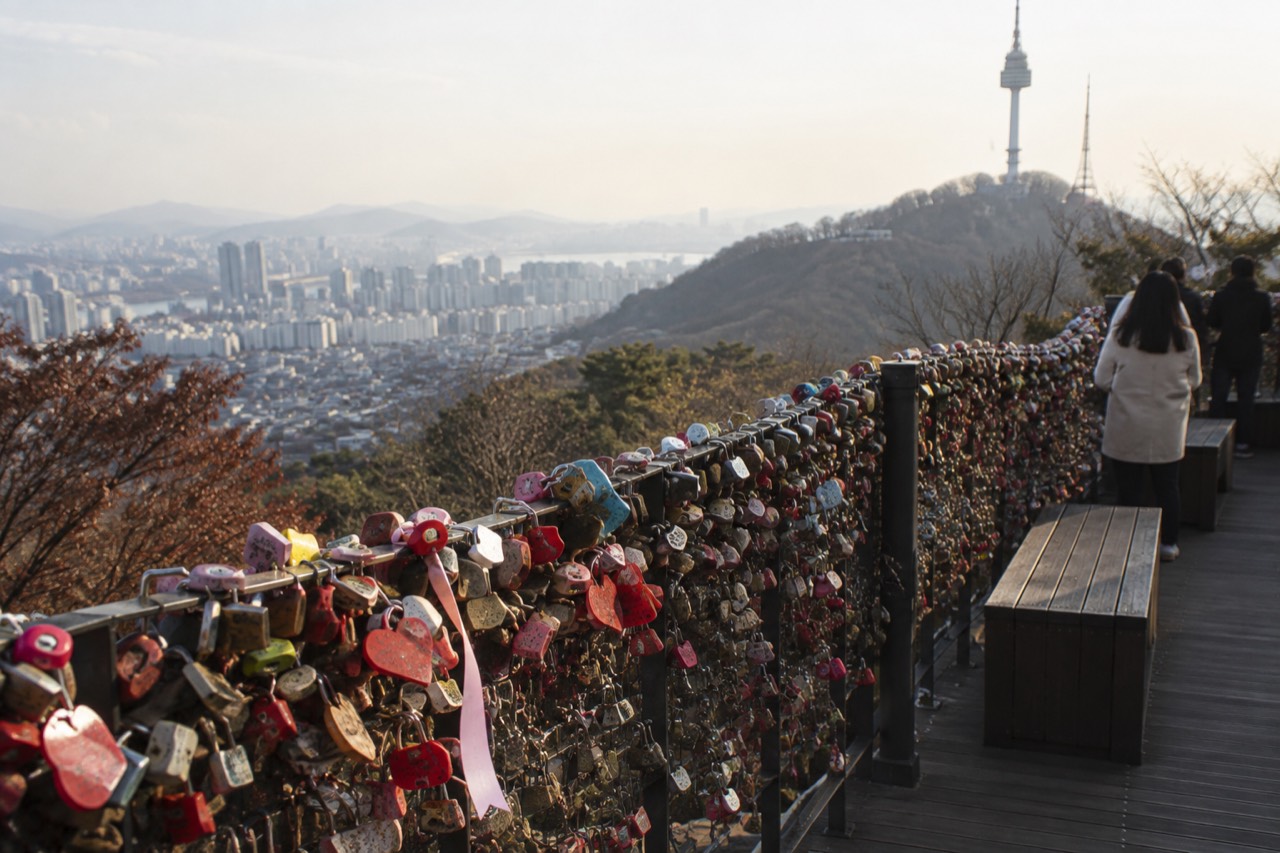
The most famous love lock site today is the love lock terraces of Namsan in Seoul, where N Seoul Tower stands. The Pont des Arts in Paris held the title for years, but Paris removed the padlocks from its bridge, and the ritual's centre of gravity shifted east. On Namsan the locks are still attached, still sold on the mountain, and still promoted by Seoul's own government, which now routes a free official night walk directly past them.
The question sounds simple, and for about a decade it had one simple answer. Travellers who wanted to clip a padlock onto something famous went to Paris, to the Pont des Arts, and the bridge's railings disappeared under a crust of engraved metal. Then the Paris authorities took the locks off the structure, and the couples who had made the ritual a global phenomenon needed somewhere else to go.
Seoul had been ready for years. Namsan, the mountain that rises between the Myeongdong shopping district and the Han River, had its own lock tradition, spread across terraces and fences around the base of N Seoul Tower rather than concentrated on a single bridge. What changed after Paris is that Namsan became the place the ritual survived rather than one of many places it was practised.
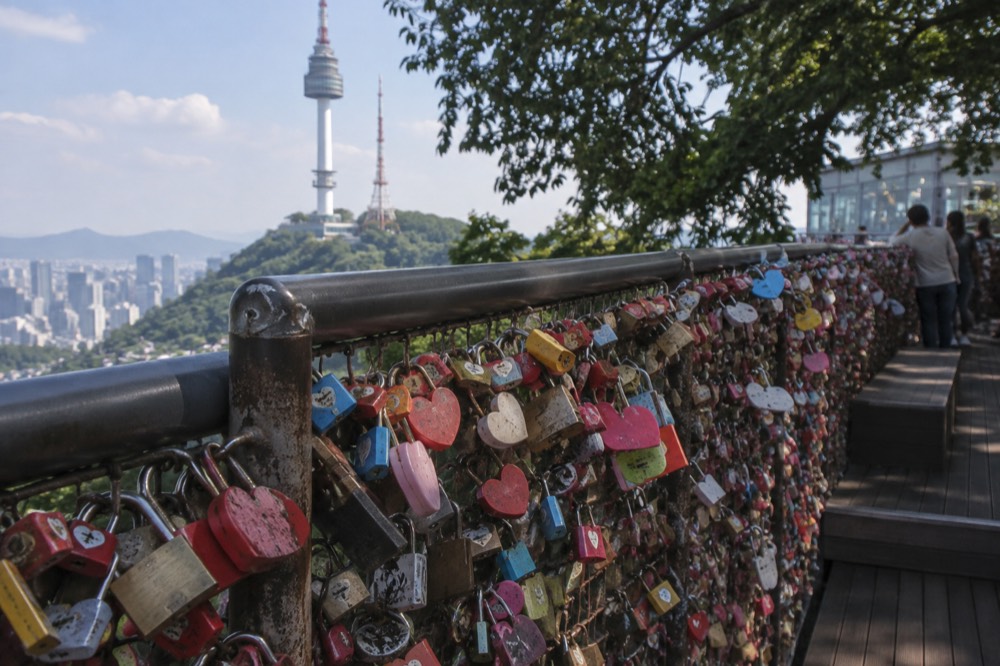
The distinction matters for anyone planning a trip. A love lock site only works as a destination if the locks are actually there, and the answer to that question changes faster than most guidebooks do. Sites have removed their locks for weight, for safety, for bridge repairs, and sometimes without announcing it. This article sets out where the ritual now lives, why the title moved, and what a visitor to the Namsan terraces can expect, with the locks at the tower a fixture that Seoul city itself promotes to visitors.
If the summit is on your itinerary, the observatory inside the tower is the one part of it that needs a ticket, and there are a few ways to buy it:
Why Paris Lost the Title
Paris lost the love lock title because the city physically removed the locks from the Pont des Arts in 2015, dismantling the tradition at its most famous site. Once the panels were taken down and replaced with graffiti-resistant glass, couples stopped returning in large numbers, and the mass ritual that once defined the city's lock culture faded away for good. The bridge's railings, which had carried an enormous weight of padlocks, were cleared by the city authorities, and panels were replaced to stop the practice re-establishing itself at the same scale. The couples kept travelling, but the landmark that had defined the ritual no longer hosted it, and no successor site inside Paris has since gathered anything like the same following. A tradition that had been anchored to one specific structure found itself without its anchor.
The Paris story is the reason the question "where is the most famous love lock bridge" even needs asking again. Before the removal, the answer was so settled that travel features treated the Pont des Arts as the love lock site, the way Agra is treated as the Taj Mahal's city. Photographers sold prints of the railings. Vendors around the bridge sold padlocks and markers to people who had arrived with no plan to buy either. The bridge was not just a place where the custom happened, it was the place people crossed a city, sometimes a continent, to practise it.
Structures, though, have limits, and a bridge that accumulates metal by the ton eventually becomes an engineering problem rather than a romantic one. Cities that host love lock traditions all face the same tension: the locks are a draw, and the locks are a load. Paris resolved the tension by removing them. Other cities have done the same on smaller scales, usually quietly, which is why any list of "love lock bridges" written more than a couple of years ago needs checking before you build a trip around it.
The deeper point for a traveller is that fame in this ritual follows survival. A love lock site is famous exactly as long as its locks are still on the fence. That is what makes Namsan's position strong: the locks there are, the tower operator's own pages, Seoul's tourism site and the city government's channels all still promote the locks, still attached, still being added to, and still officially promoted. Seoul's visitor page for Namsan Seoul Tower lists the Locks of Love among the site's attractions, and the city's own feature on the mountain groups them with the heart chairs and photo booths as things to do there.
Wondering whether to pair the free terraces with the paid view from inside the tower?
What Makes the Namsan Love Locks Different
Namsan's love locks are not attached to a bridge at all, unlike the famous sites in Paris or elsewhere. Instead, they spread across terraces and fences around the base of N Seoul Tower, forming a hillside display that visitors can wander through freely. And unlike most famous lock destinations, this one costs nothing to reach, making it an open, accessible spot for couples and travelers alike. The mountain, the summit plaza, the terraces and the locks themselves are all free; the only ticketed thing on the summit is the observation deck inside the tower. That inverts the Paris model, where the ritual sat on a working river bridge in the middle of a city, and it means a visitor can complete the whole famous ritual, from buying a padlock to clipping it in place, without ever paying an entrance fee for the ground it happens on.
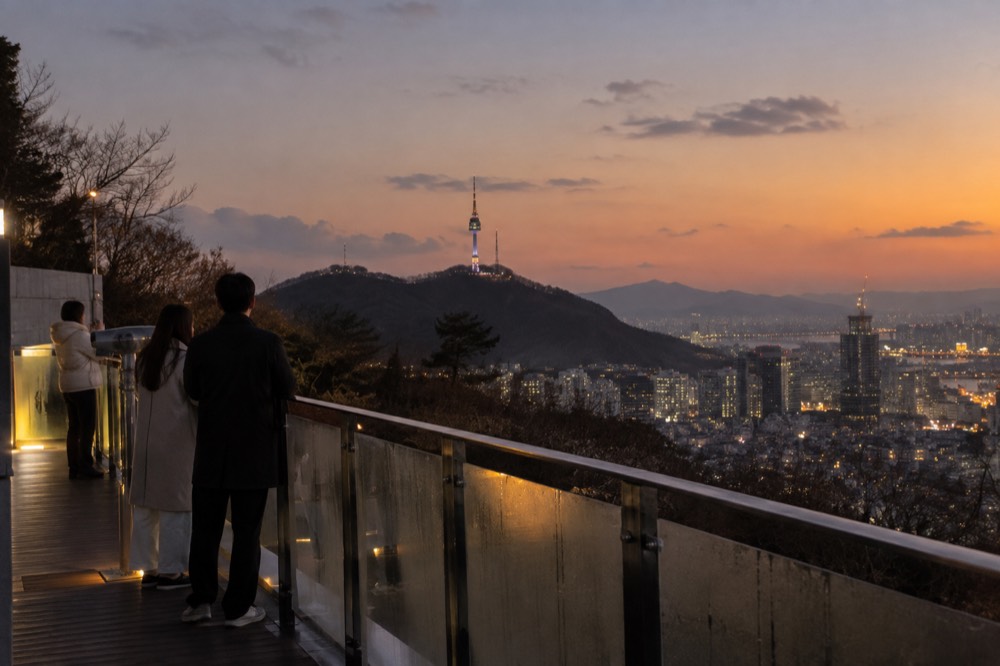
The setting is the other difference. The Pont des Arts was flat, urban and horizontal, a bridge among bridges. Namsan is a mountain park in the middle of Seoul, and the locks sit high above the city, on terraces that look out over a skyline that stretches, on a clear day, up to 50 km according to the tower operator's own FAQ, which names distant landmarks in every direction. Couples clip a lock at altitude, with the whole of the capital below them.
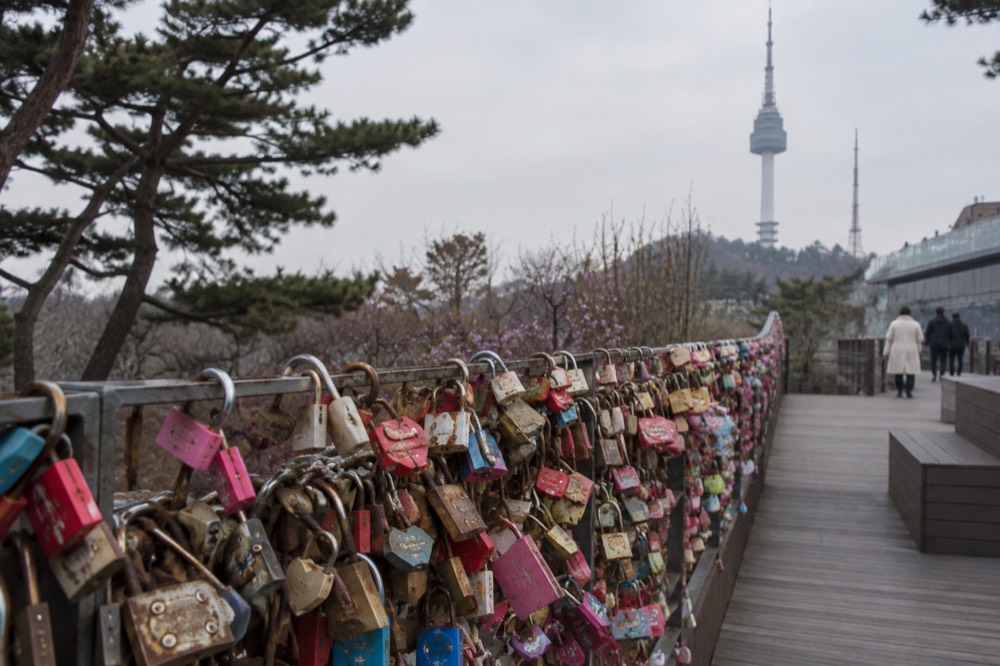
The ritual on Namsan also has an official blessing that most love lock sites never get. Seoul Metropolitan Government's own feature on Namsan promotes the Locks of Love alongside the mountain's trails and the Palgakjeong pavilion area, treating them as part of the park's offer rather than a nuisance to be managed. The cable car company lists the locks on its own attraction cards too. When a city government puts a padlock fence in its official tourism material, the site has moved from folk custom to civic landmark.
There is a screen dimension as well. N Seoul Tower has become one of the most recognisable structures in East Asia, and the tower's appearance in global popular culture has pulled new attention up the mountain. Readers who want that story in full will find it in the site's guide to N Seoul Tower on screen, but the short version is that the tower now anchors the summit's fame in a way a river bridge never could. The locks share the stage with a landmark that millions of people have already seen on a screen before they ever see it in life.
Do the Namsan Locks Ever Get Removed?
No, the love locks at Namsan Seoul Tower are not removed on any regular basis. Neither the tower operator, YTN Seoul Tower, nor the Seoul Metropolitan Government has announced any programme to clear them, and no source indicates the locks are taken away on a fixed cycle, so visitors should expect the padlocks to remain in place for the foreseeable future. That is the honest, sourced answer, and it is more than most love lock sites can offer. What cannot be said is the opposite either: nobody has promised the locks will stay forever, so the position is simply that nothing is scheduled, nothing has been announced, and every recent official signal, from the operator's pages to the city's newest walking route, points the other way entirely.
This question gets asked because removal is what usually kills a love lock site, and it usually happens without warning. No removal programme has been announced on the operator's Korean and English notice boards, or on YTN Seoul Tower's pages and city government channels found no statement restricting or ending the practice, no scheduled cutting, no weight or safety programme, and no recycling scheme. The freshest evidence runs the other way: Seoul's new guided night walk over the summit, launched in September 2026, routes walkers past the love lock deck by name, between N Seoul Tower and the Palgakjeong pavilion. Everything else covered here is indexed on Namsan Tower Seoul.
Visitors still buy locks on the mountain. Recent visitor accounts describe purchasing padlocks at the tower, including branded locks with engraving done on the spot, and clipping them to the terraces. Where the locks are sold and what they cost is not something this site states, because those details were not verified at the source, but the ritual's mechanics are clearly still running.
For readers who want the full picture on the practice, the site carries a dedicated guide to the N Seoul Tower love locks, and a companion post on whether you can still put locks on the love lock bridge that works through the practicalities. The short answer to both is yes, the locks are active, and the city's own tourism material treats them as a permanent feature of the mountain rather than a tolerated accident.
How to See the Namsan Love Locks
To see the Namsan love locks, make your way to the summit of Namsan using any of the free or paid routes up the mountain, then walk the terraces that surround the base of N Seoul Tower. The locks are attached to fences and railings in this area, so once you arrive at the top and approach the tower, you will find them displayed all around. No ticket is needed for the locks, the summit plaza, the Palgakjeong area or the park trails. The paid options are the observation deck inside the tower, the cable car if you ride it, and the circular bus if you take it, so the choice of route is about comfort and timing rather than access, because every route delivers you to the same open summit where the locks live.
The routes up are varied enough to suit almost anyone. The Namsan cable car runs from a base station up the hill from Myeongdong, and the cable car company also runs a free shuttle bus between Myeongdong Station and its platform. The Namsan Ormi, a glass-walled inclined elevator between Namsan Tunnel 3 and the cable car station, is free of charge. The circular buses 01A and 01B climb from Chungmuro Station and Dongguk University Station for a small fare. And the mountain has proper walking trails, including the Sam-soon Steps, named for the drama that made them famous, which YTN Seoul Tower's own guidance lists at 40 minutes up to Palgakjeong.
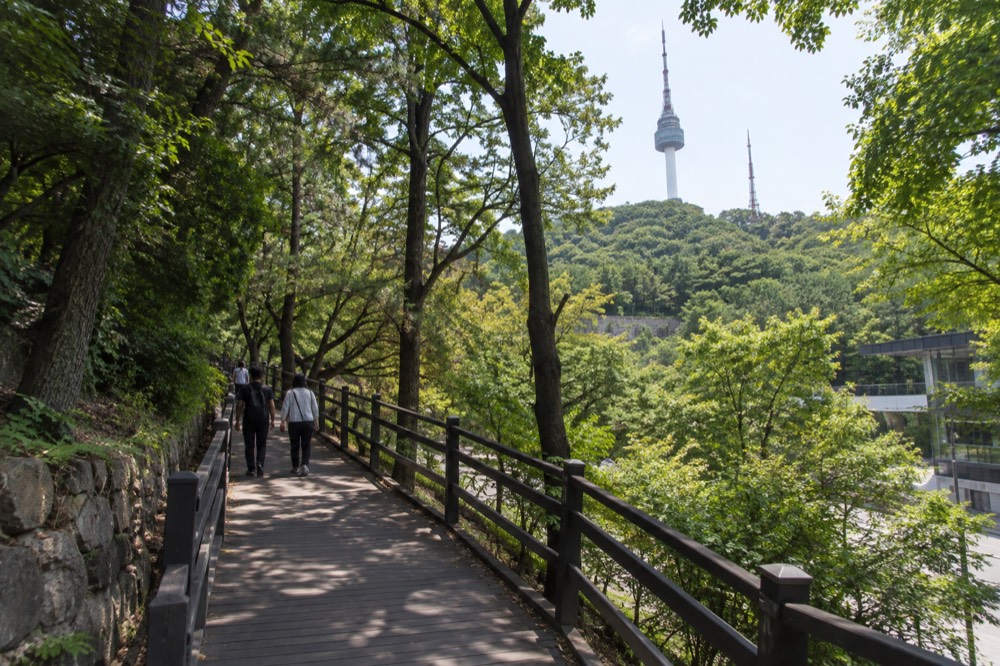
There is also a genuinely new option that almost no published guide knows about. Seoul opened the Namsan Sky Forest Trail in October 2025, a barrier-free timber deck path built so that wheelchair users, older visitors and anyone who cannot manage the steep old paths can get up the mountain, and the city's free guided night walk now starts at its entrance. The night course runs daily with two evening departures, is led by a licensed city culture-and-tourism guide, passes the tower and the love lock deck, and finishes at Palgakjeong. It is booked in advance through the city's own walking tour site, and it costs nothing.
That walk is worth dwelling on, because it is the clearest sign of how official the locks have become. A city government does not send a licensed guide past a fence it plans to clear. The course description, published on the Seoul Media Hub, names the love lock deck as a waypoint on the route, which makes the locks part of the city's own interpretation of the mountain, not just a visitor habit the authorities tolerate. You can read the details on the official Seoul walking tours page and the city's announcement of the new Namsan night course.
Getting the timing right is simpler here than at most attractions. The summit plaza and terraces are open ground with no gate and no ticket, so there is no admission window to miss. The things that do have hours are the tower's interior, open 365 days a year with the observatory running 10:00 to 22:30 on weekdays and 10:00 to 23:00 on weekends and public holidays, and the cable car, which runs 10:00 to 23:00 daily. Visitors consistently report that weekends, holidays and evenings are the busy windows at both, and that weekday visits and the ends of the day are quieter, which matches the cable car company's own advice that mornings are calmer than afternoons.
Is the Observatory Worth Adding to a Love Lock Visit?
Yes, for most visitors the observation deck is worth adding to a love lock visit, because it is the only way to see the panorama from inside the tower itself, and it is modestly priced, so the small extra cost buys a view you cannot get any other way. The official N Seoul Tower Observatory Ticket is rated 4.6 from 34,365 reviews and starts from US$15.25 per adult. The locks, the terraces and the summit views from the base stay free either way, so the ticket is an upgrade, not a requirement, and a visitor who only wants the ritual can skip it without missing the locks at all. What the deck adds is the tower's own interior, its telescopes and its framed view over the same skyline.
The deck sits at the top of a tower that is 236.7 m tall as a structure, standing on a mountain that lifts the whole thing to 506.7 m above sea level. Inside are the digital telescopes with optical zoom up to 36x, the Sky Post Office, where postcards are sold and the operator states domestic delivery takes 2 to 3 days, and the rotating n.Grill restaurant on the top floor, which completes one full rotation in 1 hour 40 minutes. An advance n.Grill reservation includes free observatory admission, and dining at HanCook gets a discount on the deck ticket, so there are restaurant routes in as well as the straight ticket.
The ticket options worth knowing about, from the operator's live listing:
| Option | What it covers | Price |
|---|---|---|
| Observatory ticket | The observation deck inside the tower | From US$15.25 |
| Observatory plus cable car | The deck plus the Namsan cable car | US$28.05 |
| Fast-track observatory | The deck, skipping the ticket counter | US$40.85 |
| Observatory plus cocktail | The deck plus a cocktail | No published price |
Two honest notes on those options. The combined observatory-plus-cable-car package requires collecting a physical ticket at a partner shop in Myeongdong before riding, and collection closes at 18:00, which makes it a poor fit for a late-evening plan. And the fast-track option skips the ticket counter, not the cable car queue; riders still queue for the cable car like everyone else, and one buyer reported no visible fast-track lane at all. A straight observatory ticket, bought for a time you choose, is the simple route for most people, and you can check availability on the tour page or read the site's full N Seoul Tower tickets guide before deciding.
For anyone weighing the deck against the free view from the base, the site's post on whether the N Seoul Tower is worth visiting works through that trade-off directly. The one-line version: the free terraces give you the city, the paid deck gives you the city plus the tower experience itself, and the two are not substitutes.
However you build the visit, the love lock terraces are the part that needs no planning at all. Walk up, or ride up, and the locks are there, on the fences and railings around the tower base, in the open air, with the whole of Seoul below. That is the state of one of the best known surviving love lock sites right now: not a bridge, not in Paris, and not going anywhere that any official source has announced.
Common questions about the Namsan love locks
Where Is The Most Famous Love Lock Bridge?
The strongest claim today belongs to the love lock terraces of Namsan in Seoul, around the base of N Seoul Tower. The Pont des Arts in Paris held the title for years, but its locks were removed, while Namsan's locks remain attached, actively added to, and promoted by Seoul's own government.
Are the Namsan love locks still there?
Yes. Recent checks of the tower operator's pages, Seoul's tourism site and city government channels found the locks present and promoted, with 2026 visitor accounts describing buying and attaching padlocks on site. Seoul's new official night walk over the summit, launched in September 2026, routes walkers past the love lock deck by name.
Do you need a ticket to see the love locks at N Seoul Tower?
No. Namsan Park, the summit plaza, the terraces around the tower base and the love locks themselves are all free. The only ticketed attraction on the summit is the observation deck inside the tower, which starts from US$15.25 per adult on the operator's live listing.
Is there a real love lock bridge in Paris anymore?
The Pont des Arts still stands and still carries its name, but the padlocks that made it famous were removed by the city authorities, and the mass ritual did not return at its old scale. Travellers looking for the living version of the tradition now find it on Namsan in Seoul rather than on the Seine.
Where exactly on Namsan are the locks?
The locks are spread across terraces and fence lines around the base of N Seoul Tower, rather than concentrated on a single bridge. This site does not state a specific floor or level for them, because that detail was never verified at the source, but the area is open, free to walk, and easy to find once you reach the summit plaza.
Can you still buy a padlock at Namsan?
Visitors report buying padlocks on the mountain, including branded locks engraved on the spot, in accounts from 2026. Where they are sold and what they cost is not stated here, because those details were not verified. What is verified is that the practice of attaching locks is active and officially recognised.